CPR and AED Readiness in Sports: Cardiac Emergencies on the Ice
Understanding Sudden Cardiac Arrest in Youth Sports
 Sudden cardiac arrest can occur when the heart’s electrical system is disrupted, causing it to stop beating effectively. In rare cases, a strong impact to the chest—such as from a puck or ball—can trigger a dangerous heart rhythm.
Immediate response with CPR and an automated external defibrillator (AED) is critical in restoring a normal heartbeat and improving survival.
First Aid & Workplace Relevance in Vancouver and the Lower Mainland
Across Vancouver, Burnaby, Richmond, Surrey, and the Lower Mainland, hockey arenas, sports facilities, and recreation centres host thousands of youth and adult activities.
These environments must be prepared for emergencies with:
-
Accessible and functional AEDs
-
Clear emergency response plans
Preparedness is especially important in high-activity environments like ice rinks.
Real Incident Overview
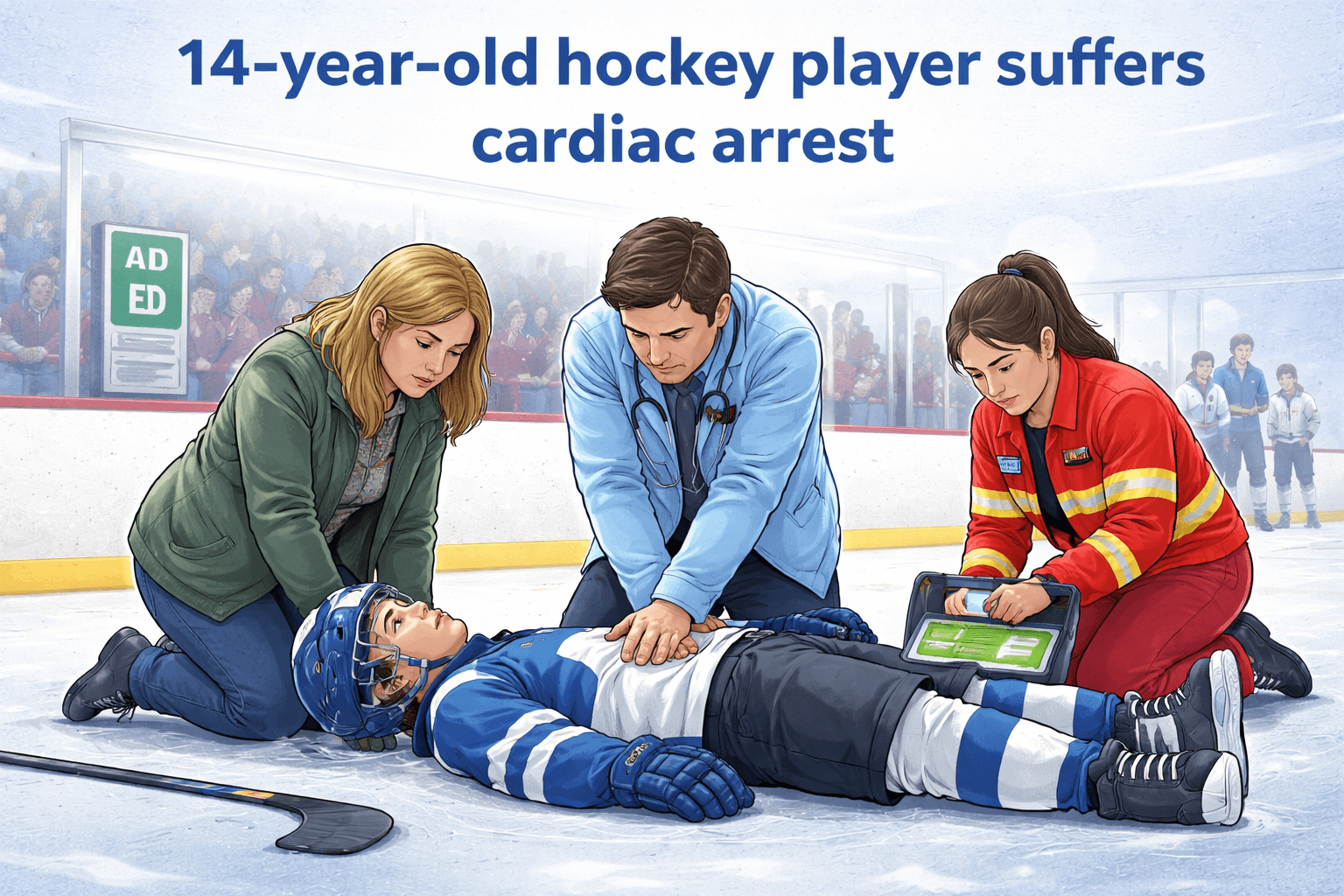
Kenzie Lahey, a 14-year-old hockey player, collapsed on the ice after being struck in the chest by a puck during a game.
Moments after the impact, he grabbed his chest, dropped to his knees, and became unresponsive. At first, those nearby thought he might be having a seizure. However, it quickly became clear that the situation was more serious.
The referee called for help, and multiple individuals responded immediately, including Kenzie’s mother, an off-duty respiratory therapist, and a physician whose child was playing in the game.
CPR was started right away. The arena had an AED available, but it was not functional due to an uncharged battery.
Fortunately, a nearby ambulance had a working defibrillator. After two shocks were delivered, Kenzie’s heart rhythm was restored. He was stabilized, transported to IWK Health Centre, and later released after recovery.
Following the incident, his mother emphasized the importance of ensuring AEDs are not only available—but also properly maintained and ready for use.
Signs of Sudden Cardiac Arrest
Cardiac arrest may present with:
-
Sudden collapse
-
Unresponsiveness
-
No normal breathing
-
No pulse or signs of circulation
Quick recognition is essential for immediate action.
Why AED Readiness Matters
This incident highlights that:
-
AEDs must be accessible and functional
-
Regular maintenance (battery checks) is essential
-
Delays in defibrillation can affect outcomes
Having an AED nearby is only effective if it is ready to use at all times.
First Aid Response: CPR and AED Use
If someone collapses during sports:
-
Call 911 immediately
-
Check responsiveness and breathing
-
Begin CPR (chest compressions)
-
Have someone retrieve an AED immediately
-
Turn on the AED and follow instructions
-
Continue CPR and AED use until help arrives
Early CPR and defibrillation are key factors in survival.
Prevention and Safety in Sports Facilities
To improve safety in arenas and recreational facilities:
-
Ensure AEDs are regularly inspected and maintained
-
Train coaches, staff, and volunteers in CPR and AED use
-
Clearly mark AED locations
-
Develop and practice emergency response plans
Preparedness helps reduce risks in sports environments.
Frequently Asked Questions
Can a chest impact cause cardiac arrest?
In rare cases, a sudden impact can disrupt heart rhythm and lead to cardiac arrest.
Why is AED maintenance important?
An AED must be fully functional, including battery readiness, to be effective in emergencies.
What should I do if someone collapses during a game?
Call 911, begin CPR, and get an AED as quickly as possible.
Can CPR alone restart the heart?
CPR supports circulation, but an AED may be needed to restore a normal rhythm.
Who should be trained in CPR at sports facilities?
Coaches, staff, and regular facility users benefit from training.
Educational Note
This article is intended for general first aid awareness and workplace safety education in Canada. CPR and AED training can help individuals respond effectively in emergencies.
Serving the Vancouver Lower Mainland with the lowest priced, highest quality safety, CPR, food safe and first aid training since 2010.
 Support local, Canadian-owned businesses, with no connections to American corporations or partnerships.