 Cold water incidents can happen quickly, especially during winter or early spring when melting snow increases water flow in creeks and rivers. In these situations, a person may lose consciousness due to lack of oxygen or exposure to cold temperatures.
Cardiopulmonary resuscitation (CPR) is an emergency technique used when someone becomes unresponsive and stops breathing normally. It helps maintain circulation and oxygen flow to the brain and vital organs until professional medical care becomes available.
Across Canada—including Vancouver and communities throughout British Columbia—CPR training is commonly included in workplace safety programs, community courses, and outdoor recreation training, helping people respond more effectively during emergencies.
First Aid and Workplace Relevance in Canada
Cold-water environments are common in many parts of Canada. Workers in outdoor industries such as construction, forestry, tourism, and environmental services may operate near rivers, creeks, or lakes where water-related emergencies could occur.
Because of these risks, many workplaces encourage first aid and CPR certification, ensuring staff are prepared to respond if someone is pulled from the water or becomes unresponsive.
Prompt action from bystanders, combined with rapid emergency response, can play an important role in survival during cold-water incidents.
A Realistic Scenario Involving a Cold Water Rescue
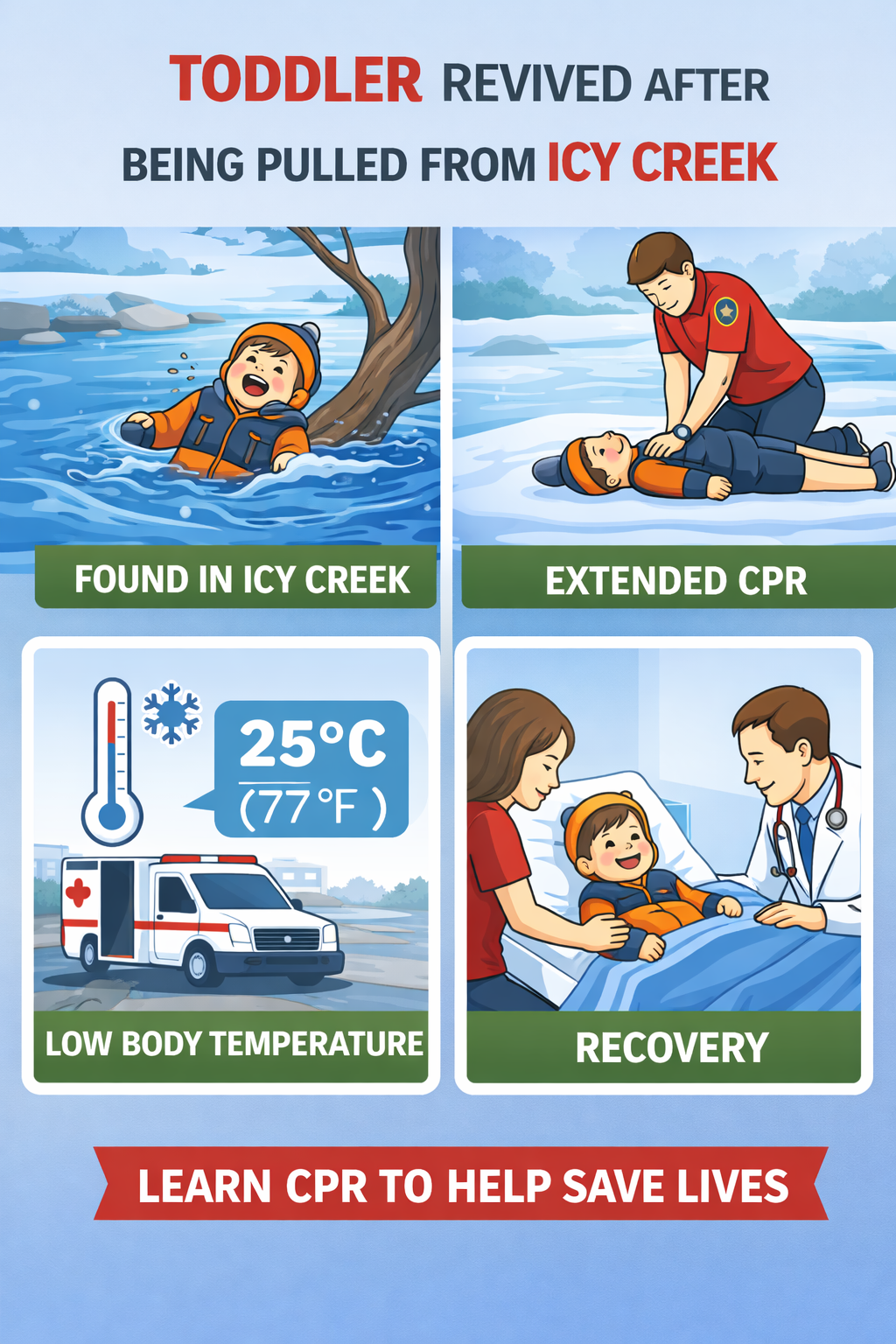
In a widely reported incident in Pennsylvania, a toddler was found in a creek after going missing near his family’s property.
The child’s mother began searching the area when she realized her 22-month-old son was no longer nearby. After checking the property, she became concerned that the toddler may have fallen into a nearby creek that had become swollen due to melting snow.
She called emergency services while her two teenage daughters walked downstream searching for the child.
A neighbour eventually located the toddler caught in a tree branch in the fast-moving water. Emergency responders quickly arrived and began providing medical care.
When paramedics assessed the child, he had no detectable pulse and required immediate resuscitation efforts. CPR was started at the scene and continued for an extended period while the child was transported for advanced medical care.
After arriving at the hospital, doctors determined the child’s body temperature had dropped significantly due to prolonged exposure to cold water.
In rare circumstances, severe hypothermia can slow the body’s metabolism. This reduced metabolic demand may help protect organs during cardiac arrest. Medical teams continued treatment, and the toddler eventually recovered without lasting complications.
While every emergency is different, the situation highlighted how rapid emergency response and persistent CPR efforts can support survival during critical incidents.
Signs of a Cold Water Emergency
When someone is pulled from cold water, several warning signs may indicate a serious medical emergency.
Possible signs include:
-
Unresponsiveness
-
No normal breathing
-
Weak or absent pulse
-
Pale or bluish skin tone
-
Shivering or extreme cold exposure
-
Confusion or loss of consciousness
These signs require immediate medical attention.
How Cold Water and Hypothermia Affect the Body
Hypothermia occurs when the body loses heat faster than it can produce it, causing body temperature to drop below normal levels.
Exposure to very cold environments can lead to:
-
Slowed heart rate and breathing
-
Reduced metabolic activity
-
Decreased circulation
-
Impaired brain function
In some rare cases involving cold-water immersion, the drop in body temperature may slow the body’s oxygen needs, which can provide limited protection to vital organs during cardiac arrest.
First Aid Response and Immediate Management
When someone is pulled from cold water and appears unresponsive, emergency responders focus on restoring breathing and circulation while preventing further heat loss.
General first aid considerations may include:
-
Call emergency services immediately.
-
Remove the person from the water if it is safe to do so.
-
Check responsiveness and breathing.
-
Begin CPR if the person is unresponsive and not breathing normally.
-
Keep the person warm while waiting for professional responders.
These steps help support vital functions until paramedics and medical teams provide advanced care.
Prevention and Water Safety Considerations
Cold-water incidents can often be reduced through supervision and environmental safety awareness.
Important safety measures may include:
-
Supervising young children near creeks, rivers, or ponds
-
Installing barriers or secure access points around hazardous water areas
-
Teaching family members basic first aid and CPR awareness
-
Monitoring water levels during snowmelt or heavy rainfall
-
Wearing appropriate safety equipment during outdoor activities near water
Preparedness and awareness can help reduce the risks associated with cold-water environments.
Frequently Asked Questions
Why is CPR important after a water rescue?
CPR helps maintain circulation and oxygen delivery to the brain and vital organs when a person is unresponsive and not breathing normally.
What is hypothermia?
Hypothermia occurs when the body’s core temperature drops below normal levels due to prolonged exposure to cold environments.
Can cold water affect survival in certain emergencies?
Cold temperatures can slow the body’s metabolism in some situations. While this may offer limited protection to organs during cardiac arrest, each medical emergency is different.
Why are children at higher risk near water?
Young children may not recognize environmental hazards and can quickly lose balance or fall into nearby water sources.
How can families improve water safety at home?
Households can reduce risks by supervising children near water, securing hazardous areas, and learning basic first aid and CPR skills.
Educational Note
This article is intended for general first aid awareness and public education. Learning CPR and basic emergency response skills can help individuals respond more confidently during water-related emergencies while waiting for professional medical assistance.
About The Author

Mark Kascha
First Aid Instructor Trainer with 30+ years of experience in CPR, emergency response, and safety training across Canada.
Last reviewed: March 2026
 Support local, Canadian-owned businesses, with no connections to American corporations or partnerships.