
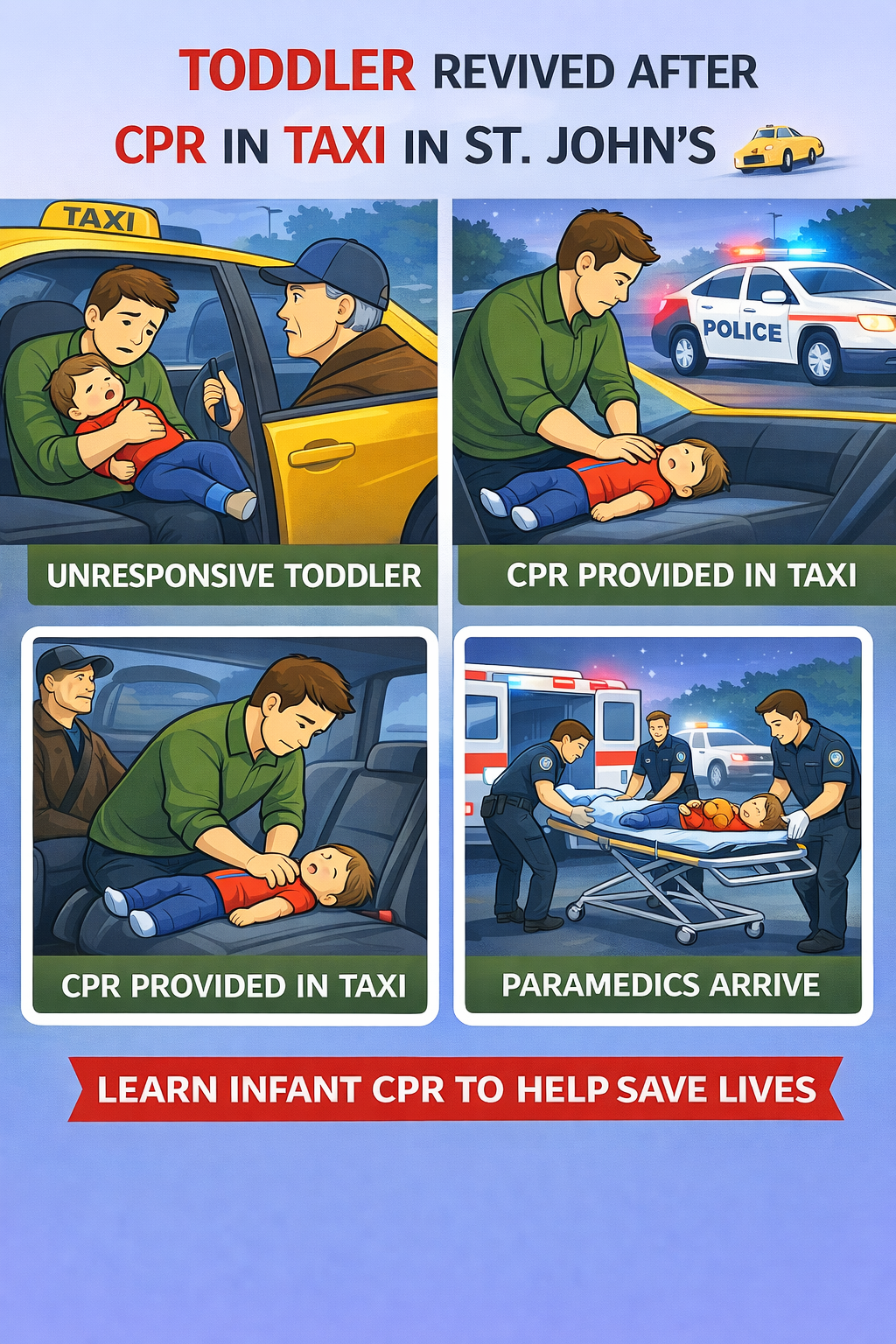
 Medical emergencies involving young children can happen unexpectedly, even during routine daily activities. When a toddler suddenly stops breathing or becomes unresponsive, immediate action is critical to help restore breathing and circulation until professional medical assistance arrives.
Cardiopulmonary resuscitation (CPR) is a life-support technique used when someone has stopped breathing normally or has no pulse. Special CPR techniques are used for infants and toddlers because their bodies are smaller and more delicate than adults.
Across Canada—including Vancouver and throughout British Columbia—first aid and CPR training programs often include infant and child emergency response, helping parents, caregivers, and workers respond quickly during emergencies.
First Aid and Workplace Relevance in Canada
Emergency response skills are valuable not only in workplaces but also in everyday community situations. Taxi drivers, transit operators, retail workers, and members of the public may unexpectedly find themselves assisting during medical emergencies.
Many Canadian workplaces encourage employees to complete first aid and CPR certification, which helps ensure someone nearby can respond while waiting for paramedics.
Prepared individuals and quick communication with emergency dispatchers can play an important role during medical emergencies involving children.
A Realistic Scenario from St. John’s
A family in St. John’s experienced a frightening emergency while travelling in a taxi with their young son.
Jason Roddan, his wife, and their 17-month-old son Christopher were riding in a taxi on their way to pick up groceries when the toddler suddenly stopped breathing.
Recognizing that something was seriously wrong, Roddan quickly removed his son from the car seat and placed him on the passenger seat in order to begin assisting him.
According to reports, the toddler had no detectable pulse and was not breathing. Roddan immediately began performing CPR while emergency services were contacted.
He continued providing CPR for approximately 15 minutes until first responders arrived and took over the resuscitation efforts.
Paramedics and emergency personnel continued treatment and transported the toddler to a hospital for further medical care.
Following the incident, the child’s father expressed gratitude to everyone involved in the response—including the taxi driver, emergency dispatcher, and paramedics—whose quick actions helped support the toddler during the emergency.
Situations like this highlight the importance of rapid response, CPR knowledge, and coordinated emergency services.
Signs of a Serious Medical Emergency in Toddlers
Young children may show several warning signs when experiencing breathing or cardiac emergencies.
Possible symptoms may include:
-
Difficulty breathing or no breathing
-
Unresponsiveness
-
Bluish or pale skin colour
-
Sudden limpness or weakness
-
Unusual gasping sounds
-
No detectable pulse
When these signs occur, emergency services should be contacted immediately.
Possible Causes of Sudden Breathing Emergencies in Toddlers
Toddlers may stop breathing or become unresponsive for several reasons.
Possible causes can include:
-
Airway obstruction
-
Severe allergic reactions
-
Illness or infection
-
Heart rhythm disturbances
-
Trauma or choking incidents
Emergency responders focus on restoring breathing and circulation while identifying the underlying cause.
First Aid Response and Immediate Management
When a toddler becomes unresponsive and is not breathing normally, quick action from caregivers or bystanders may help support vital functions.
General emergency response steps may include:
-
Call emergency services immediately.
-
Check responsiveness and breathing.
-
Begin infant or child CPR if the child is unresponsive and not breathing normally.
-
Follow instructions from emergency dispatchers if available.
-
Continue care until paramedics arrive.
Infant and child CPR techniques are designed specifically for young children to help restore circulation and breathing safely.
Prevention and Child Safety Awareness
While not all emergencies can be prevented, caregivers can improve preparedness through safety awareness and training.
Helpful safety measures may include:
-
Learning infant and child CPR
-
Supervising young children closely
-
Understanding choking hazards and airway risks
-
Recognizing early warning signs of breathing problems
-
Keeping emergency numbers easily accessible
Prepared caregivers and community members can help improve emergency response for children.
Frequently Asked Questions
What is the difference between adult CPR and infant CPR?
Infant CPR uses gentler compressions and smaller hand placement techniques designed for babies and toddlers.
Why do toddlers sometimes turn blue during breathing emergencies?
A bluish skin colour may occur when oxygen levels in the blood drop due to breathing problems or lack of circulation.
Who should learn infant and child CPR?
Parents, caregivers, childcare workers, teachers, and anyone responsible for supervising young children may benefit from learning these skills.
Can CPR be performed in unusual locations such as vehicles?
Yes. In emergencies, CPR may be started wherever the person becomes unresponsive until professional medical assistance arrives.
Why is early CPR important for children?
Early CPR helps maintain blood circulation and oxygen flow to the brain and vital organs while waiting for emergency responders.
Educational Note
This article is intended for general first aid awareness and public education. Learning CPR and emergency response skills for infants and children can help caregivers and community members act quickly during emergencies while waiting for professional medical assistance.
About The Author

Mark Kascha
First Aid Instructor Trainer with 30+ years of experience in CPR, emergency response, and safety training across Canada.
👉 [View full credentials]🔗 View LinkedIn Profile
Last reviewed: March 2026