 Drowning incidents involving young children can occur quickly and often without warning. Toddlers are especially vulnerable because they may not recognize water hazards and can access pools or water features within seconds.
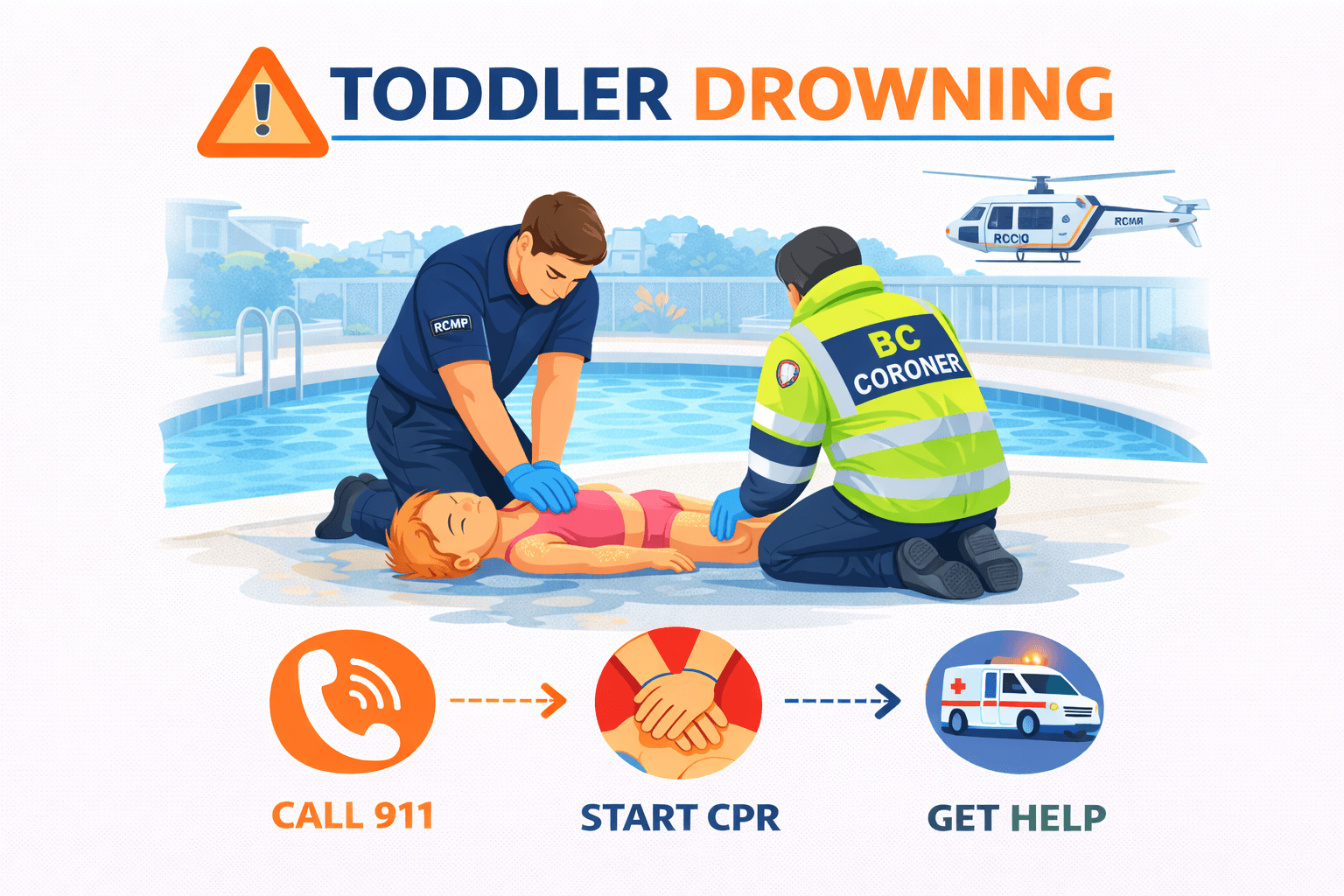
When a child is removed from the water and is unresponsive or not breathing normally, cardiopulmonary resuscitation (CPR) may be attempted while emergency medical services are on the way.
Across British Columbia, including Vancouver and surrounding communities, CPR and first aid training are widely taught through workplace safety programs and community courses. These programs help caregivers and community members understand how to respond during emergencies.
Child Safety Around Water
Residential pools and water features are common in many Canadian neighbourhoods. Because young children can wander unexpectedly, public safety organizations emphasize close supervision and secure barriers around pools.
Safety programs commonly recommend:
-
Constant adult supervision near water
-
Pool fencing with self-closing gates
-
Locked backyard access points
-
Learning CPR and first aid skills
-
Keeping rescue equipment accessible near pools
These precautions help reduce the risk of water-related emergencies involving children.
A Pool Emergency in Mission, British Columbia
A tragic incident in the Fraser Valley involved a toddler who went missing from a home daycare in Mission, British Columbia.
According to reports, the 23-month-old child was noticed missing by the daycare operator, who immediately called 911. Police were informed that the child had been unaccounted for for approximately ten minutes.
Officers responded quickly and began searching the surrounding residential neighbourhood. The search included police officers, trained police dogs, and an RCMP Air One helicopter.
During the search, the toddler was discovered unresponsive in a nearby backyard swimming pool.
Emergency responders immediately began providing assistance. Police officers used a portable automated external defibrillator and continued emergency care while waiting for paramedics to arrive.
The child was airlifted to Mission Memorial Hospital for treatment, but despite extensive medical efforts, she later died.
Both the RCMP and the BC Coroners Service began investigating the circumstances surrounding the incident.
Recognizing Signs of a Water Emergency
Children experiencing distress in water may show subtle warning signs, including:
-
Sudden silence or disappearance beneath the water surface
-
Weak or uncoordinated movements
-
Difficulty staying above water
-
Unresponsiveness after being removed from the water
Recognizing these signs quickly allows caregivers or bystanders to contact emergency services and begin assistance.
Why CPR May Be Used After Water Rescue
When a child rescued from water is unresponsive and not breathing normally, CPR may be performed while waiting for emergency responders.
CPR helps maintain circulation of oxygen-rich blood to the brain and vital organs during the critical early minutes of an emergency.
Emergency response organizations across Canada emphasize that early CPR and rapid emergency response can improve survival outcomes in certain drowning emergencies.
Prevention and Pool Safety Awareness
Families, childcare providers, and communities can reduce drowning risks by following several safety practices:
-
Supervising children closely around water
-
Installing secure fencing and locked pool gates
-
Teaching water safety as children grow older
-
Avoiding distractions while supervising swimmers
-
Learning CPR and first aid skills
Prepared caregivers may be better equipped to respond quickly during emergencies.
Frequently Asked Questions
Why are toddlers at higher risk around water?
Young children are naturally curious and may wander quickly toward water without recognizing potential danger.
When might CPR be used during a drowning incident?
CPR may be performed when a child rescued from the water is unresponsive and not breathing normally.
How quickly can drowning incidents happen?
Water emergencies can develop within minutes, especially with young children who may not be able to call for help.
Are backyard pools required to have safety barriers?
Many municipalities in Canada require fencing or barriers around residential pools to help prevent accidental access.
Where can people learn CPR in British Columbia?
CPR training is available through workplace safety providers, community organizations, and certified first aid training centres throughout British Columbia.
Educational Note
This article is intended for general first aid awareness and water safety education. Learning CPR and first aid can help individuals better understand how to respond during emergencies while waiting for trained emergency medical services.
About The Author

Mark Kascha
First Aid Instructor Trainer with 30+ years of experience in CPR, emergency response, and safety training across Canada.
Last reviewed: March 2026
 Support local, Canadian-owned businesses, with no connections to American corporations or partnerships.