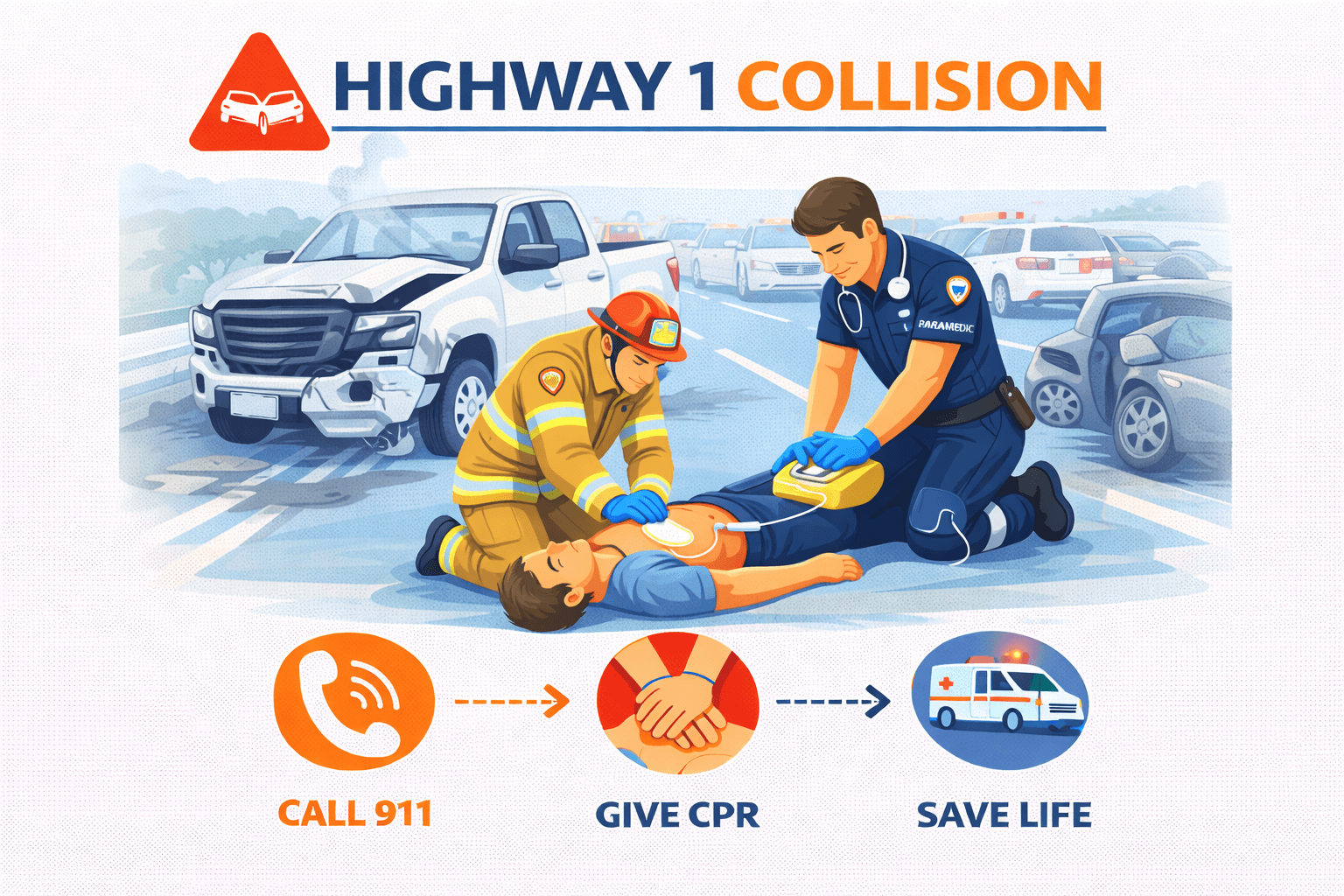
 Serious vehicle collisions can sometimes lead to medical emergencies where a person becomes unresponsive or stops breathing normally. In these situations, cardiopulmonary resuscitation (CPR) may be used while emergency responders provide medical assistance.
Across Burnaby and British Columbia, CPR and first aid training are widely included in workplace safety programs and community education courses. These programs help people recognize emergencies and understand how to respond until paramedics arrive.
During traffic collisions, trained first responders—including firefighters, paramedics, and police officers—may begin CPR if a person shows signs of cardiac arrest or loss of breathing.
Road Safety and Emergency Response in British Columbia
Major highways such as Highway 1 through Burnaby experience heavy traffic during peak commuting hours. When collisions occur in busy traffic conditions, emergency responders often need to manage both medical care and traffic safety.
Emergency response procedures typically include:
-
Securing the collision scene
-
Assessing injured individuals
-
Providing life-support measures such as CPR if needed
-
Transporting injured individuals to hospital
Quick coordination between emergency responders helps ensure that injured individuals receive immediate care.
Multi-Vehicle Collision During Rush Hour
A serious collision involving several vehicles caused major traffic delays along Highway 1 in Burnaby during the evening rush hour commute.
According to reports, a white pickup truck travelling westbound lost control and struck the centre median. The impact caused the vehicle to cross into the eastbound lanes of traffic.
Emergency crews quickly arrived at the scene to assist those involved.
First responders were seen providing medical assistance to the driver of the pickup truck. Reports from the scene indicated that CPR was performed before the driver was transported to hospital for further treatment.
Investigators continued to assess the scene to determine the cause of the crash.
Images from the area showed significant damage to a grey sedan involved in the collision. Another vehicle, described as a silver Toyota Corolla from the early 2000s, was later removed by a tow truck with visible damage to one of its wheels.
At the time of reporting, the extent of the truck driver’s injuries had not been confirmed, and authorities were still determining whether additional people had been injured.
Recognizing When CPR May Be Needed
During serious accidents, CPR may be performed if a person:
-
Is unconscious or unresponsive
-
Is not breathing normally
-
Shows no signs of circulation
Emergency services should always be contacted immediately when a medical emergency occurs.
Why CPR Can Be Important After a Collision
In some traumatic incidents, breathing or heart activity may stop due to injury or medical complications.
CPR helps maintain blood circulation and oxygen delivery to the brain and vital organs until advanced medical care becomes available.
Emergency response organizations across Canada emphasize that early CPR combined with rapid emergency response can improve survival outcomes in certain emergencies.
Prevention and Road Safety Awareness
Drivers can help reduce the risk of collisions by following common road safety practices:
-
Driving within posted speed limits
-
Remaining attentive and avoiding distractions
-
Adjusting driving behaviour during heavy traffic
-
Maintaining safe following distances
-
Ensuring vehicles are properly maintained
Learning CPR and first aid can also help individuals feel more prepared if they encounter emergencies on the road.
Frequently Asked Questions
What is cardiopulmonary resuscitation (CPR)?
CPR is a first aid technique used when a person becomes unresponsive and stops breathing normally. It helps maintain blood circulation until professional medical care arrives.
Can CPR be performed after a vehicle collision?
Yes. If someone involved in a collision is unresponsive and not breathing normally, CPR may be performed while waiting for emergency responders.
Who usually performs CPR at crash scenes?
CPR may be performed by trained bystanders, police officers, firefighters, paramedics, or workplace first aid attendants depending on who arrives first.
Why is early CPR important during emergencies?
Early CPR helps maintain oxygen circulation to the brain and vital organs during the first minutes of a medical emergency.
Where can people learn CPR in British Columbia?
CPR training programs are widely available through workplace safety providers, community organizations, and certified first aid training centres across British Columbia.
Educational Note
This article is intended for general first aid awareness and public safety education. Learning CPR and first aid can help individuals better understand how to respond during emergencies while waiting for trained emergency medical services.
About The Author

Mark Kascha
First Aid Instructor Trainer with 30+ years of experience in CPR, emergency response, and safety training across Canada.
Last reviewed: March 2026
 Support local, Canadian-owned businesses, with no connections to American corporations or partnerships.