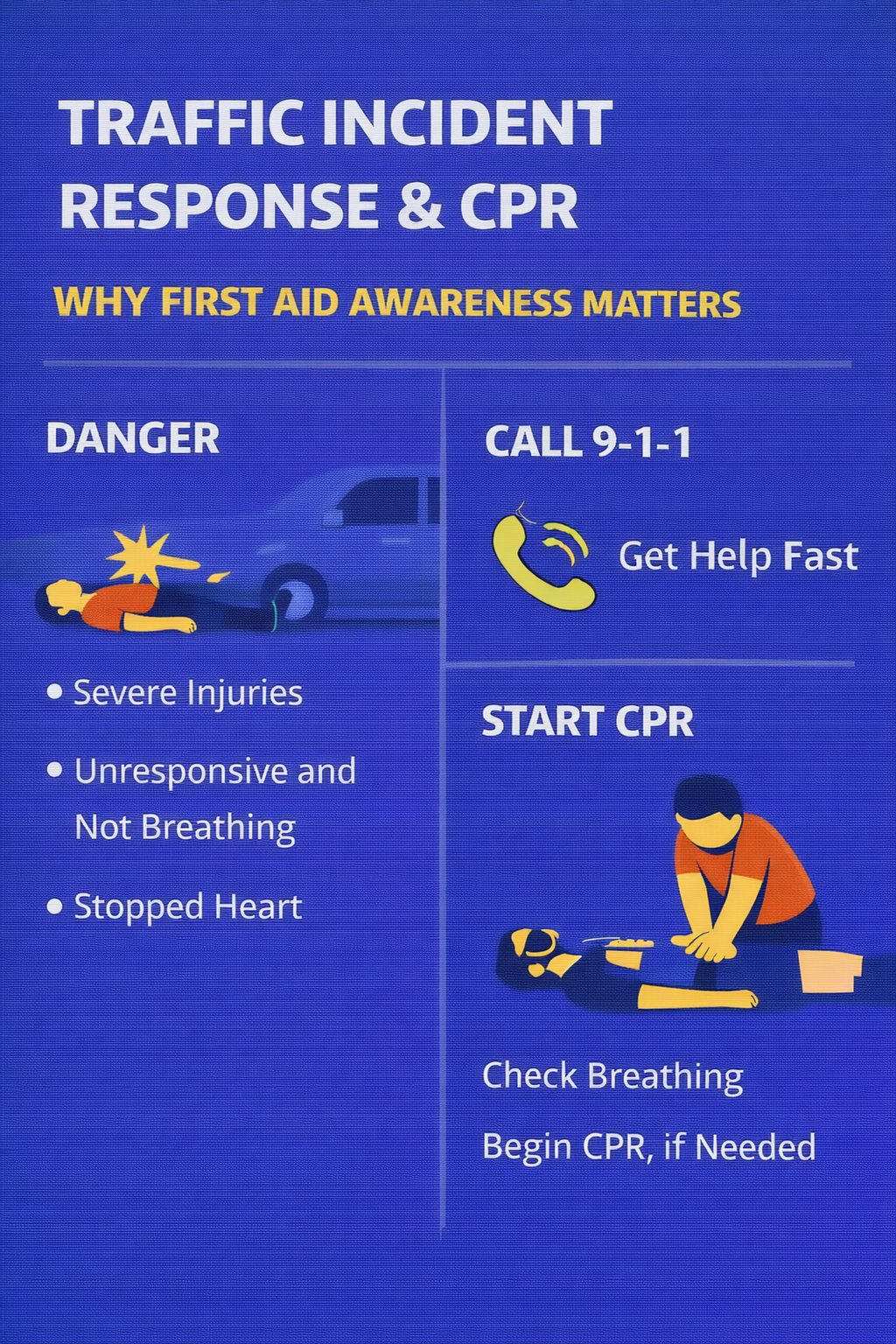
Traffic collisions can cause serious injuries that require immediate medical attention. When a person is struck by a vehicle, injuries may include severe trauma, bleeding, or loss of consciousness. In some cases, emergency responders may begin cardiopulmonary resuscitation (CPR) if the individual is not breathing normally or shows no signs of circulation.
Across Canada, including Vancouver and British Columbia, first aid and CPR training are often promoted through workplace safety programs and community education. These skills can help bystanders recognize emergencies and provide assistance until professional responders arrive.
Understanding how to respond safely during road incidents can be an important part of public safety awareness.
A Real-World Scenario
 A tragic incident occurred in the New Toronto neighbourhood of Toronto, Ontario, following a late-night hit-and-run collision.
Police were initially called to Garnett Janes Road near Ninth Street at approximately 11 p.m. after reports of possible gunshots in the area. When officers arrived, they discovered a 48-year-old man lying on the ground with serious injuries.
Investigators later determined that the man had been struck by a Dodge vehicle that left the scene.
Emergency responders transported the injured man to a nearby healthcare facility, but despite medical care he was later pronounced deceased. Family members later identified the victim as Joseph Stele.
Police continued their investigation into the incident. Early the following morning, authorities located the suspected vehicle near Sixth Street and Lake Shore Boulevard, where a 40-year-old man was taken into custody in connection with the fail-to-remain collision.
During the initial response, officers at the scene attempted life-saving measures including CPR, as the victim reportedly showed no vital signs when they arrived.
Authorities also investigated earlier reports of gunshots, though preliminary findings indicated that the victim had no gunshot wounds.
Incidents like this highlight the importance of emergency response training and how first responders and bystanders often act quickly to assist injured individuals.
Recognizing a Serious Traffic Injury
When someone is struck by a vehicle, certain signs may indicate a life-threatening emergency.
Possible warning signs include:
-
Unresponsiveness or inability to wake the person
-
Lack of normal breathing
-
Severe bleeding or visible injuries
-
Confusion or disorientation
-
Inability to move after the collision
If these signs are present, emergency services should be contacted immediately.
First Aid Awareness During Road Emergencies
First aid training teaches general steps that may help support injured individuals until paramedics arrive.
Typical response steps may include:
-
Call emergency services (9-1-1 in Canada).
-
Ensure the area is safe from traffic hazards before approaching.
-
Check responsiveness and breathing if it is safe to do so.
-
If the person is not breathing normally, CPR may be started by trained individuals.
-
Continue care until emergency responders arrive.
These actions can help support the injured person during the critical early moments of an emergency.
Prevention and Road Safety Awareness
Road safety awareness helps reduce the risk of serious collisions involving pedestrians.
Important safety considerations include:
-
Drivers remaining alert in residential areas
-
Following speed limits and traffic signals
-
Pedestrians using crosswalks when possible
-
Improved street lighting and visibility at night
-
Community awareness of road safety
Across Vancouver and British Columbia, road safety campaigns encourage both drivers and pedestrians to remain attentive and share responsibility for safe streets.
FAQ
What should someone do if they witness a hit-and-run collision?
Emergency services should be contacted immediately. If it is safe to do so, bystanders may provide basic first aid until responders arrive.
Why might CPR be performed after a traffic collision?
If a person stops breathing or becomes unresponsive after an accident, CPR may help maintain circulation until paramedics arrive.
Should bystanders approach injured people on busy roads?
Only if it is safe. Traffic hazards should be considered before approaching an injured person.
Why is first aid training encouraged for the public?
Training helps individuals recognize emergencies and understand safe response steps while waiting for professional responders.
Can bystanders help before paramedics arrive?
Yes. Calling emergency services quickly and providing basic first aid may help support injured individuals during the first moments after an incident.
Educational Note
This article is intended for general first aid awareness and public safety education. Learning CPR and first aid through certified training programs can help individuals recognize emergencies and respond safely until emergency services arrive.
About The Author

Mark Kascha
First Aid Instructor Trainer with 30+ years of experience in CPR, emergency response, and safety training across Canada.
Last reviewed: March 2026
 Support local, Canadian-owned businesses, with no connections to American corporations or partnerships.