
Understanding Rollover Accidents and Injury Risks
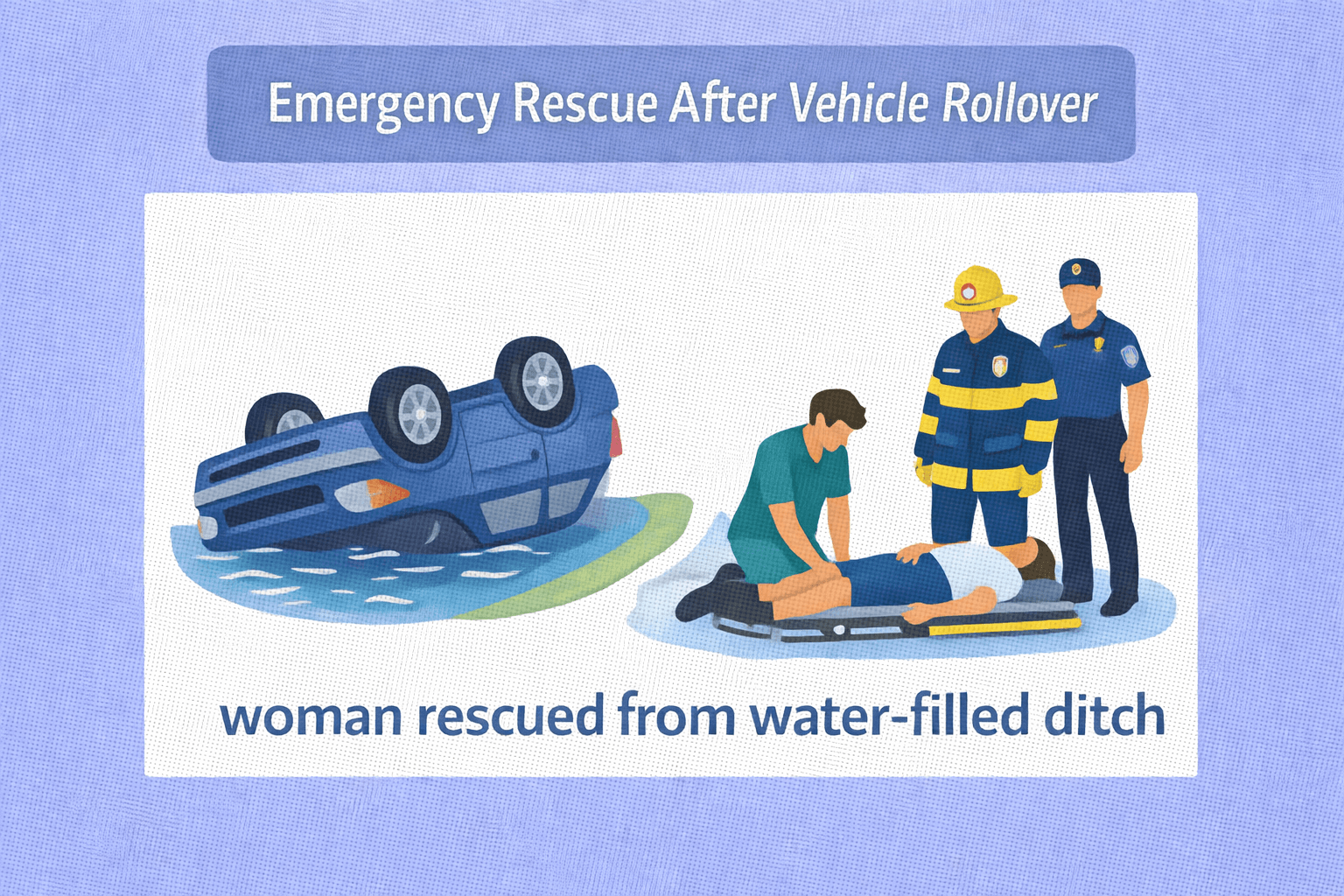 A vehicle rollover occurs when a car flips onto its side or roof, often resulting in injuries due to impact, entrapment, or environmental hazards such as water exposure. These incidents can vary in severity, but quick rescue and first aid care are important in stabilizing individuals before transport to a healthcare facility.
Even when injuries are not life-threatening, early care helps reduce complications.
First Aid & Workplace Relevance in Vancouver and the Lower Mainland
Across Mission, Abbotsford, Chilliwack, and the Lower Mainland, vehicle incidents can occur on highways, rural roads, and work-related travel routes. Workers who drive as part of their job, as well as bystanders, may be first on scene.
Understanding basic first aid, scene safety, and how to respond to vehicle incidents is an important part of workplace and public safety in British Columbia.
Real Incident Overview
Emergency personnel in Mission responded to a single-vehicle rollover east of Lougheed Highway and Nelson Street after witnesses reported a vehicle leaving the roadway.
An eastbound Subaru Legacy veered off the north side of the road and flipped into a ditch filled with water. The driver, a 56-year-old woman from Osoyoos, was trapped inside the vehicle.
Mission firefighters and paramedics arrived on scene and worked to safely extract the woman from the overturned vehicle. Once removed, she received immediate first aid care before being transported to a healthcare facility. Due to the nature of the incident, she was later airlifted to Royal Columbian Hospital.
Reports indicated that her injuries were non-life-threatening, and investigators noted that speed and alcohol were not considered contributing factors in the crash.
Signs and Symptoms of Injury After a Rollover
Individuals involved in rollover accidents may experience:
-
Cuts, bruises, or bleeding
-
Head, neck, or back pain
-
Dizziness or confusion
-
Difficulty moving
-
Signs of shock such as pale or clammy skin
Even if injuries appear minor, medical evaluation is important.
Common Causes of Rollover Accidents
Rollover incidents may occur due to:
-
Loss of vehicle control
-
Road conditions or hazards
-
Sudden steering movements
-
Vehicle imbalance or uneven terrain
Environmental factors, such as ditches or water, can increase risks during these incidents.
First Aid Response for Vehicle Incidents
If you come across a vehicle rollover:
-
Ensure scene safety (watch for traffic, hazards, or water risks)
-
Call 911 immediately
-
Do not move the person unless necessary for safety
-
Provide reassurance and keep them calm
-
Control any visible bleeding with direct pressure
-
Monitor breathing and responsiveness
If the person becomes unresponsive and is not breathing normally, CPR may be required.
Prevention and Workplace Safety Considerations
To reduce the risk of vehicle-related incidents:
-
Follow safe driving practices
-
Adjust driving for weather and road conditions
-
Maintain vehicles regularly
-
Use seatbelts at all times
-
Provide driver safety training in workplaces
Preparedness and awareness contribute to safer travel across British Columbia.
Frequently Asked Questions
What should I do first at the scene of a rollover accident?
Ensure your safety, call 911, and assess the situation before providing help.
Should I remove someone from a vehicle after a crash?
Only if there is an immediate danger, such as fire or water risk.
What injuries are common in rollover accidents?
Head, neck, and back injuries are common, along with cuts and bruises.
Why is it important to keep the person still?
Movement can worsen potential spinal injuries.
How can workplaces reduce driving-related risks?
By providing safety training and promoting safe driving practices.
Educational Note
This article is intended for general first aid awareness and workplace safety education in Canada. Learning first aid skills can help individuals respond more effectively during emergencies.
About The Author

Mark Kascha
First Aid Instructor Trainer with 30+ years of experience in CPR, emergency response, and safety training across Canada.
👉 [View full credentials]🔗 View LinkedIn Profile
Last reviewed: March 2026
 Support local, Canadian-owned businesses, with no connections to American corporations or partnerships.