 Motor vehicle collisions can result in severe injuries that require immediate medical attention. In some cases, individuals involved in crashes may become unresponsive or stop breathing normally due to trauma or medical complications.
Cardiopulmonary resuscitation (CPR) is a first aid technique used when a person becomes unresponsive and is not breathing normally. Across Vancouver and British Columbia, CPR training is widely taught in workplace first aid programs and community safety courses to help people respond during emergencies.
Quick intervention by emergency responders and trained bystanders can help support circulation until advanced medical care becomes available.
Emergency Response and Road Safety in British Columbia
Urban and suburban roads can experience serious collisions at any time of day. Emergency response teams—including police, firefighters, and paramedics—often work together to rescue occupants, stabilize injuries, and transport patients to hospital.
First aid and CPR training programs emphasize several key emergency actions:
-
Calling emergency services immediately
-
Checking responsiveness and breathing
-
Beginning CPR if breathing has stopped or is abnormal
-
Continuing care until paramedics arrive
These steps help ensure that people receive assistance as quickly as possible during critical moments.
A Serious Crash in Richmond, British Columbia
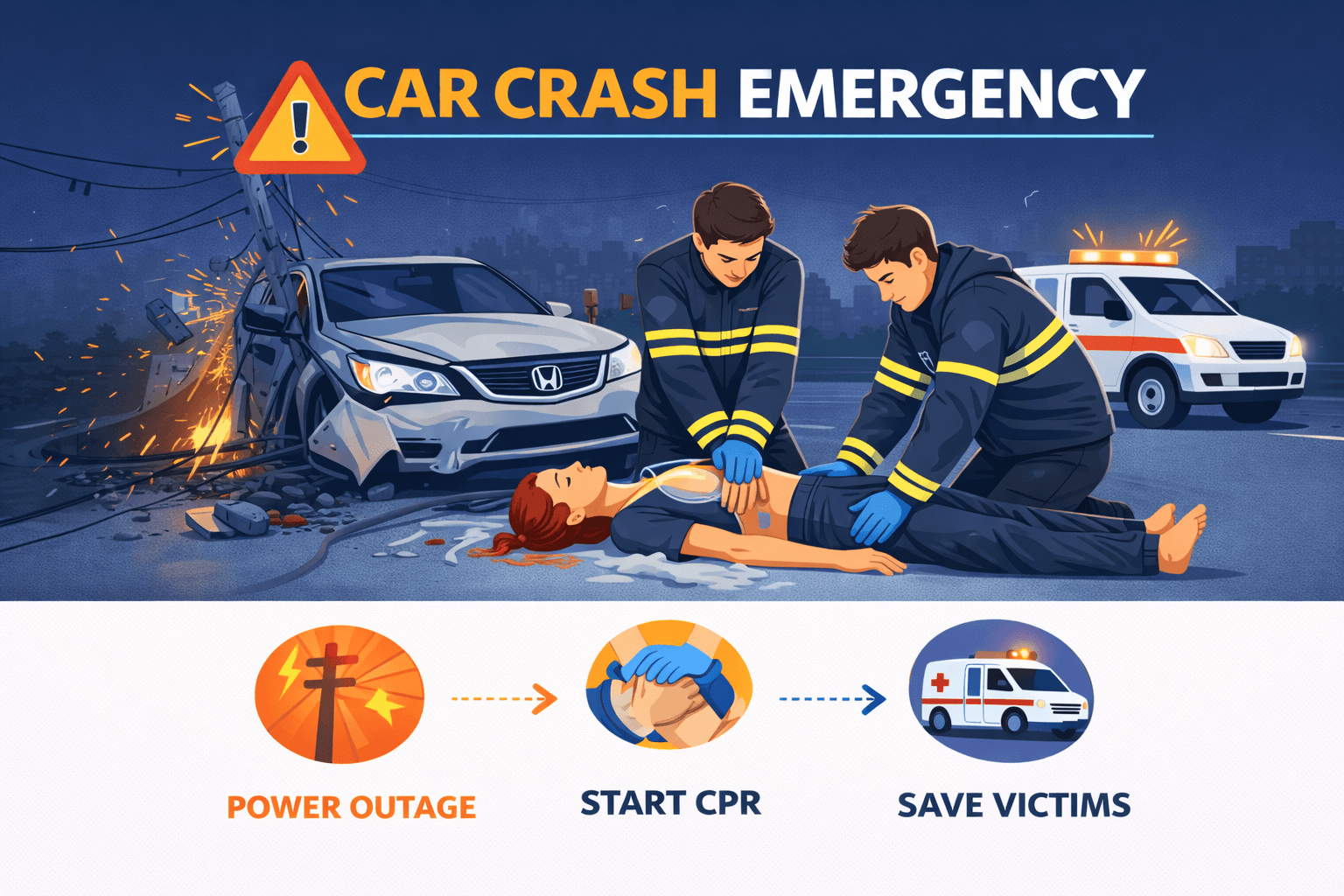
An early morning collision in Richmond, British Columbia resulted in two women being hospitalized after their vehicle struck a hydro pole.
According to Richmond RCMP, the crash occurred along No. 6 Road, where a Honda sedan collided with a utility pole. The impact damaged power lines and caused the vehicle to roll into a nearby ditch.
Emergency crews responded quickly to the scene. Because the car had overturned, firefighters needed to perform a technical rescue to safely extricate the occupants.
The driver, a 21-year-old woman from Surrey, suffered critical injuries. Paramedics began providing emergency medical care, including CPR, at the scene before transporting her to hospital.
The passenger, a 22-year-old woman, also sustained injuries that were described as serious but not life-threatening.
The collision also caused power disruptions that temporarily affected approximately 1,900 BC Hydro customers. Utility crews were able to restore power within a few hours.
Police investigators later stated that speed and alcohol may have been contributing factors, although the cause of the crash had not been fully confirmed.
Recognizing Situations Where CPR May Be Needed
Serious collisions can lead to medical emergencies where someone becomes unresponsive.
CPR may be used when a person:
-
Is unconscious
-
Is not breathing normally
-
Shows no signs of circulation
In these situations, emergency services should be contacted immediately while trained individuals provide assistance.
Why Early CPR Can Be Important
When breathing or circulation stops, oxygen flow to the brain and vital organs decreases quickly.
CPR helps maintain blood circulation during this critical period until advanced medical care becomes available.
Emergency response organizations across Canada emphasize that early CPR combined with rapid emergency medical response can improve survival outcomes in certain emergencies.
Prevention and Road Safety Awareness
Road safety education programs often encourage drivers to take steps that reduce the risk of collisions:
-
Avoid driving under the influence of alcohol or drugs
-
Follow posted speed limits
-
Stay attentive and avoid distractions while driving
-
Ensure vehicles are operated safely in all conditions
In addition, learning CPR and first aid skills can help individuals respond effectively if accidents occur.
Frequently Asked Questions
What is cardiopulmonary resuscitation (CPR)?
CPR is a first aid technique used when someone becomes unresponsive and stops breathing normally. It helps maintain circulation until professional medical care arrives.
Can CPR be used after a car crash?
Yes. If someone involved in a collision is unresponsive and not breathing normally, CPR may be performed while waiting for emergency responders.
Who usually provides CPR at accident scenes?
CPR may be provided by trained bystanders, police officers, firefighters, paramedics, or workplace first aid attendants depending on who arrives first.
Why is CPR important during emergencies?
CPR helps keep oxygenated blood circulating to the brain and vital organs while waiting for advanced medical care.
Where can people learn CPR in British Columbia?
CPR training is widely available through workplace safety programs, community organizations, and certified first aid training providers across British Columbia.
Educational Note
This article is intended for general first aid awareness and public safety education. Learning CPR and first aid can help individuals better understand how to respond during emergencies while waiting for trained emergency medical services.
About The Author

Mark Kascha
First Aid Instructor Trainer with 30+ years of experience in CPR, emergency response, and safety training across Canada.
Last reviewed: March 2026
 Support local, Canadian-owned businesses, with no connections to American corporations or partnerships.