 Outdoor recreation such as rafting, kayaking, and boating is popular across Canada. Rivers and waterways provide opportunities for adventure, but they also present risks when conditions change or accidents occur.
When someone is pulled underwater or unable to breathe, immediate rescue and emergency response become critical. Cardiopulmonary resuscitation (CPR) may be used by trained responders when a person is unresponsive and not breathing normally.
In communities throughout Canada, including Vancouver and across British Columbia, first aid training and water safety awareness are important components of workplace safety programs, particularly in industries related to tourism, recreation, and outdoor operations.
First Aid and Workplace Relevance in Canada
Many Canadian workplaces operate near rivers, lakes, and coastal environments. Outdoor guides, camp staff, and tourism operators often receive first aid and CPR training to prepare for water-related emergencies.
Quick response by bystanders or trained personnel can help support breathing and circulation until emergency medical services arrive. In remote or outdoor locations, these early actions can play a critical role while responders travel to the scene.
Water safety planning—including proper equipment, supervision, and emergency response knowledge—is an important part of risk management for both recreation and workplace activities.
A Realistic Scenario from the Miramichi River
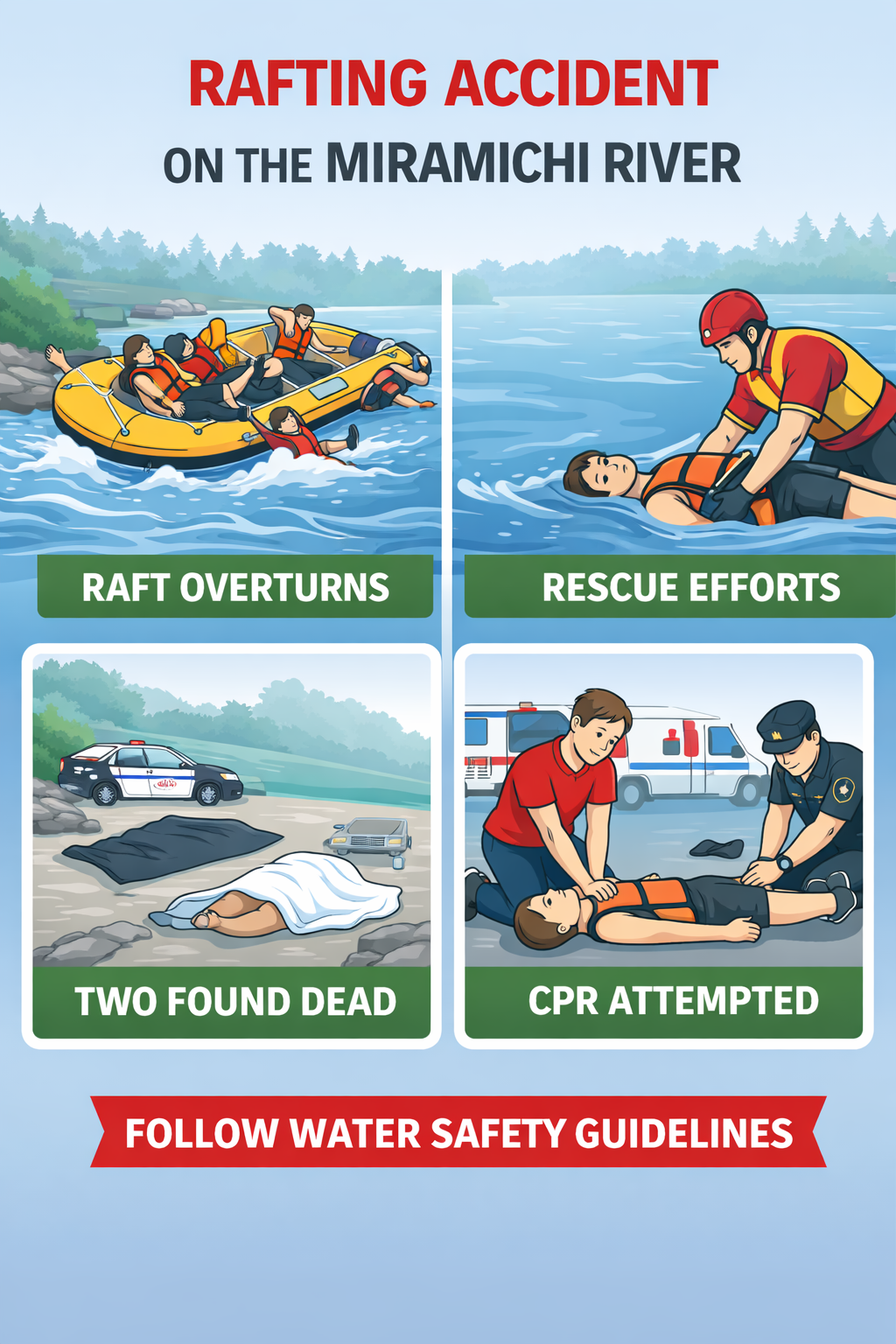
A tragic rafting accident occurred on New Brunswick’s Miramichi River when a group of eight friends were travelling together near Gray Rapids.
According to reports from the Royal Canadian Mounted Police (RCMP), the raft overturned while the group was on the river. Six members of the group were able to make it safely back to shore on their own.
Emergency responders were called to the scene after two individuals remained missing in the water.
First responders later located a 29-year-old woman from White Rapids and pulled her from the river. CPR was administered at the scene before she was transported to a healthcare facility. Despite these efforts, she was later declared deceased.
Shortly afterward, responders also recovered the body of a 55-year-old man from the same community.
Authorities reported that foul play was not suspected. Investigators noted that river conditions did not appear unusually fast at the time, but officials continued examining possible factors that may have contributed to the raft overturning.
Although incidents like this are uncommon, they highlight the importance of water safety awareness and emergency preparedness during recreational river activities.
Signs of a Water Emergency
Recognizing when someone may be experiencing a water-related emergency can help bystanders respond quickly.
Possible warning signs include:
-
Difficulty staying above water
-
Unresponsiveness after being pulled from the water
-
No normal breathing
-
Gasping or irregular breathing
-
Blue or pale skin tone
-
Loss of consciousness
When these signs appear, emergency services should be contacted immediately.
Causes of Rafting Accidents
Rafting accidents can occur for a variety of reasons, even when conditions appear calm.
Possible contributing factors may include:
-
Sudden changes in water currents
-
Hidden rocks or obstacles below the surface
-
Loss of balance within the raft
-
Uneven weight distribution
-
Limited experience with river conditions
-
Inadequate safety equipment
While many rafting trips occur safely, awareness of river hazards and proper preparation can help reduce risks.
First Aid Response and Immediate Management
When someone is pulled from the water and appears unresponsive, trained responders may begin emergency care while waiting for paramedics.
General first aid response actions may include:
-
Call emergency services immediately.
-
Remove the person from the water if it is safe to do so.
-
Check responsiveness and breathing.
-
Begin CPR if the person is unresponsive and not breathing normally.
-
Continue care until professional responders arrive.
These steps help maintain circulation and oxygen flow to vital organs during critical moments before advanced medical support becomes available.
Prevention and Water Safety Considerations
Many water-related accidents can be reduced through preparation and safety awareness.
Important safety measures may include:
-
Wearing approved personal flotation devices (life jackets)
-
Following safety guidance from experienced guides
-
Understanding local river conditions and hazards
-
Avoiding overcrowding or imbalance in small watercraft
-
Participating in first aid and CPR training
Organizations and workplaces that operate near water often incorporate these practices into safety training programs.
Frequently Asked Questions
Why is CPR used after someone is rescued from water?
If a person is unresponsive and not breathing normally after being removed from the water, CPR may help maintain circulation and oxygen flow until emergency medical personnel arrive.
Are rafting accidents common?
Most rafting activities occur safely when proper equipment, supervision, and training are used. However, rivers can present unpredictable conditions that increase the risk of accidents.
Why are life jackets important during river activities?
Personal flotation devices help keep individuals afloat if they fall into the water, which can improve survival chances while rescue assistance arrives.
How can outdoor workplaces prepare for water emergencies?
Organizations operating near water often provide staff training in first aid, CPR, and water safety procedures while ensuring proper safety equipment is available.
What should someone do if they witness a water emergency?
The safest action is to call emergency services immediately and assist only if it can be done without putting additional people at risk.
Educational Note
This article is provided for general first aid awareness and public education. Learning CPR and basic water safety practices can help individuals respond more confidently during emergencies while waiting for professional responders.
About The Author

Mark Kascha
First Aid Instructor Trainer with 30+ years of experience in CPR, emergency response, and safety training across Canada.
Last reviewed: March 2026
 Support local, Canadian-owned businesses, with no connections to American corporations or partnerships.