
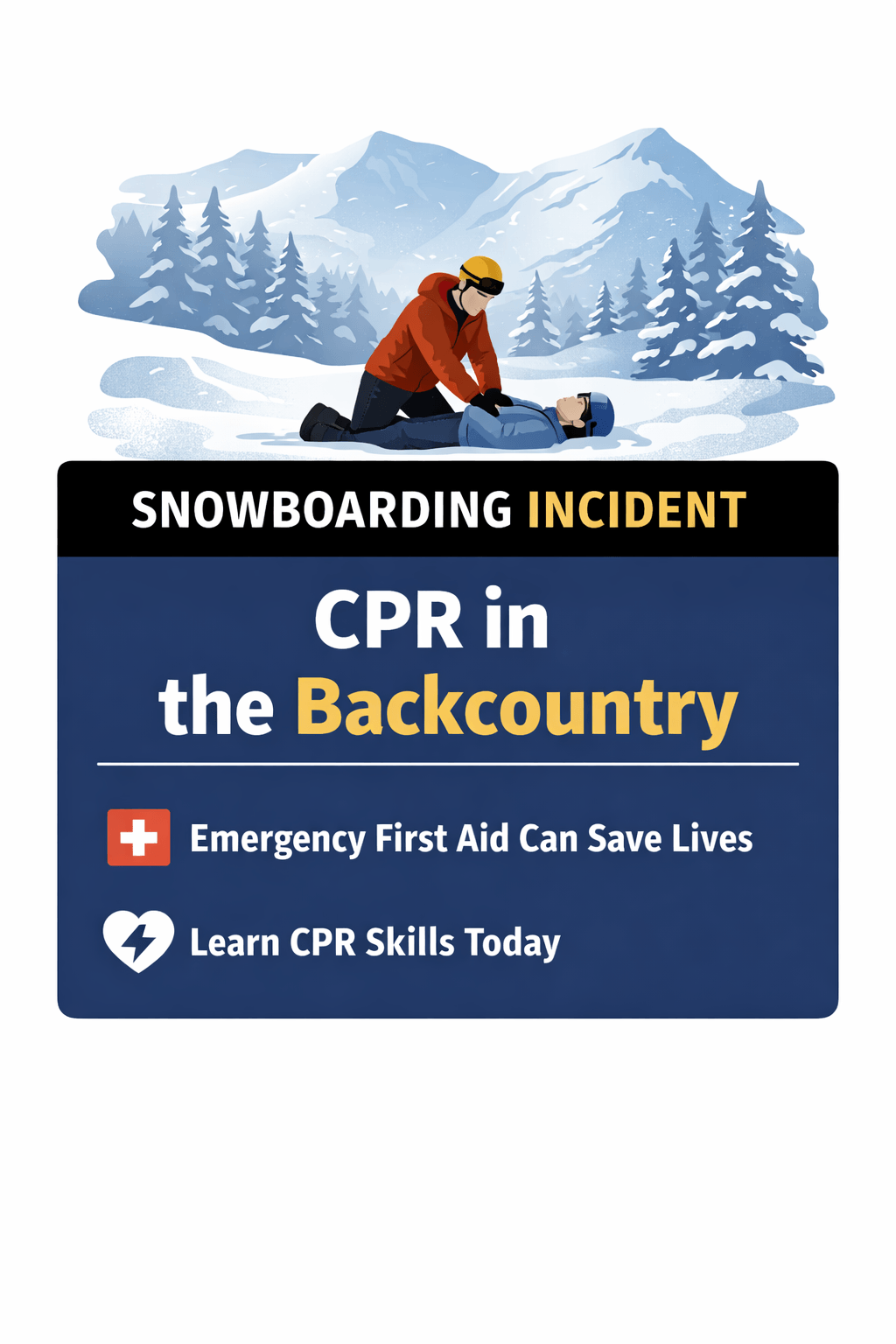
 Backcountry skiing and snowboarding take place in remote mountain areas where natural terrain and deep snow create unique risks. While these activities are popular throughout British Columbia’s mountain regions, including the Selkirk Mountains and Kootenays, accidents can still occur even for experienced outdoor enthusiasts.
When an injury or emergency happens in remote locations, immediate first aid and CPR may be necessary while waiting for rescue teams or medical transport. Because access to medical facilities may take time, first aid knowledge is an important part of outdoor safety.
Outdoor First Aid Awareness in British Columbia
British Columbia is known worldwide for activities such as cat-skiing, backcountry snowboarding, and alpine touring. These adventures often take place far from urban centres such as Vancouver or Kelowna.
Guides, instructors, and many outdoor recreation professionals receive CPR and wilderness first aid training so they can respond quickly if someone becomes injured or unresponsive during an expedition.
Learning CPR and emergency response skills can help outdoor participants support each other until professional rescue teams arrive.
Scenario: Snowboarding Incident in the Selkirk Mountains
A tragic incident during a cat-skiing expedition near Retallack Lodge in southeastern British Columbia highlighted the importance of emergency preparedness in remote mountain environments.
The group of skiers and snowboarders was descending a backcountry run in the Selkirk Mountains when they realized one member of the group was missing.
Using an avalanche transceiver, the guide searched for the missing snowboarder and located the individual buried head-first in deep snow. The woman, a 32-year-old resident of the Kootenays region, was described as an experienced snowboarder.
Guides and members of the group worked quickly to bring her down the mountain while providing emergency assistance. During the rescue effort, cardiopulmonary resuscitation (CPR) was performed while they transported her toward medical care in the nearby community of Kaslo.
Despite continued resuscitation efforts, the woman later died after reaching the healthcare facility.
Authorities, including the RCMP and the BC Coroners Service, later reviewed the circumstances surrounding the accident. Early information suggested the snowboarder may have fallen while travelling through deep fresh snow on a remote slope.
The incident highlights how mountain environments can present unpredictable hazards, even for skilled participants.
What Is Cat-Skiing?
Cat-skiing is a form of backcountry skiing that uses snowcat grooming machines to transport groups into high alpine terrain. The practice became widely popular in British Columbia several decades ago and is now offered in many mountain regions across the province.
Unlike traditional ski resorts, cat-skiing takes place in remote terrain where emergency response times may be longer. For this reason, safety procedures and trained guides are an important part of these excursions.
Recognizing When CPR May Be Needed in Outdoor Emergencies
In wilderness or mountain environments, CPR may be required if someone becomes unresponsive and stops breathing normally. Warning signs may include:
-
Lack of responsiveness
-
No visible breathing or only gasping breaths
-
Sudden collapse after a fall or injury
-
Pale or bluish skin tone
-
Weak or absent pulse
When these signs occur, emergency medical help should be contacted immediately while trained responders begin CPR if appropriate.
How CPR Helps During Critical Emergencies
CPR helps support the body when the heart stops beating effectively. The technique works by:
-
Providing chest compressions that help circulate blood
-
Helping oxygen reach the brain and vital organs
-
Supporting the body until advanced medical care is available
-
Maintaining circulation during cardiac arrest
In remote locations, CPR can provide important support during the time it takes for rescue teams to arrive.
Safety Considerations for Backcountry Recreation
Outdoor adventures in mountainous terrain require preparation and awareness. Helpful safety practices include:
-
Travelling with trained guides or experienced partners
-
Carrying safety equipment such as avalanche transceivers
-
Checking weather and snow conditions before trips
-
Maintaining communication devices for emergencies
-
Learning first aid and CPR skills
Preparation and training help reduce risk during activities in remote alpine environments.
Frequently Asked Questions
What is CPR and when is it used?
CPR is an emergency technique used when a person stops breathing normally or when the heart stops beating effectively.
Why is CPR important in remote outdoor locations?
In remote areas, medical help may take longer to arrive. CPR can help maintain circulation and oxygen delivery during that time.
Do mountain guides receive first aid training?
Many professional guides receive CPR and wilderness first aid training so they can assist participants during emergencies in remote environments.
What safety equipment is commonly used during backcountry trips?
Common equipment may include avalanche transceivers, communication devices, safety gear, and navigation tools.
Should recreational skiers and snowboarders learn CPR?
Many outdoor organizations encourage participants to learn CPR and first aid because emergencies can occur in remote mountain settings.
Educational Note
This article is intended for general public education about CPR awareness and outdoor safety. Participating in recognized first aid and CPR training can help individuals feel more prepared to respond during emergencies in recreational or wilderness environments.
About The Author

Mark Kascha
First Aid Instructor Trainer with 30+ years of experience in CPR, emergency response, and safety training across Canada.
👉 [View full credentials]🔗 View LinkedIn Profile
Last reviewed: March 2026