 Workplace incidents can happen unexpectedly, especially in outdoor environments where equipment, terrain, and nearby hazards such as water are involved. When a person becomes trapped or submerged, the situation can quickly turn into a life-threatening emergency.
Across Surrey, Vancouver, Burnaby, and the Lower Mainland of British Columbia, many workers perform duties in parks, public spaces, and landscaping environments. These settings may include ponds, slopes, and machinery, making first aid awareness and CPR training essential for workplace safety.
First Aid Training in British Columbia Workplaces
Workplaces in British Columbia are often required to have trained first aid attendants who can respond to injuries and emergencies on-site. These individuals are trained to provide care such as:
-
Recognizing life-threatening situations
-
Performing CPR
-
Assisting with breathing emergencies
-
Supporting injured workers until paramedics arrive
Having trained personnel on-site can help improve response times during critical incidents.
Scenario: Emergency at Glenwood Park in Surrey
A workplace incident at Glenwood Park in Surrey, British Columbia, highlighted the importance of quick action during emergencies.
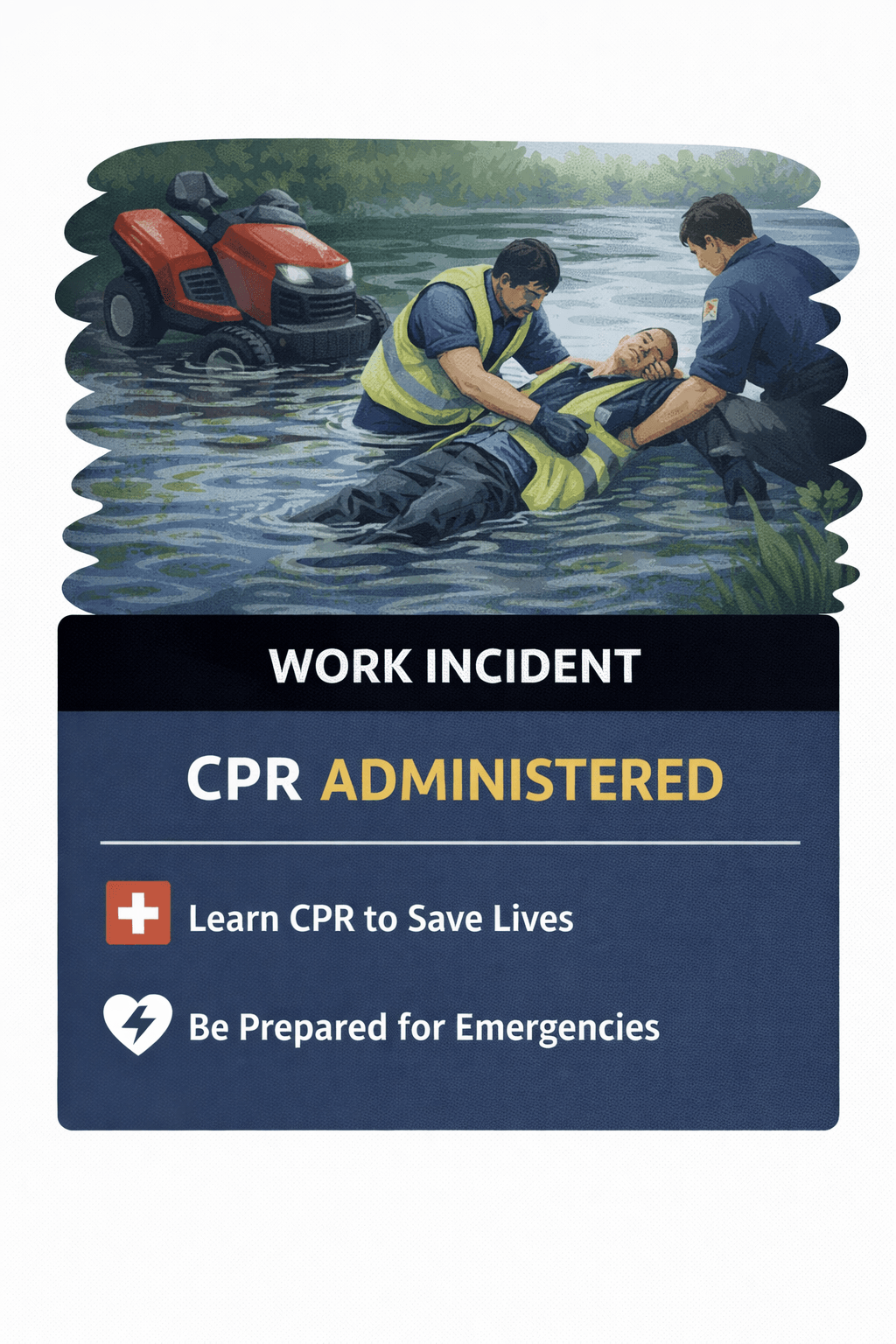
According to reports, a city worker was operating a riding lawn mower while performing routine maintenance in the park. At some point, the mower entered a nearby pond, and the worker became trapped underneath the equipment in the water.
It was unclear how the incident occurred or how long the worker remained submerged.
A coworker and a nearby bystander quickly responded to the situation. Working together, they managed to lift the mower and free the trapped worker from the water.
Once the individual was pulled to safety, they were found to be unresponsive. The rescuers immediately began cardiopulmonary resuscitation (CPR) while emergency services were contacted.
Paramedics arrived shortly afterward and continued providing advanced care. The worker was transported to a healthcare facility in critical condition.
The incident demonstrates how quick thinking and immediate first aid can play an important role during workplace emergencies.
Recognizing When CPR May Be Needed
CPR may be required when a person becomes unresponsive and stops breathing normally. Warning signs can include:
-
Unconsciousness
-
No visible breathing or only gasping
-
No detectable pulse
-
Pale or bluish skin
-
Sudden collapse after an incident
When these signs are present, emergency services should be contacted immediately and CPR may be started by trained responders.
How CPR Helps During Critical Emergencies
When breathing stops or the heart is not pumping effectively, oxygen cannot reach vital organs. CPR helps by:
-
Providing chest compressions to circulate blood
-
Supporting oxygen delivery to the brain and body
-
Maintaining circulation until advanced care arrives
-
Helping improve survival chances during cardiac arrest
Early CPR is a key part of the chain of survival in emergency situations.
First Aid Response in Workplace Incidents
Individuals trained in first aid may assist during workplace emergencies by:
-
Calling emergency services immediately
-
Ensuring the scene is safe before approaching
-
Removing the person from danger if it is safe to do so
-
Checking for responsiveness and breathing
-
Beginning CPR if the person is unresponsive and not breathing normally
-
Continuing care until paramedics arrive
Following proper procedures helps ensure both the rescuer and the injured person remain as safe as possible.
Workplace Safety and Prevention
While not all incidents can be prevented, safety awareness can help reduce risks. Important considerations include:
-
Conducting regular equipment safety checks
-
Using machinery carefully near water or uneven terrain
-
Providing first aid and CPR training for staff
-
Ensuring clear communication among team members
-
Identifying potential hazards in outdoor work environments
Prepared workplaces contribute to safer outcomes when emergencies occur.
Frequently Asked Questions
Why is CPR important in workplace emergencies?
CPR helps maintain circulation and oxygen flow when a person stops breathing or their heart stops, supporting them until medical help arrives.
Can coworkers provide first aid during emergencies?
Yes. Trained coworkers can assist by calling emergency services and providing first aid while waiting for paramedics.
What should someone do if a person is found unconscious?
Emergency services should be contacted immediately. A trained individual may begin CPR if the person is not breathing normally.
Why are outdoor workplaces higher risk?
Outdoor environments may include hazards such as water, machinery, uneven ground, and changing weather conditions.
Should employers provide first aid training?
Many workplaces in British Columbia encourage or require first aid training so employees can respond to emergencies effectively.
Educational Note
This article is intended for general public education about first aid awareness and workplace safety. Participating in recognized first aid and CPR training can help individuals feel more prepared to respond during emergencies.
About The Author

Mark Kascha
First Aid Instructor Trainer with 30+ years of experience in CPR, emergency response, and safety training across Canada.
Last reviewed: March 2026
 Support local, Canadian-owned businesses, with no connections to American corporations or partnerships.