
 Water activities such as kayaking are popular across Vancouver and the Lower Mainland, especially on scenic rivers like the Vedder River in Chilliwack. While these activities can be enjoyable and physically rewarding, moving water environments also carry risks. Changing currents, cold water, submerged obstacles, and sudden weather shifts can create hazardous conditions even for experienced paddlers.
For people living and working in British Columbia, understanding basic water safety and first aid awareness can help communities respond more effectively when accidents occur.
First Aid and Workplace Safety Relevance in Vancouver and British Columbia
Outdoor recreation is a significant part of life in Vancouver and surrounding communities, and many workplaces in British Columbia—including outdoor tourism, parks services, environmental work, and construction near waterways—require employees to be aware of basic first aid and emergency response procedures.
Training programs such as first aid, CPR, and workplace safety education often emphasize recognizing emergencies, contacting emergency services quickly, and providing initial assistance until trained responders arrive. Knowledge of water-related risks is particularly relevant in regions where rivers, lakes, and coastal environments are frequently used for recreation and work.
Scenario: A Kayaking Incident on the Vedder River
In a reported incident near Yarrow, close to Lickman Road and the Keith Wilson Bridge, emergency responders were called after reports of an overturned kayak on the Vedder River. According to information from local authorities, a 30-year-old woman from Vancouver had been involved in a kayaking incident.
Police and first responders arrived at the scene and located the individual in the water. Emergency personnel provided first aid measures while awaiting further medical assistance. Despite these efforts, the woman later died from injuries related to the incident.
The B.C. Coroners Service began an investigation to better understand the circumstances surrounding the event. Investigations following outdoor accidents help authorities identify potential contributing factors and provide safety recommendations to help prevent similar incidents in the future.
Possible Symptoms and Warning Signs in Water Emergencies
Water incidents can involve several medical concerns, including drowning, cold-water shock, or trauma from collisions with rocks or submerged objects. Signs that someone may be in distress in the water can include:
-
Difficulty staying afloat or maintaining balance in a vessel
-
Sudden silence or inability to call for help
-
Uncontrolled gasping or rapid breathing after falling into cold water
-
Disorientation or confusion
-
Weak or uncoordinated movements while attempting to swim
-
Lack of responsiveness once removed from the water
Recognizing these warning signs early can help bystanders alert emergency services more quickly.
Causes and Environmental Factors
Kayaking incidents on rivers can occur for a variety of reasons. The Vedder River, like many waterways in British Columbia, can change conditions quickly depending on rainfall, snowmelt, and seasonal water levels.
Common contributing factors in river accidents may include:
-
Fast-moving currents or sudden changes in water flow
-
Submerged debris, rocks, or log jams
-
Cold water temperatures that affect breathing and muscle control
-
Loss of balance or equipment failure
-
Limited visibility of hazards around bends or bridges
-
Lack of protective equipment such as flotation devices
Even experienced paddlers may encounter unexpected challenges when river conditions change.
First Aid Awareness During Water Emergencies
When a water incident occurs, the immediate priority is personal safety and contacting emergency services. Attempting rescues without proper training can place additional people at risk.
General first aid awareness may include:
-
Calling emergency services as soon as a water emergency is identified
-
Avoiding entering fast-moving water unless trained in water rescue techniques
-
Using reach or throw methods, such as extending a paddle, rope, or flotation device if safe to do so
-
Assisting responders by providing information about what happened and when the person entered the water
-
Monitoring the individual once removed from the water until professional medical care arrives
First aid training programs commonly teach how to recognize life-threatening emergencies and provide basic assistance while waiting for emergency responders.
Prevention and Safety Considerations for Kayaking
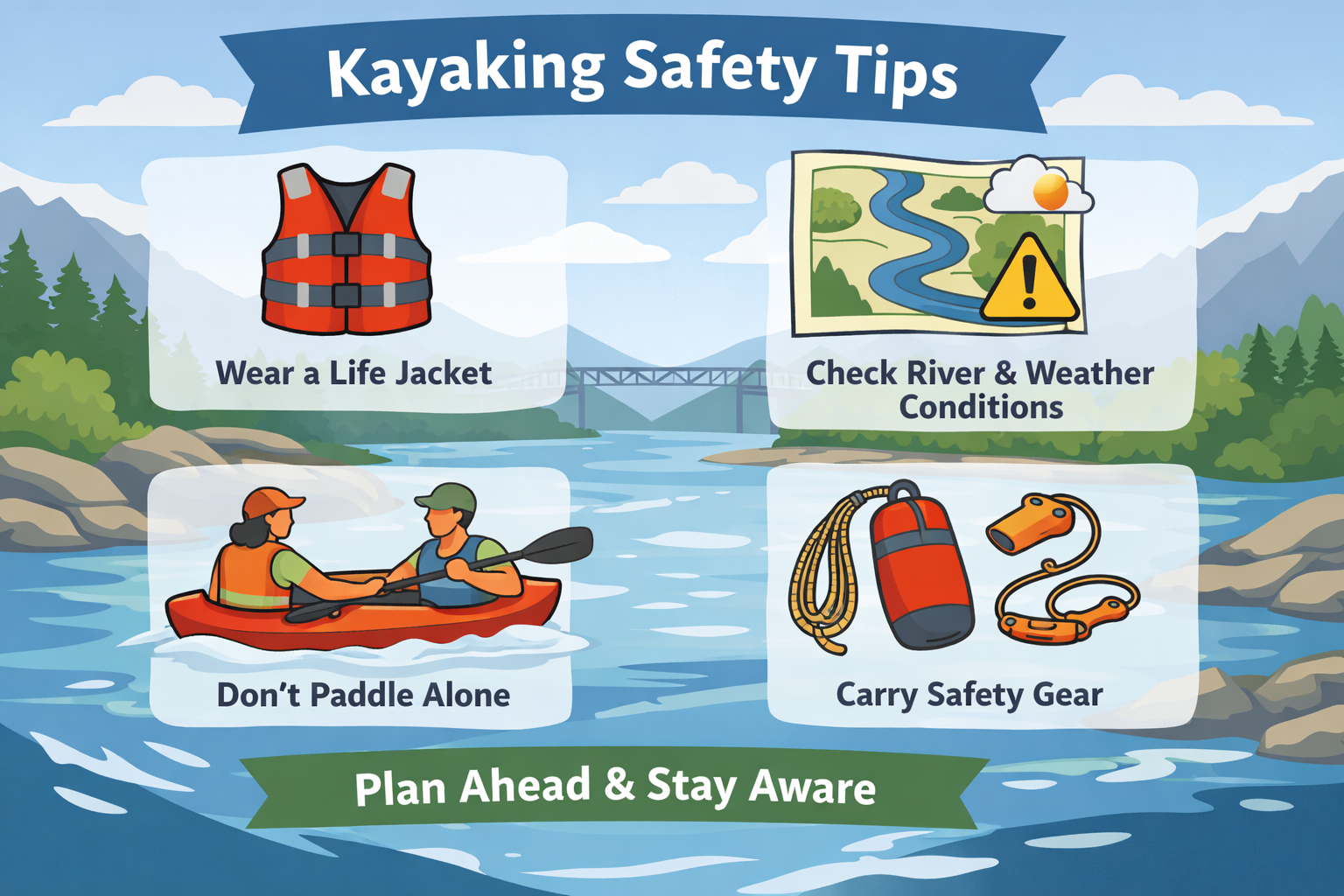
Many water incidents can be reduced through planning and awareness. Safety practices commonly recommended for kayaking and similar activities include:
-
Wearing an approved personal flotation device (PFD)
-
Checking river flow levels and weather conditions before entering the water
-
Avoiding paddling alone when possible
-
Informing someone of your planned route and expected return time
-
Carrying safety equipment such as whistles or throw ropes
-
Understanding the skill level required for specific river sections
In workplace environments near rivers or coastal areas, employers may also incorporate safety training that includes hazard recognition, emergency communication procedures, and first aid preparedness.
Frequently Asked Questions
Why can river kayaking be dangerous even for experienced paddlers?
Rivers can change rapidly due to weather, water releases, or seasonal runoff. Strong currents, submerged obstacles, and cold water temperatures can create hazards that are difficult to anticipate.
What is cold-water shock and why is it important?
Cold-water shock occurs when sudden immersion in cold water triggers rapid breathing and loss of breath control. This response can make it difficult for a person to keep their airway above water or swim effectively.
Why is wearing a life jacket important during kayaking?
Personal flotation devices help keep a person afloat if they fall into the water. This can reduce the risk of exhaustion and provide valuable time for rescue or self-recovery.
How can bystanders help during a water emergency?
Bystanders can assist by calling emergency services immediately, directing responders to the location, and using safe reach-or-throw rescue methods if they have the proper equipment and training.
Why are water safety and first aid training useful in British Columbia?
Many communities in British Columbia are located near rivers, lakes, or coastal environments. First aid education helps individuals recognize emergencies and respond safely until professional help arrives.
Educational Note
This article is intended for general first aid awareness and public safety education. Water emergencies can involve complex risks, and trained emergency responders are equipped to manage these situations. Learning first aid and water safety principles can help communities respond more effectively when unexpected incidents occur.
About The Author

Mark Kascha
First Aid Instructor Trainer with 30+ years of experience in CPR, emergency response, and safety training across Canada.
👉 [View full credentials]🔗 View LinkedIn Profile
Last reviewed: March 2026