
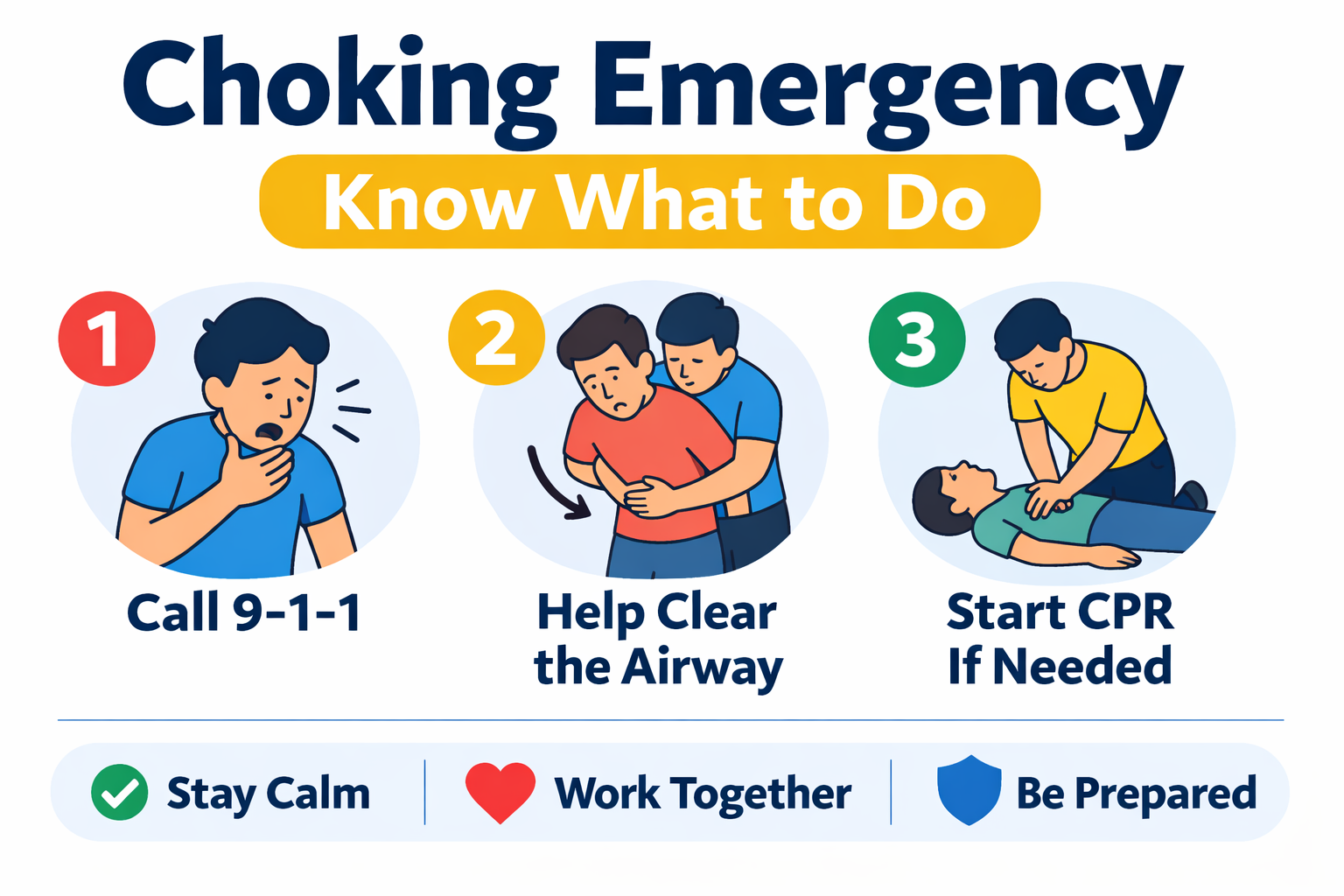
 Choking occurs when food or another object blocks the airway and prevents normal breathing. When this happens, oxygen cannot move properly into the lungs, which can quickly become a serious medical emergency if the obstruction is not cleared.
Across Canada, including Vancouver and British Columbia, choking response techniques are commonly taught in first aid and CPR courses. These programs help individuals recognize the warning signs of airway obstruction and respond quickly while emergency services are contacted.
Because choking can happen during everyday activities such as eating, first aid knowledge is valuable in homes, workplaces, schools, and care settings.
First Aid and Workplace Safety Relevance in Vancouver and British Columbia
Many workplaces throughout Vancouver and British Columbia encourage staff to complete first aid and CPR training, particularly in environments where employees work with the public, children, or individuals who may require additional support.
Training programs commonly cover:
-
Recognizing choking emergencies
-
Performing abdominal thrusts (commonly known as the Heimlich manoeuvre)
-
CPR and rescue breathing
-
Coordinating emergency response and contacting 911
These skills are useful not only in workplaces but also at home, during community events, and in caregiving environments.
A Family Response to a Choking Emergency
A family from Dover, United Kingdom, received recognition after working together to help a man who experienced a severe choking emergency.
Tony Keats provides home support for a man with autism. One day during lunch, Tony noticed the man becoming distressed while eating peanut butter on bread. He realized that a large amount of food remained in the man’s mouth, and the individual appeared unable to clear it.
According to reports of the incident, the man sometimes had difficulty chewing food thoroughly, which may have contributed to the situation.
Tony attempted to help remove some of the food and then tried abdominal thrusts in an effort to clear the airway. Despite these efforts, the obstruction remained and the man eventually became unresponsive.
At that moment, other members of the Keats family who were at home quickly joined the response.
Working Together During an Emergency
Tony’s son Cole and daughter Toni were nearby when the emergency occurred. The family immediately began working together while contacting emergency services.
Each family member took on a role:
-
One family member called emergency services and spoke with the dispatcher
-
Tony began chest compressions
-
His son assisted by providing rescue breaths
-
His daughter helped guide the response and support communication
Through coordinated action and the use of their first aid and CPR training, the family continued providing assistance until emergency responders arrived.
The man survived the incident, and the family later reflected on how their training helped them remain calm and respond quickly.
Signs of a Choking Emergency
A person experiencing severe choking may show several warning signs, including:
-
Difficulty breathing or speaking
-
Clutching the throat
-
Silent coughing or inability to cough effectively
-
Blue or pale lips and skin
-
Panic or distress
If the airway becomes completely blocked, the person may lose consciousness.
Recognizing these signs quickly is important so that first aid responders can begin appropriate actions while emergency services are contacted.
General First Aid Awareness for Choking
First aid training programs commonly teach several general steps for responding to choking:
-
Encourage the person to cough if they are able
-
Call emergency services if the obstruction is severe
-
Use abdominal thrusts to attempt to clear the airway if trained
-
If the person becomes unresponsive, begin CPR while waiting for help
These techniques are taught in first aid courses to help restore airflow and support the person until professional medical assistance arrives.
Prevention and Workplace Considerations
Choking incidents can occur in many environments, including homes, workplaces, schools, and care facilities. Several preventative steps may reduce risk:
-
Encouraging people to eat slowly and chew food thoroughly
-
Supervising individuals who may have difficulty swallowing
-
Being aware of foods that are harder to chew or swallow
-
Ensuring staff and caregivers have first aid and CPR training
Preparedness and awareness can help people respond more effectively when unexpected emergencies occur.
Frequently Asked Questions
What is the Heimlich manoeuvre?
The Heimlich manoeuvre, also called abdominal thrusts, is a first aid technique used to help remove an object blocking a person’s airway during severe choking.
When should CPR be used during a choking emergency?
CPR may be started if the person becomes unresponsive and is not breathing normally. First aid training programs teach how to perform CPR safely while waiting for emergency responders.
Why is teamwork important during emergencies?
When several people are present, teamwork can help ensure that important tasks are completed quickly, such as calling emergency services, providing first aid, and supporting the injured person.
Are choking emergencies common?
Choking incidents can occur in many everyday situations, especially during meals. Knowing how to recognize the signs and respond appropriately can help improve emergency preparedness.
Is first aid training useful outside of workplaces?
Yes. First aid and CPR skills are helpful in homes, schools, community settings, and recreational environments where unexpected emergencies can occur.
Educational Note
This article is intended for general education about choking emergencies and first aid awareness. First aid training programs teach practical skills for responding to airway emergencies, but medical care should always be provided by qualified healthcare or emergency response professionals whenever possible.
About The Author

Mark Kascha
First Aid Instructor Trainer with 30+ years of experience in CPR, emergency response, and safety training across Canada.
👉 [View full credentials]🔗 View LinkedIn Profile
Last reviewed: March 2026