
Choking occurs when food or another object blocks the airway and prevents normal breathing. When airflow is restricted, oxygen cannot reach the lungs effectively, and the situation can quickly become dangerous if the blockage is not cleared.
Across Canada, including Vancouver and British Columbia, choking incidents can occur in many everyday settings such as restaurants, workplaces, cafeterias, and community events. Because these emergencies often happen suddenly, basic first aid awareness — including how to recognize choking — is an important public safety skill.
People trained in first aid may be able to recognize the signs of choking quickly and respond while emergency services are on the way.
A Real-World Scenario
 A Canadian Forces rescue helicopter crew demonstrated how important first aid training can be during everyday situations.
The crew had just completed a water rescue in Malpeque Bay near Lennox Island, Prince Edward Island, where they assisted in rescuing a man who had fallen from his dory fishing boat. After completing the rescue mission, the helicopter crew landed in Summerside to take a break and have a meal at a local restaurant.
While they were eating, a woman at another table suddenly began choking on her food.
Members of the crew included Search and Rescue (SAR) technicians, who are trained in emergency response and first aid. One technician quickly recognized the choking emergency and provided immediate assistance to help clear the obstruction.
The same SAR technician had just participated in the earlier water rescue operation, demonstrating how trained responders may encounter emergencies in unexpected places.
Situations like this highlight how first aid knowledge can make a difference not only during major rescue missions but also during everyday activities.
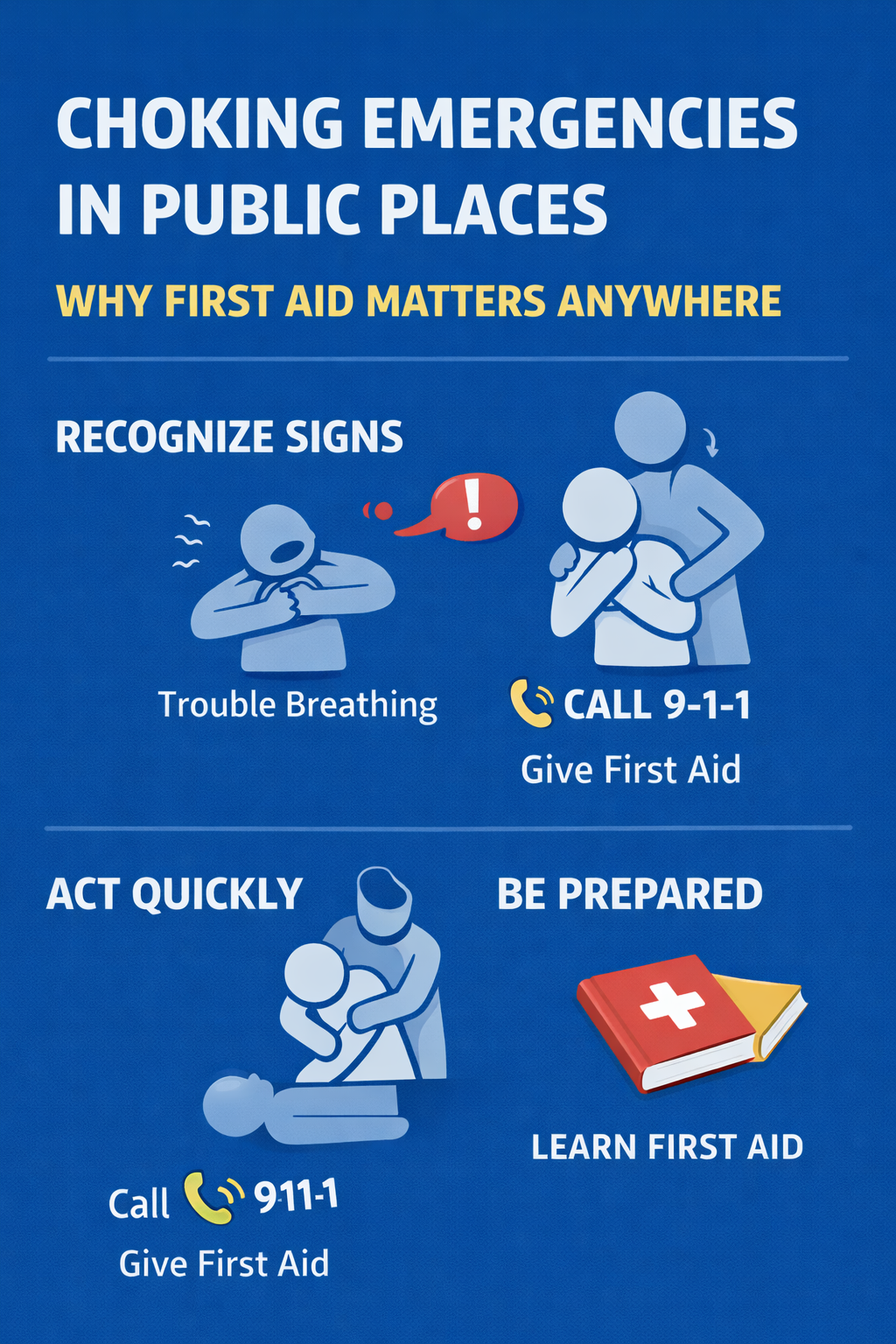
Recognizing Signs of Choking
A person who is choking may show several noticeable signs.
Common signs include:
-
Inability to speak or breathe normally
-
Grasping the throat or chest
-
Coughing weakly or silently
-
Panic or distress
-
Bluish colour around lips or face in severe cases
If the airway becomes completely blocked, the person may become unconscious if help does not arrive quickly.
Causes of Choking
Choking is most commonly caused by food becoming lodged in the airway, but other objects may also cause blockage.
Possible causes include:
-
Eating too quickly
-
Large pieces of food that are not fully chewed
-
Talking or laughing while eating
-
Small objects accidentally inhaled
-
Alcohol consumption affecting swallowing coordination
Choking incidents can occur in restaurants, homes, workplaces, and public gatherings.
First Aid Awareness for Choking Emergencies
First aid training teaches simple steps for recognizing and responding to choking emergencies.
If someone appears to be choking:
-
Ask if the person can speak or cough.
-
If they can cough forcefully, encourage them to continue coughing.
-
If the airway appears blocked and the person cannot breathe or speak, call emergency services (9-1-1 in Canada).
-
Trained individuals may perform abdominal thrusts or other first aid techniques to help clear the obstruction.
-
If the person becomes unresponsive, CPR may be required until emergency responders arrive.
Because choking emergencies can escalate quickly, early recognition and prompt action are important.
Prevention and Workplace Safety Considerations
Many choking incidents occur during routine activities such as eating meals at work or in restaurants.
Prevention strategies may include:
-
Taking time to chew food thoroughly
-
Avoiding talking or laughing while swallowing
-
Cutting food into smaller pieces
-
Supervising children during meals
-
Ensuring staff in workplaces and food-service environments have basic first aid training
In communities across Vancouver and British Columbia, first aid awareness is often encouraged in workplaces so employees can respond to emergencies involving coworkers, customers, or visitors.
FAQ
What is the most common cause of choking?
Food blocking the airway is the most common cause. Large or poorly chewed pieces of food may become lodged in the throat and prevent normal breathing.
How can someone recognize a choking emergency?
A person may clutch their throat, struggle to breathe, or be unable to speak or cough effectively. These signs indicate the airway may be blocked.
What should bystanders do if someone is choking?
Emergency services should be contacted immediately. If trained in first aid, a bystander may attempt appropriate techniques to help clear the airway while waiting for responders.
Can choking happen even in public places like restaurants?
Yes. Many choking incidents occur in everyday environments such as restaurants, homes, and workplace cafeterias where people are eating.
Why is first aid training useful for choking emergencies?
Training helps people recognize choking signs quickly and understand how to respond safely until professional help arrives.
Educational Note
This article is intended for general first aid awareness and public safety education. Learning choking response techniques, CPR, and other first aid skills through certified training programs can help individuals recognize emergencies and respond safely until emergency services arrive.
About The Author

Mark Kascha
First Aid Instructor Trainer with 30+ years of experience in CPR, emergency response, and safety training across Canada.
👉 [View full credentials]🔗 View LinkedIn Profile
Last reviewed: March 2026