
Serious bleeding injuries can occur in many environments, including schools, workplaces, and public spaces. When a person experiences heavy bleeding, the body can lose blood rapidly, making quick recognition and prompt first aid response important for stabilizing the situation until professional medical help arrives.
Across British Columbia and the Vancouver region, first aid training programs often teach participants how to recognize severe bleeding and apply basic control techniques. While most schools and workplaces focus heavily on prevention and safety policies, first aid knowledge helps staff and community members respond effectively when unexpected emergencies occur.
First Aid and Workplace Safety Relevance in Vancouver and British Columbia
 Schools, workplaces, and public institutions throughout Vancouver and British Columbia place strong emphasis on safety planning, emergency response procedures, and staff training. Teachers, administrators, workplace supervisors, and safety officers are often encouraged to learn first aid so they can assist during medical emergencies before paramedics arrive.
Training programs in BC commonly include instruction on:
-
Recognizing life-threatening bleeding
-
Applying pressure to wounds
-
Maintaining personal safety during emergencies
-
Coordinating emergency response procedures
These skills support safer environments in schools, offices, retail locations, construction sites, and community facilities throughout the province.
A School Emergency in Abbotsford
In February 2016, a tragic incident occurred at Abbotsford Senior Secondary School in Abbotsford, British Columbia, involving a 13-year-old student named Letisha Reimer. According to witness accounts presented during later court proceedings, the event unfolded in the school’s central rotunda area during the afternoon.
At approximately 2:00 p.m., school staff reported hearing commotion and shouting that a person had a knife. The school principal, who had been in a meeting nearby, responded immediately after hearing the disturbance.
Witnesses described seeing a student lying on the floor while staff members moved quickly to intervene and restrain the suspect. Several school staff members attempted to assist the injured student and provide first aid while emergency services were contacted.
Despite these efforts, the injuries were severe and the student later died. The event deeply affected the Abbotsford community and led to discussions across British Columbia about school safety, emergency preparedness, and mental health awareness.
Court proceedings later examined the circumstances surrounding the incident, including testimony from witnesses and discussions regarding the suspect’s mental health condition.
Recognizing Severe Bleeding
Severe or uncontrolled bleeding is a medical emergency that requires rapid attention. Signs may include:
-
Heavy or continuous blood loss from a wound
-
Blood soaking clothing or pooling on the ground
-
Pale or clammy skin
-
Weakness, dizziness, or confusion
-
Rapid breathing or signs of shock
Recognizing these warning signs quickly can help bystanders respond appropriately while waiting for trained medical professionals.
Causes and Mechanisms of Severe Bleeding
Serious bleeding injuries can result from many types of incidents, including:
-
Sharp object injuries
-
Falls or impact trauma
-
Workplace accidents involving tools or equipment
-
Vehicle collisions
-
Sporting injuries
In public environments such as schools or workplaces, emergency response planning and first aid training help staff respond more effectively when injuries occur.
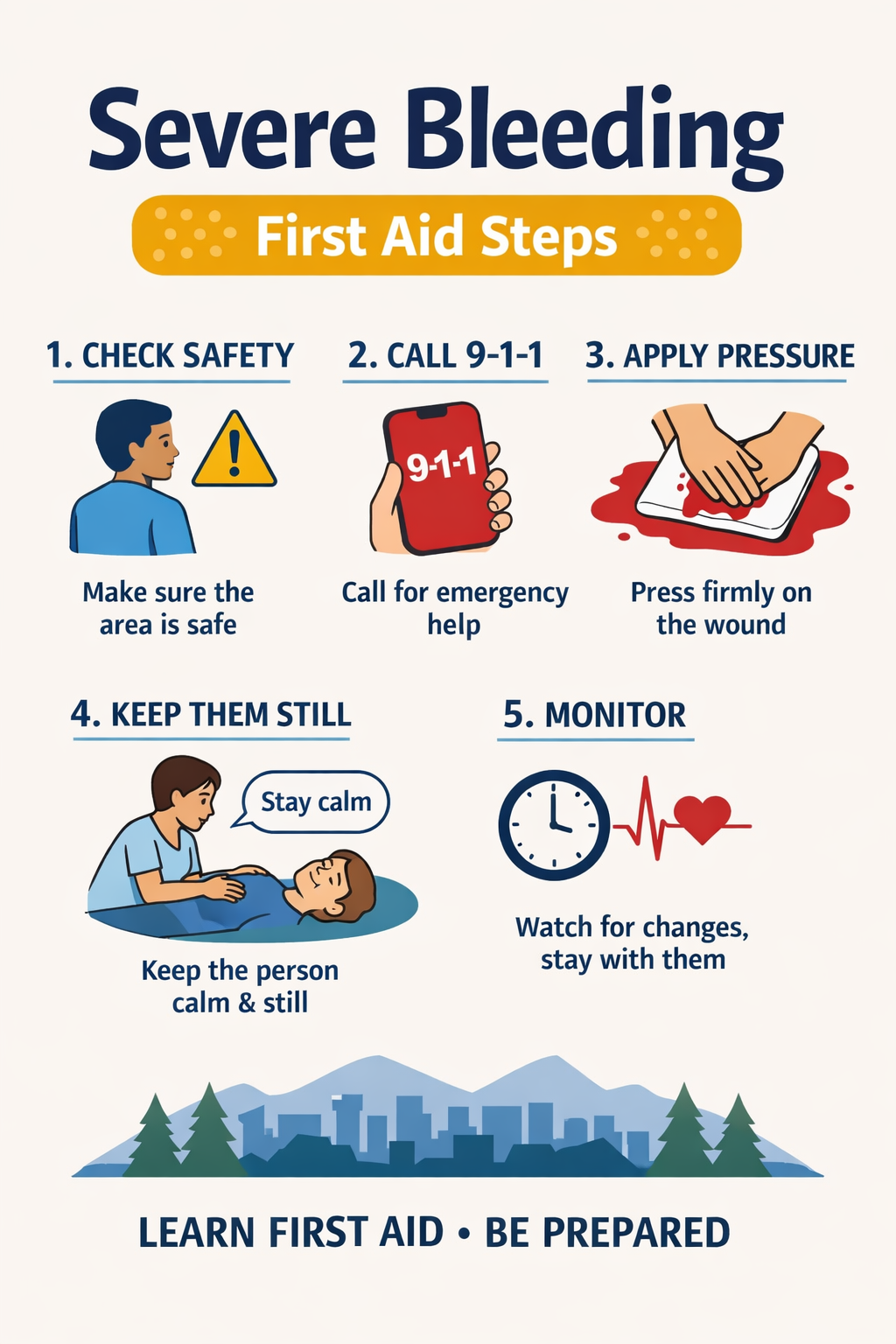
First Aid Awareness for Severe Bleeding
First aid courses commonly teach several general principles when responding to severe bleeding:
-
Ensure the area is safe before approaching the injured person
-
Call emergency services immediately
-
Apply firm pressure to the wound using cloth, bandages, or dressings if available
-
Encourage the injured person to remain still while help is on the way
-
Monitor the person’s condition until emergency responders arrive
These actions are commonly included in first aid training programs to help control bleeding and support the injured person until professional medical care is available.
Prevention and Workplace Safety Considerations
Preventing injuries and preparing for emergencies are important components of safety planning in schools and workplaces.
Common safety strategies include:
-
Emergency response planning and drills
-
Staff first aid and CPR training
-
Mental health awareness and support programs
-
Secure facility design and supervision
-
Clear procedures for reporting safety concerns
In British Columbia, many organizations encourage employees and staff to maintain current first aid certification so they can assist during unexpected incidents.
Preparedness does not eliminate risk, but it can help communities respond more effectively during emergencies.
Frequently Asked Questions
Why is severe bleeding considered a medical emergency?
Severe bleeding can lead to significant blood loss in a short period of time. Rapid response and emergency medical care are important to help stabilize the injured person and prevent further complications.
What is the most important first step when someone is seriously injured?
Ensuring the scene is safe and contacting emergency services is usually the first priority. Once help has been called, trained individuals may provide first aid while waiting for paramedics.
Do schools in British Columbia train staff in first aid?
Many schools in British Columbia encourage or require staff to complete first aid training. This helps ensure that teachers and administrators are prepared to assist during medical emergencies.
Why is emergency preparedness important in workplaces and schools?
Preparedness allows staff and community members to respond quickly and calmly during emergencies. Training, planning, and safety procedures can improve response times and help protect people until professional responders arrive.
Can first aid training help in unexpected emergencies?
Yes. First aid training helps individuals recognize emergencies, respond appropriately, and provide immediate support until medical professionals arrive.
Educational Note
This article is intended for general education about emergency awareness and first aid preparedness in schools and workplaces. First aid training provides practical skills for responding to injuries, but emergency situations should always be managed by qualified medical and emergency response professionals.
About The Author

Mark Kascha
First Aid Instructor Trainer with 30+ years of experience in CPR, emergency response, and safety training across Canada.
👉 [View full credentials]🔗 View LinkedIn Profile
Last reviewed: March 2026