
How CPR and AED Use Save Lives: Why Seconds Matter in Cardiac Emergencies
Understanding Cardiac Arrest and Emergency Response
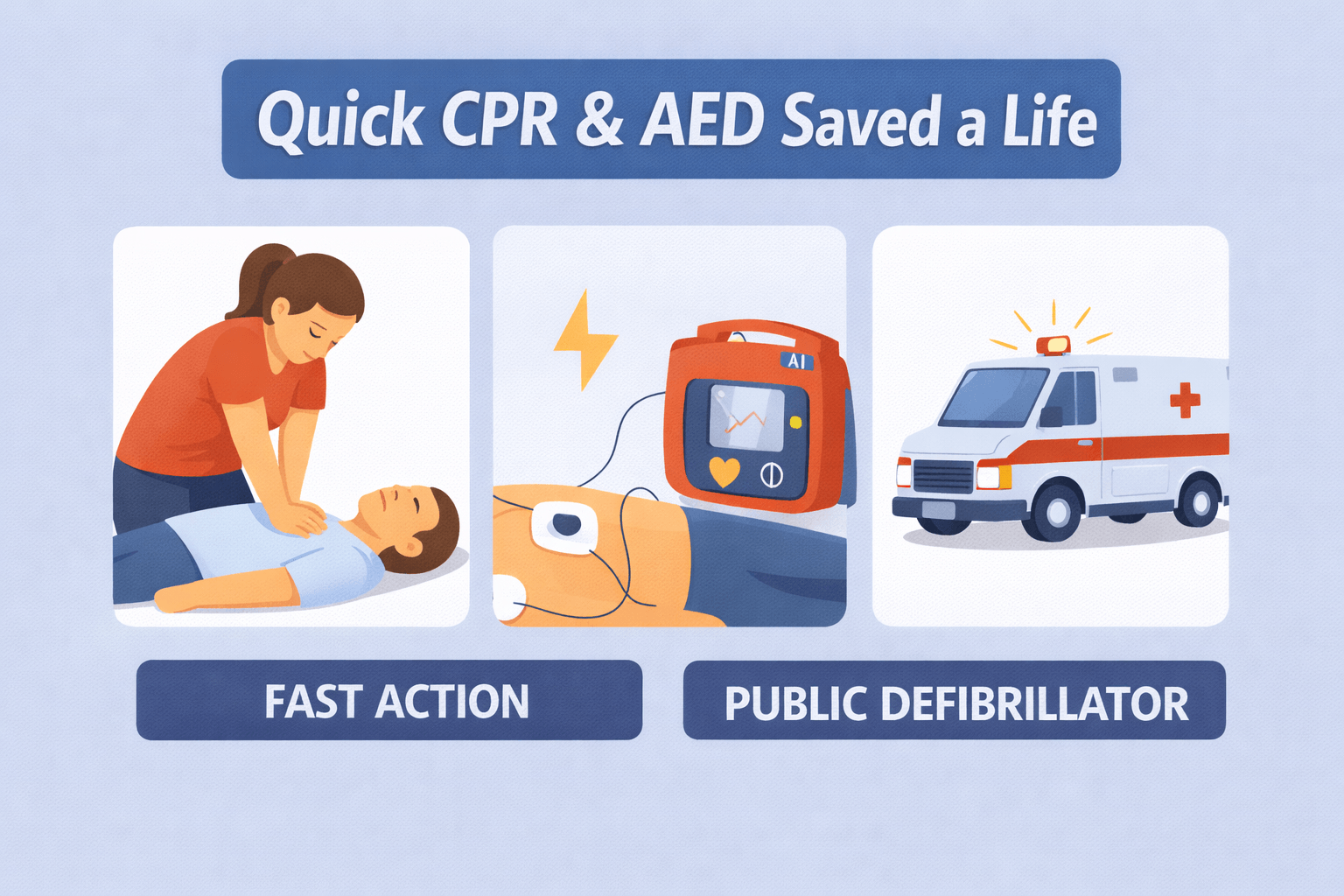 Cardiac arrest occurs when the heart suddenly stops beating due to an electrical malfunction. Without immediate help, oxygen-rich blood stops reaching the brain and vital organs. Quick action—especially early CPR (cardiopulmonary resuscitation) and use of an automated external defibrillator (AED)—can significantly improve survival.
AEDs are designed for public use and provide clear voice instructions, allowing bystanders to assist even without advanced medical training.
First Aid & Workplace Relevance in Vancouver and the Lower Mainland
Across Vancouver, Coquitlam, Burnaby, Langley, Richmond, and the Lower Mainland, cardiac arrests can happen in everyday places such as community centres, gyms, workplaces, and recreational facilities. These environments often have AEDs available, but outcomes depend on whether bystanders are prepared to act quickly.
Emergency preparedness—including CPR and AED training—is an important part of workplace and public safety planning in British Columbia.
A Realistic Scenario
At a community fitness centre in Coquitlam, a man finishes a workout and sits down to rest. Moments later, he becomes unresponsive. Staff and nearby patrons quickly respond—one calls 911, another retrieves the facility’s AED, and others begin CPR. Following the AED’s prompts, they continue assisting until emergency services arrive.
This type of coordinated response can make a critical difference during the first few minutes of a cardiac emergency.
Signs and Symptoms of Cardiac Arrest
Cardiac arrest typically occurs suddenly. Key signs include:
-
Sudden collapse
-
Unresponsiveness
-
No normal breathing
-
No signs of circulation
Immediate recognition allows for faster response and support.
Why Timing Matters: Seconds and Minutes Count
In cardiac arrest situations:
-
Brain injury can begin within minutes without oxygen
-
Emergency responders may take several minutes to arrive
-
Early CPR helps maintain blood flow
-
Early AED use can restore a normal heart rhythm
This is why bystander action in the first few minutes is critical.
First Aid Response: CPR and AED Use
If someone collapses and is unresponsive:
-
Call 911 immediately
-
Start CPR (chest compressions) if trained
-
Have someone bring an AED if available
-
Turn on the AED and follow instructions
-
Continue CPR and AED use until help arrives
AEDs are safe and designed to guide users step-by-step during emergencies.
Prevention and Workplace Safety Considerations
While cardiac arrest cannot always be prevented, preparedness improves outcomes:
-
Install AEDs in public and workplace settings
-
Ensure AEDs are clearly visible and accessible
-
Train staff in CPR and AED use
-
Include emergency response planning in safety programs
Even if AEDs are used infrequently, their presence can be life-saving when needed.
Frequently Asked Questions
Why is early CPR important during cardiac arrest?
CPR helps circulate blood to the brain and organs while waiting for advanced care.
What role does an AED play in an emergency?
An AED analyzes the heart rhythm and may deliver a shock to help restore a normal heartbeat.
Can someone without training use an AED?
Yes. AEDs provide clear instructions, making them accessible for bystanders.
Are AEDs commonly available in public places?
Many community centres, gyms, and workplaces across Canada have AEDs installed.
How can workplaces improve emergency readiness?
By training employees, installing AEDs, and ensuring clear emergency procedures are in place.
Educational Note
This article is intended for general first aid awareness and workplace safety education in Canada. Learning CPR and AED use can help individuals respond more effectively in cardiac emergencies.
About The Author

Mark Kascha
First Aid Instructor Trainer with 30+ years of experience in CPR, emergency response, and safety training across Canada.
👉 [View full credentials]🔗 View LinkedIn Profile
Last reviewed: March 2026