
Understanding AEDs and Cardiac Arrest Response
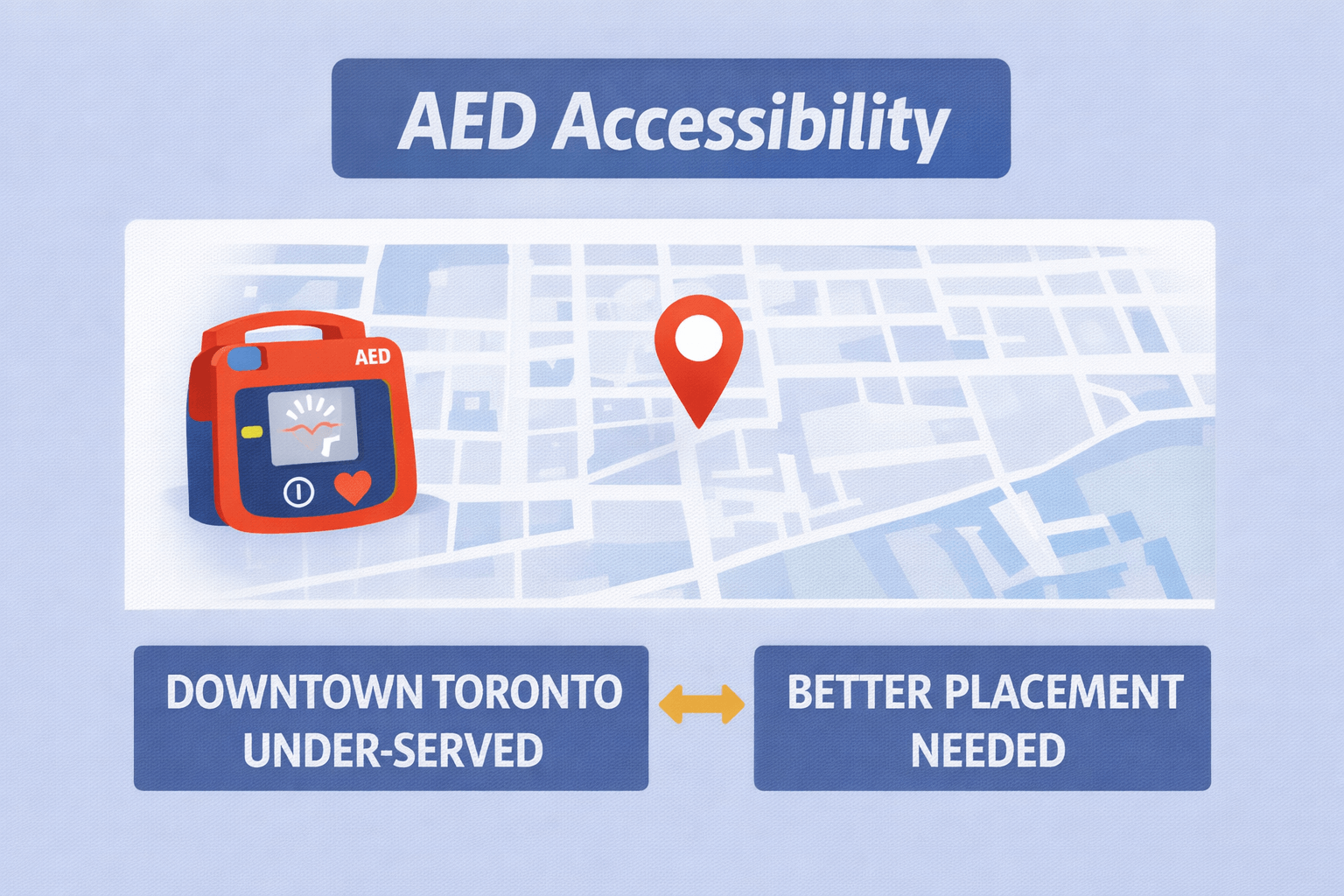 An automated external defibrillator (AED) is a portable device used to help restore a normal heart rhythm during cardiac arrest. Cardiac arrest occurs when the heart suddenly stops beating due to an electrical issue, preventing blood from circulating to the brain and vital organs.
AEDs are designed for public use and provide step-by-step voice instructions. When combined with early CPR (cardiopulmonary resuscitation), they can significantly improve survival during cardiac emergencies.
First Aid & Workplace Relevance in Vancouver and the Lower Mainland
Across Vancouver, Burnaby, Richmond, Surrey, and the Lower Mainland, cardiac arrest can happen in public places such as offices, transit hubs, shopping areas, and community centres.
The effectiveness of an AED depends not only on its presence—but also on how quickly it can be accessed. This makes proper placement in workplaces and public environments a key part of emergency preparedness in British Columbia.
A Realistic Scenario
In downtown Vancouver, a person collapses on a busy sidewalk near a transit stop. Bystanders quickly recognize the emergency and call 911. While one person begins CPR, another runs to locate the nearest AED. If the device is nearby and clearly marked, it can be brought back within moments—helping provide critical support before paramedics arrive.
Signs and Symptoms of Cardiac Arrest
Cardiac arrest often happens suddenly and without warning. Signs include:
-
Sudden collapse
-
Unresponsiveness
-
No normal breathing
-
No signs of circulation
Immediate action is essential to support survival.
Why AED Accessibility Matters
Research into AED placement shows that:
-
Many cardiac arrests occur in public, high-traffic areas
-
Some locations may be underserved or lack nearby AEDs
-
Quick access—within a short walking distance—can improve response time
In dense urban areas, having AEDs within close range (for example, a short walking distance) increases the likelihood that bystanders can retrieve one quickly during an emergency.
Factors That Influence AED Placement
Effective AED placement considers:
-
Areas with high pedestrian traffic
-
Locations with previous cardiac arrest incidents
-
Accessibility during all hours (indoors vs. outdoors)
-
Visibility and clear signage
Common locations include:
-
Office buildings
-
Transit stations
-
Shopping centres
-
Community centres
-
Recreational facilities
First Aid Response: CPR and AED Use
If someone experiences cardiac arrest:
-
Call 911 immediately
-
Begin CPR (chest compressions) if trained
-
Send someone to get the nearest AED
-
Turn on the AED and follow instructions
-
Continue CPR and AED use until emergency responders arrive
Quick access to an AED can make a meaningful difference in those first critical minutes.
Prevention and Workplace Safety Considerations
To improve emergency readiness:
-
Install AEDs in visible, accessible locations
-
Ensure staff know where AEDs are located
-
Provide CPR and AED training
-
Regularly check and maintain equipment
-
Include AED access in workplace safety planning
Improving accessibility helps communities respond more effectively to cardiac emergencies.
Frequently Asked Questions
Why is AED placement important in cities?
Quick access reduces the time it takes to respond during cardiac arrest, which can improve outcomes.
Are AEDs required in all public places in Canada?
Requirements vary by region, and not all locations are mandated to have AEDs, which can lead to gaps in access.
How far should someone have to travel to find an AED?
Shorter distances are better, as faster access allows quicker response during emergencies.
Can AEDs be used by people without medical training?
Yes. AEDs provide clear instructions and are designed for use by the general public.
How can workplaces improve AED accessibility?
By installing devices in visible areas, training staff, and ensuring everyone knows their location.
Educational Note
This article is intended for general first aid awareness and workplace safety education in Canada. Learning CPR and AED use can help individuals respond more effectively in cardiac emergencies.
About The Author

Mark Kascha
First Aid Instructor Trainer with 30+ years of experience in CPR, emergency response, and safety training across Canada.
👉 [View full credentials]🔗 View LinkedIn Profile
Last reviewed: March 2026