 Hypothermia occurs when the body loses heat faster than it can produce it, causing body temperature to drop to unsafe levels. This condition can develop quickly in extreme cold temperatures, especially when a person is exposed to wind, wet conditions, or prolonged time outdoors.
Across Vancouver, Burnaby, Surrey, and many parts of Canada, cold weather can pose serious health risks during winter months. While coastal areas may not always reach extreme lows, similar risks still exist during cold snaps or for individuals exposed to the elements for long periods.
First Aid Awareness for Cold Weather Emergencies
People working in public-facing roles—such as transit operators, security personnel, and outdoor workers—may encounter individuals experiencing cold-related illness. First aid training helps individuals:
-
Provide early care
-
Contact emergency services when needed
-
Support the person until help arrives
Being prepared is especially important in Canadian climates where temperatures can drop quickly.
Scenario: Emergency Response by Edmonton Bus Driver
An incident in Edmonton, Alberta, highlighted how first aid knowledge can help during cold weather emergencies.
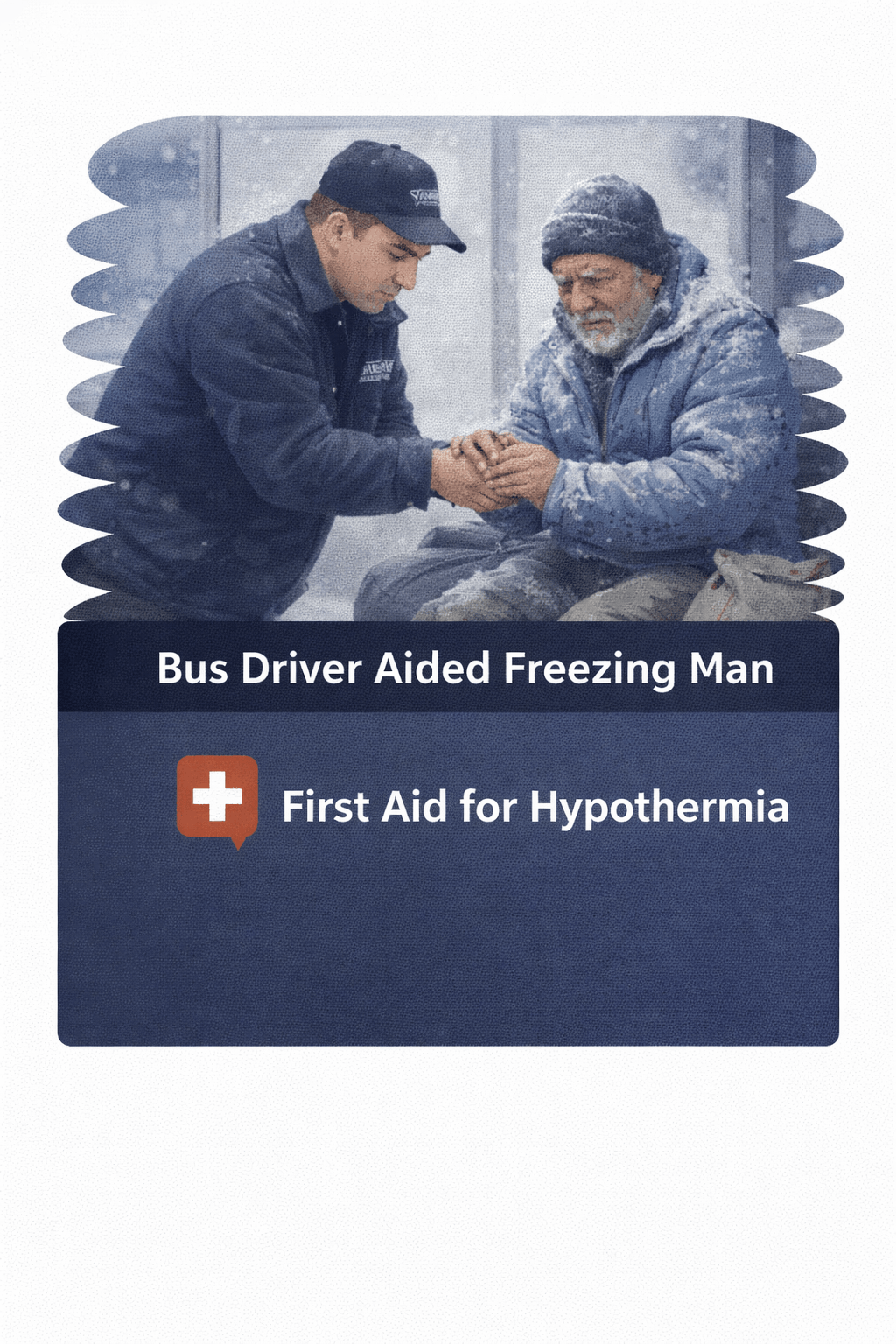
A transit driver operating a morning route noticed a man sitting at a bus stop who appeared unwell. The temperature that day was extremely cold, and the individual showed signs of significant cold exposure.
The driver, who had previous emergency response training, approached the man and assessed his condition. The individual was shivering heavily, had difficulty speaking, and appeared weak, which are common signs of hypothermia.
Recognizing the seriousness of the situation, the driver contacted emergency services. While waiting for paramedics, he provided initial support and stayed with the individual.
The man’s pulse appeared weak, and he had difficulty responding, reinforcing the need for urgent medical attention. Although the individual initially hesitated to go with paramedics, the driver encouraged him to accept care.
Emergency responders arrived and transported the man to hospital, where he later recovered in stable condition.
The incident demonstrates how early recognition and supportive care can help improve outcomes in cold-related emergencies.
Signs and Symptoms of Hypothermia
Hypothermia can range from mild to severe. Common signs include:
-
Intense shivering
-
Slurred or slowed speech
-
Confusion or drowsiness
-
Weak pulse
-
Loss of coordination
-
Cold, pale skin
In more serious cases, shivering may stop, and the person may become unresponsive.
First Aid Response for Hypothermia
Individuals trained in first aid may assist by:
-
Calling emergency services if the condition appears serious
-
Moving the person to a warmer, sheltered area
-
Helping the person stay still and conserve heat
-
Using available clothing or blankets to provide insulation
-
Monitoring breathing and responsiveness
If the person becomes unresponsive and stops breathing normally, CPR may be required by trained responders.
Prevention and Cold Weather Safety
Preventing hypothermia involves staying prepared in cold conditions. Safety tips include:
-
Dressing in layers and weather-appropriate clothing
-
Limiting time outdoors in extreme cold
-
Staying dry and protected from wind
-
Checking on vulnerable individuals during cold weather
-
Learning first aid and CPR skills
Prepared individuals and communities help reduce risks during winter months.
Frequently Asked Questions
What is hypothermia?
Hypothermia is a condition where the body temperature drops below normal due to prolonged exposure to cold.
Can hypothermia happen in cities?
Yes. Even in urban areas, exposure to cold temperatures can lead to hypothermia, especially for individuals outdoors for extended periods.
Why is shivering important?
Shivering is the body’s way of generating heat. Severe hypothermia may reduce or stop shivering.
Should someone try to warm a person quickly?
First aid focuses on gentle warming and protecting the person from further heat loss while waiting for medical care.
Should workers learn first aid for cold-related emergencies?
Many workplaces encourage first aid training because employees may encounter medical emergencies in public or outdoor settings.
Educational Note
This article is intended for general public education about first aid awareness and cold weather safety. Learning recognized first aid skills can help individuals respond more confidently during emergencies.
About The Author

Mark Kascha
First Aid Instructor Trainer with 30+ years of experience in CPR, emergency response, and safety training across Canada.
Last reviewed: March 2026
 Support local, Canadian-owned businesses, with no connections to American corporations or partnerships.