
 Boating and lake recreation are popular activities across British Columbia, particularly during warmer months. Lakes such as Kalamalka Lake near Vernon attract families from communities including Vancouver, North Vancouver, and throughout the Lower Mainland. While boating can be an enjoyable outdoor activity, water environments also require careful attention to safety practices.
Water incidents involving boats can occur quickly and may involve falls overboard, collisions with equipment, or sudden changes in balance. Awareness of boating safety and basic first aid principles helps communities better understand how to respond when unexpected emergencies occur.
First Aid and Workplace Safety Relevance in Vancouver and British Columbia
In Vancouver and throughout British Columbia, first aid and CPR training are commonly encouraged in workplaces, recreational programs, and community organizations. Workers in industries such as tourism, marine transportation, outdoor recreation, and public parks often operate near lakes, rivers, and coastal environments.
Understanding how to recognize a water emergency, call for help quickly, and provide initial assistance can make a difference while waiting for professional responders. First aid education helps people learn how to remain calm, identify risks, and support emergency response efforts.
Scenario: A Boating Incident at Kalamalka Lake
In a reported incident at Kalamalka Lake south of Vernon, a family from North Vancouver was boating on the lake and returning toward the dock. According to information released by local authorities, the boat turned while approaching the dock area and a child fell overboard.
Emergency responders were called to the scene after reports of a water emergency. The child was brought to the pier where emergency crews provided first aid care while awaiting further medical support. Despite these efforts, the child later died from injuries related to the incident.
Authorities indicated that the child may have been struck by part of the boat during the event. Police secured the dock area while assisting the B.C. Coroners Service, which began reviewing the circumstances of the incident. Support services were also provided to the family through Vernon North Okanagan Victim Services.
Investigations following water incidents help determine contributing factors and may inform future safety recommendations.
Signs of Distress in Water Emergencies
Water emergencies often occur suddenly, and individuals may not always be able to call for help. Signs that someone may be in distress near or in the water can include:
-
Sudden fall or slip from a boat or dock
-
Difficulty staying above the surface of the water
-
Uncontrolled gasping or rapid breathing
-
Confusion or disorientation after entering the water
-
Weak or uncoordinated movements when trying to swim
-
Lack of response once removed from the water
Recognizing these warning signs can help bystanders act quickly by alerting emergency services.
Causes and Risk Factors in Boating Incidents
Boating accidents can involve a combination of environmental and situational factors. On lakes and other recreational waterways, common contributing risks may include:
-
Sudden changes in boat direction or speed
-
Loss of balance when a boat turns or stops
-
Passengers standing or moving while the boat is in motion
-
Contact with parts of the boat or propeller area
-
Lack of properly fitted flotation devices
-
Limited supervision or awareness in busy recreational areas
Even short trips near docks or shorelines can present risks if passengers lose balance or unexpectedly fall overboard.
First Aid Awareness During Boating Emergencies
In a boating emergency, the priority is ensuring safety and contacting emergency services immediately. Responding quickly while avoiding additional risks is essential.
General first aid awareness may include:
-
Alerting emergency services as soon as a person falls overboard or appears injured
-
Safely stopping the boat if possible and directing attention to the person in the water
-
Using flotation devices or reaching tools to assist without entering unsafe water
-
Helping guide emergency responders to the location
-
Monitoring the individual after removal from the water until trained medical personnel arrive
First aid and CPR training programs help individuals understand how to provide assistance safely while waiting for professional emergency care.
Prevention and Boating Safety Practices
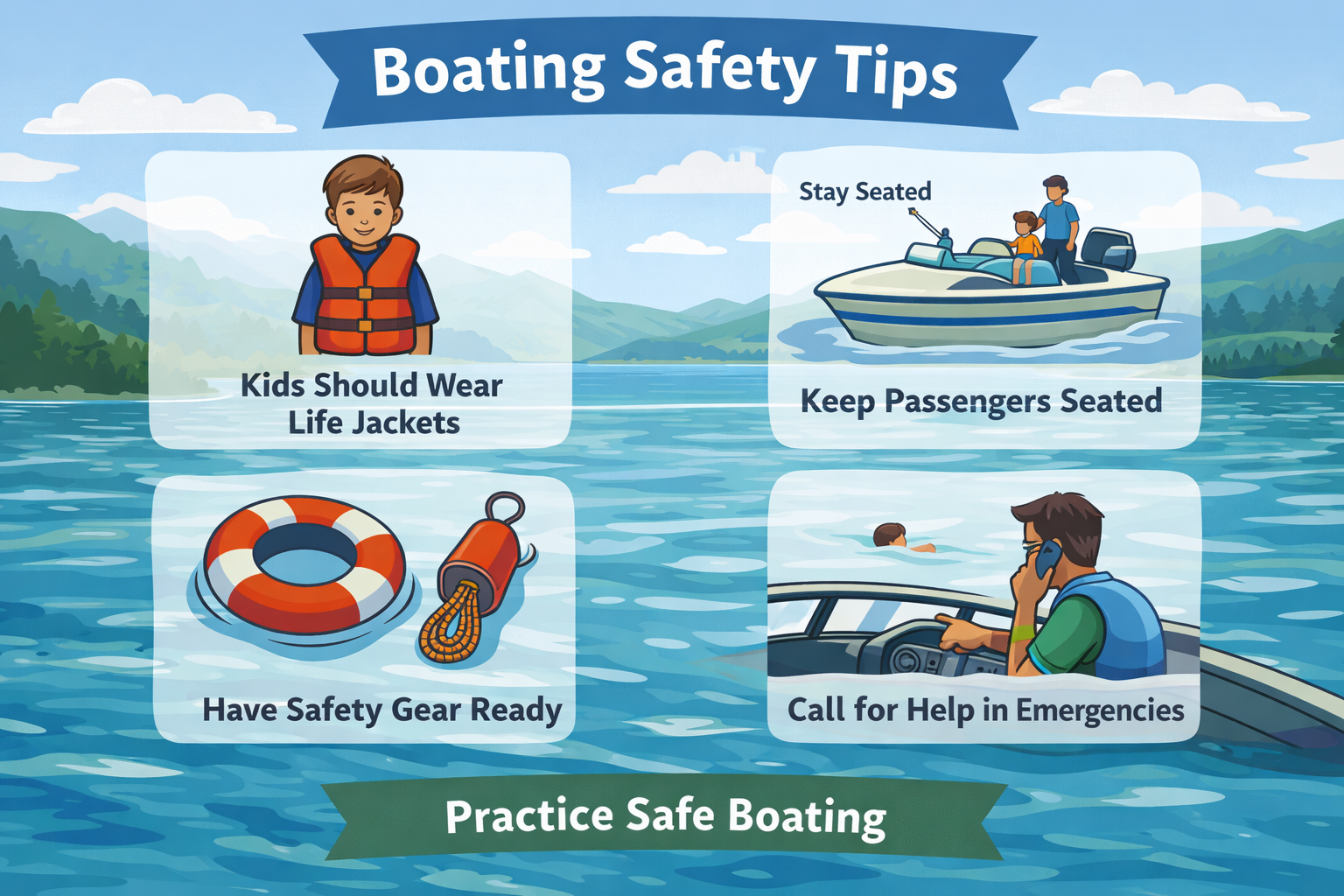
Many boating incidents can be reduced through preparation and consistent safety practices. Recommended safety measures often include:
-
Ensuring children wear properly fitted life jackets while on or near the water
-
Keeping passengers seated while the boat is moving or turning
-
Operating boats at safe speeds near docks and swimming areas
-
Maintaining clear communication between the driver and passengers
-
Staying aware of surroundings, including swimmers and other vessels
-
Providing active supervision of children on boats and docks
In British Columbia, many recreational boating programs emphasize these safety practices as part of water safety education.
Frequently Asked Questions
Why are life jackets important for children on boats?
Life jackets help keep children afloat if they accidentally fall into the water. Properly fitted flotation devices can provide additional time for rescue or safe recovery.
Are boating incidents more common near docks?
Dock areas can involve increased movement and turning as boats slow down or change direction. Passengers may also move around the boat while preparing to dock, which can increase the risk of losing balance.
What should bystanders do if someone falls overboard?
The safest response is to alert the boat operator and contact emergency services immediately. If possible, flotation devices or reaching tools may be used to assist the person while keeping rescuers safe.
Why is supervision important during family boating trips?
Children may not recognize hazards around boats, docks, or moving water. Close supervision helps ensure they remain seated, wear safety equipment, and avoid risky areas of the vessel.
Why is first aid training useful in water recreation areas?
First aid education helps people recognize emergencies, communicate clearly with responders, and provide basic assistance until trained emergency services arrive.
Educational Note
This article is provided for general first aid awareness and public safety education. Water and boating emergencies can involve complex risks, and trained emergency responders are equipped to manage these situations. Learning water safety and first aid principles can help individuals respond more effectively during unexpected incidents.
About The Author

Mark Kascha
First Aid Instructor Trainer with 30+ years of experience in CPR, emergency response, and safety training across Canada.
👉 [View full credentials]🔗 View LinkedIn Profile
Last reviewed: March 2026