
Water recreation activities such as boating and personal watercraft use can be enjoyable, but they also carry safety risks. When a person becomes submerged or loses consciousness in water, breathing can stop quickly. In these situations, cardiopulmonary resuscitation (CPR) may help maintain circulation and oxygen flow until emergency responders arrive.
Across Canada, including British Columbia and the Vancouver region, lakes, rivers, and coastal waters are popular locations for recreational boating. Because water-related emergencies can occur unexpectedly, first aid and CPR training often includes drowning recognition and safe rescue awareness.
Understanding how these incidents happen can help improve public safety around waterways.
A Real-World Scenario
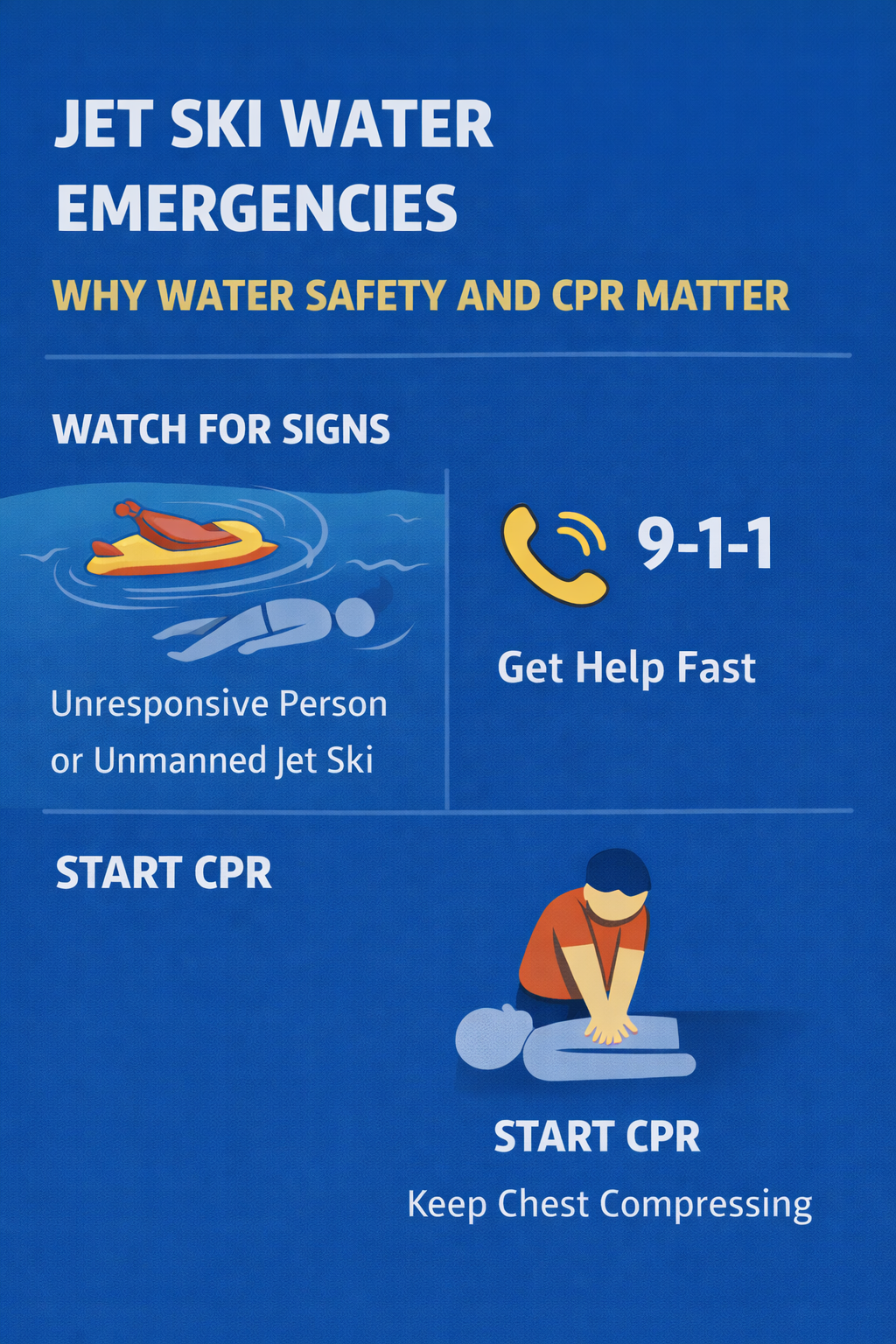 A tragic incident occurred in the Bay of Quinte near Greater Napanee, Ontario, involving a man believed to have been operating a personal watercraft.
Ontario Provincial Police (OPP) were first called to a public boat launch along the eastern edge of the Bay of Quinte after receiving reports that a man who appeared to be intoxicated was attempting to unload a jet ski.
While officers were traveling to the area, additional reports indicated that a man and woman wearing lifejackets had been seen riding the jet ski in the bay.
Approximately twenty minutes later, police received another call reporting that CPR was being performed on a man at a nearby residence on County Road 9, not far from the boat launch.
According to reports, another boater noticed an unmanned jet ski circling in the water and discovered a man face-down nearby. The boater brought the man ashore, where bystanders and police began CPR while waiting for paramedics.
Despite the efforts of rescuers and emergency responders, the 33-year-old man from Greater Napanee was later pronounced deceased at a healthcare facility.
Incidents like this highlight how quickly water emergencies can develop and how bystanders may become the first people to attempt lifesaving assistance.
Signs of a Water Emergency
Drowning incidents may not always be obvious. A person experiencing distress in the water may not be able to call for help.
Possible warning signs include:
-
Sudden disappearance beneath the water
-
Weak or uncoordinated movements in the water
-
A person floating face-down or unresponsive
-
An unmanned watercraft nearby
-
Lack of movement after being removed from the water
When a person is unresponsive and not breathing normally, CPR may be required until emergency services arrive.
Risk Factors During Watercraft Use
Operating personal watercraft such as jet skis can involve several safety considerations.
Possible risk factors include:
-
Loss of balance or falling into the water
-
Operating watercraft while impaired
-
Limited visibility on open water
-
Rough water conditions
-
Lack of close supervision from nearby boaters
In Canada, lifejackets are strongly encouraged when using watercraft to help improve flotation and visibility during emergencies.
First Aid Awareness During Water Incidents
When someone is removed from the water and appears unresponsive, quick action is important.
First aid training typically teaches these general steps:
-
Ensure the scene is safe before approaching the water.
-
Call emergency services (9-1-1 in Canada).
-
If the person is not breathing normally, begin CPR if it is safe to do so.
-
Continue CPR until emergency responders arrive or the person begins breathing.
Early CPR may help maintain oxygen circulation while waiting for trained responders.
Prevention and Water Safety Considerations
Water safety experts encourage several precautions when operating recreational watercraft:
-
Always wear a properly fitted lifejacket
-
Avoid operating watercraft while impaired
-
Maintain awareness of surroundings and other boaters
-
Use designated boat launch areas safely
-
Ensure someone nearby knows your location
-
Learn basic CPR and first aid skills
Across British Columbia and Vancouver, water safety education is commonly promoted due to the region’s many lakes, rivers, and coastal areas used for recreation.
FAQ
Why is CPR important in water emergencies?
If a person stops breathing after being submerged, CPR may help circulate oxygenated blood through the body until emergency responders arrive.
What should someone do if they see a person floating face-down in water?
Emergency services should be contacted immediately. If the person is removed from the water and is not breathing normally, CPR may be started if it is safe to do so.
Why are lifejackets important when using jet skis?
Lifejackets help keep a person afloat if they fall into the water and can make them easier to locate during an emergency.
Can drowning incidents happen quickly?
Yes. Drowning can occur within minutes if a person cannot breathe while submerged in water.
Why is CPR training recommended for the public?
Training helps individuals recognize emergencies and understand how to respond safely while waiting for professional responders.
Educational Note
This article is intended for general first aid awareness and water safety education. Learning CPR and first aid through certified training programs can help individuals recognize emergencies and respond safely until emergency services arrive.
About The Author

Mark Kascha
First Aid Instructor Trainer with 30+ years of experience in CPR, emergency response, and safety training across Canada.
👉 [View full credentials]🔗 View LinkedIn Profile
Last reviewed: March 2026