
Railway crossings are designed with signals, gates, and warning systems to help prevent collisions between trains and vehicles. However, accidents can still occur if a vehicle stops on the tracks or if a driver is unable to clear the crossing before a train approaches.
In Vancouver and throughout British Columbia, many communities—including Langley and surrounding Fraser Valley areas—have active railway crossings used by freight and passenger trains. Because trains cannot stop quickly, any collision at a crossing can result in serious injuries. This is why CPR and first aid training are valuable life-saving skills in workplaces, transportation environments, and public settings where emergencies may occur before professional responders arrive.
A Realistic Scenario: Collision at a Langley Rail Crossing
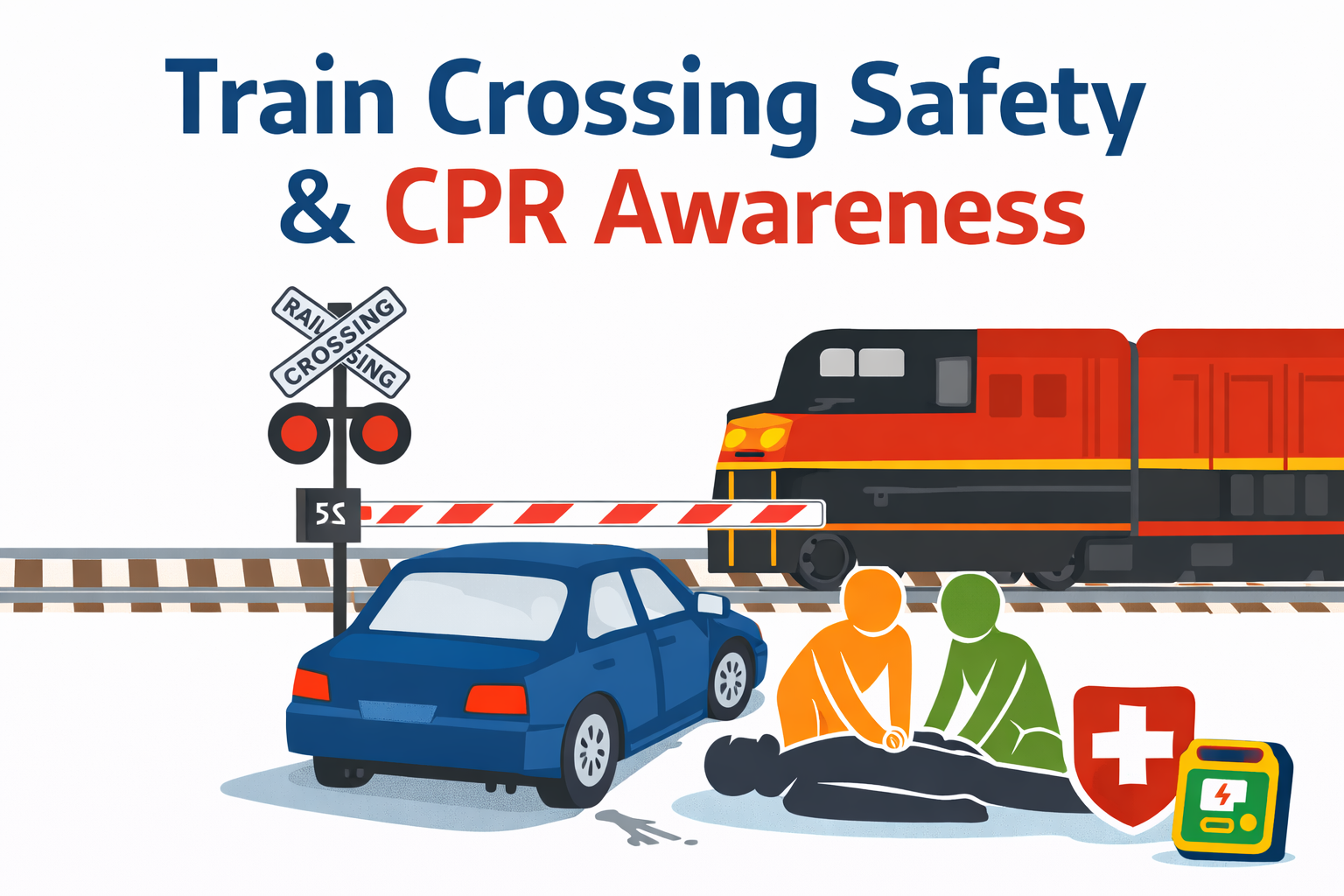 In a reported incident in Langley, an elderly couple lost their lives after their vehicle was struck by a freight train at a rail crossing.
According to RCMP reports, the collision occurred near the intersection of Langley Bypass and Glover Road, where a westbound freight train struck a car that had stopped on the tracks. Witnesses indicated that the vehicle appeared to remain on the crossing as the rail safety gates were lowering.
Emergency crews responded quickly to the scene. Firefighters worked to extricate the occupants from the damaged vehicle, while first responders attempted life-saving measures including cardiopulmonary resuscitation (CPR). Despite these efforts, the injuries sustained during the crash were severe, and both individuals were later pronounced deceased at the scene.
Authorities later reopened the roadway after investigators completed their work. Police and rail officials examined the circumstances surrounding the collision to determine what factors may have contributed to the incident.
While events like this are rare, they highlight how emergency response, first aid knowledge, and railway safety awareness remain important in communities across British Columbia.
Signs of Medical Distress After a Collision
Motor vehicle collisions, particularly those involving trains, can lead to severe trauma and medical emergencies. Individuals involved in a crash may experience symptoms such as:
-
Loss of consciousness or unresponsiveness
-
Difficulty breathing or absent breathing
-
Severe bleeding or visible injuries
-
Confusion or disorientation
-
Chest pain or irregular pulse
-
Signs of shock, such as pale or clammy skin
In serious incidents, bystanders or trained responders may need to provide first aid while waiting for emergency medical services.
Causes and Risk Factors at Railway Crossings
Railway crossing collisions can occur due to several contributing factors. These may include:
-
Vehicles stopping or stalling on train tracks
-
Drivers misjudging the speed or distance of an approaching train
-
Mechanical issues with a vehicle
-
Reduced visibility due to weather or environmental conditions
-
Driver distraction or unfamiliarity with the crossing layout
Unlike road vehicles, trains require a long distance to slow down or stop. Because of this limitation, drivers must ensure the crossing is clear before entering and should never stop on train tracks.
First Aid and Emergency Response at Collision Scenes
When a serious collision occurs, emergency responders focus on scene safety and rapid medical assessment. First aid training often teaches individuals to prioritize several important steps:
-
Ensuring the area is safe before approaching the scene
-
Calling emergency services immediately
-
Checking responsiveness and breathing
-
Providing CPR if the person is unresponsive and not breathing normally
-
Supporting injured individuals until paramedics arrive
Emergency responders may also use specialized rescue equipment to safely remove individuals from vehicles in complex situations.
Although many collision scenes require advanced medical care, early assistance from trained bystanders or workers can still play a supportive role until professional help arrives.
Prevention and Workplace Safety Considerations
Railway safety awareness is important for both the general public and certain workplaces in British Columbia, especially those near industrial rail corridors or transportation routes.
Important safety reminders include:
-
Never enter a railway crossing unless there is enough space to fully clear the tracks
-
Obey all crossing signals, lights, and barriers
-
Avoid stopping or changing lanes while crossing railway tracks
-
Remain alert for approaching trains even when signals are not active
-
Encourage employees working near rail corridors to understand basic rail safety procedures
Workplaces that operate vehicles or equipment near rail infrastructure often include first aid and CPR training as part of their safety preparedness programs.
FAQ
Why are train collisions often severe?
Trains are extremely heavy and require a long distance to stop. When a collision occurs, the force involved can be significant, which is why railway crossings are equipped with warning systems and gates to help prevent vehicles from entering when a train is approaching.
What should drivers do if a vehicle becomes stuck on train tracks?
Drivers should attempt to exit the vehicle and move to a safe location away from the tracks while contacting emergency services or railway authorities if possible. Personal safety is the priority in these situations.
Why might CPR be attempted after a collision?
CPR may be used if a person becomes unresponsive and is not breathing normally. The technique helps maintain circulation and oxygen flow to vital organs until emergency medical professionals arrive.
Are railway crossings common in British Columbia communities?
Yes. Many municipalities in the Lower Mainland and Fraser Valley have rail lines used by freight and passenger trains. Drivers and pedestrians should remain aware of crossing signals and safety warnings.
Why is first aid training recommended for workplaces?
First aid training helps workers recognize emergencies and respond appropriately while waiting for professional responders. Prepared workplaces are better equipped to manage unexpected incidents.
Educational Note:
This article is intended for general first aid awareness and public safety education. Learning CPR and basic first aid skills can help individuals recognize emergencies and provide supportive care while waiting for trained emergency services.
About The Author

Mark Kascha
First Aid Instructor Trainer with 30+ years of experience in CPR, emergency response, and safety training across Canada.
👉 [View full credentials]🔗 View LinkedIn Profile
Last reviewed: March 2026
 Support local, Canadian-owned businesses, with no connections to American corporations or partnerships.