 Motor vehicle collisions can result in serious injuries and medical emergencies that require immediate assistance. In some cases, individuals involved in crashes may become unresponsive or stop breathing normally.
Cardiopulmonary resuscitation (CPR) is a first aid technique used when a person becomes unresponsive and is not breathing normally. Across Vancouver and throughout British Columbia, CPR and first aid training are important parts of workplace safety programs and community preparedness.
Quick action from bystanders and emergency responders can help stabilize someone during the critical moments before paramedics arrive.
Road Safety and Emergency Preparedness in Vancouver
Busy urban roads and intersections can experience accidents at any time. When collisions occur, emergency crews—including firefighters, paramedics, and police officers—often work together to provide rescue and medical care.
First aid and CPR training programs encourage people to understand how to respond safely during emergencies by:
-
Contacting emergency services immediately
-
Checking whether someone is responsive
-
Monitoring breathing and circulation
-
Beginning CPR if the person is not breathing normally
-
Waiting for trained responders to arrive
Prepared individuals may be able to assist until professional help reaches the scene.
A Serious Crash in South Vancouver
Emergency responders were called to a serious collision in South Vancouver involving a driver who struck two parked vehicles.
The crash occurred near the intersection of Main Street and East 42nd Avenue. According to reports, the 28-year-old driver was operating a grey Acura when the vehicle collided with a Land Rover and another parked car.
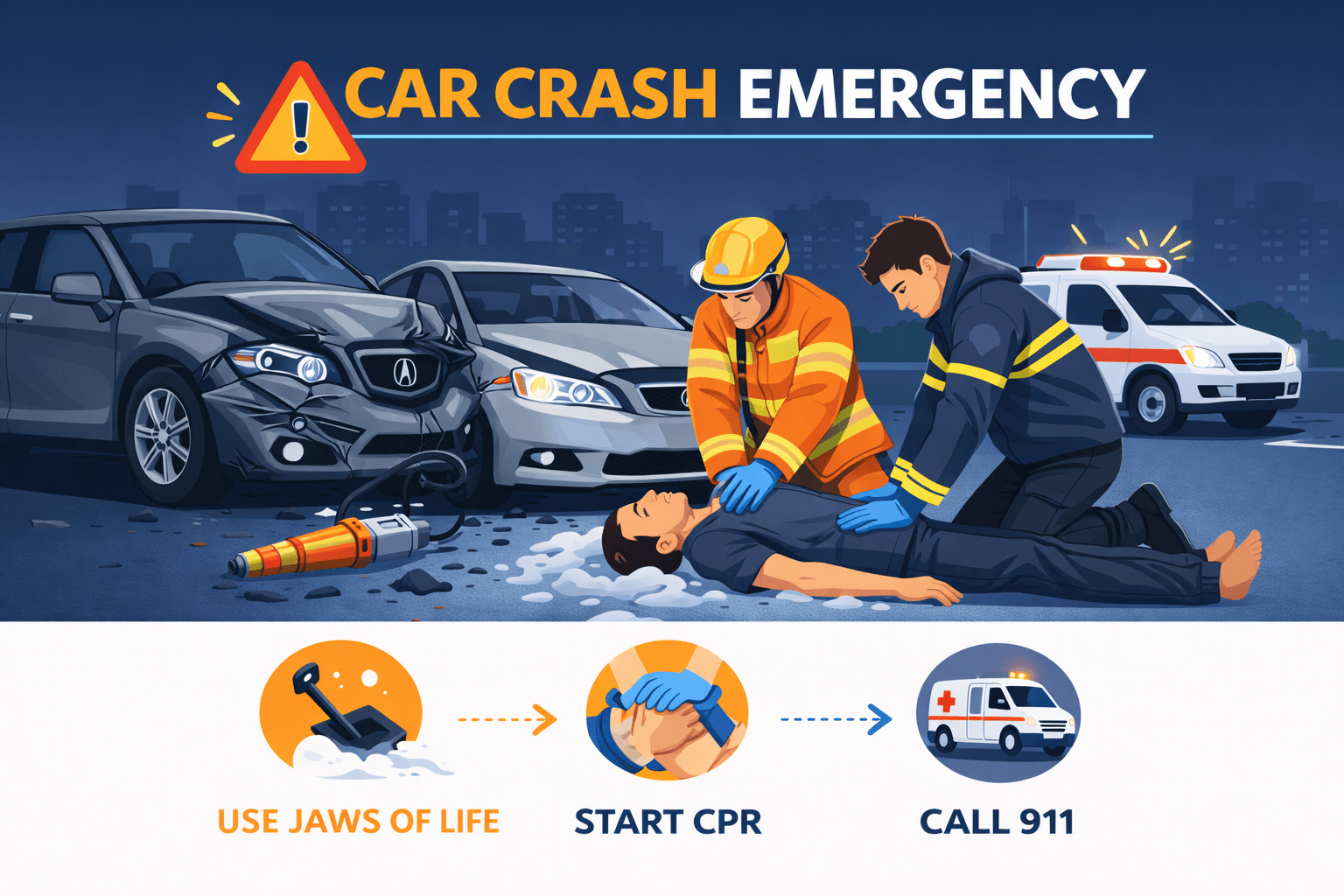
Emergency crews arrived at the scene around 9 p.m. Because the driver was trapped inside the vehicle, firefighters used hydraulic rescue equipment—often referred to as the “Jaws of Life”—to safely remove him from the wreckage.
Witnesses reported that the driver appeared to be in critical condition.
During the rescue, first responders began providing emergency medical care, including CPR, in an effort to stabilize him.
According to one witness, responders performed CPR for several minutes before transporting the driver to hospital with serious injuries.
The crash investigation required a section of Main Street to be temporarily closed overnight while police examined the scene. The roadway was later reopened.
Authorities continued working to determine the factors that may have contributed to the collision.
Recognizing Situations Where CPR May Be Needed
Serious accidents may lead to medical emergencies where a person becomes unresponsive.
CPR may be used when a person:
-
Is unconscious
-
Is not breathing normally
-
Shows no signs of circulation
In these situations, emergency services should be contacted immediately while trained individuals provide assistance.
Why Early CPR Can Be Important
When breathing or circulation stops, oxygen flow to the brain and vital organs decreases rapidly.
CPR helps maintain circulation during this critical period while advanced medical care is on the way.
Emergency response organizations across Canada emphasize that early CPR and rapid emergency response can improve survival outcomes in certain medical emergencies.
Prevention and Road Safety Awareness
Communities and workplaces often promote road safety and emergency preparedness through education and training.
Important safety measures may include:
-
Encouraging defensive driving practices
-
Following traffic laws and speed limits
-
Staying alert and avoiding distractions while driving
-
Learning CPR and first aid skills for emergency situations
Prepared individuals may be better equipped to assist when accidents occur.
Frequently Asked Questions
What is cardiopulmonary resuscitation (CPR)?
CPR is a first aid technique used when a person becomes unresponsive and stops breathing normally. It helps maintain circulation until emergency medical care arrives.
Can CPR be performed after a vehicle collision?
Yes. If a person involved in an accident is unresponsive and not breathing normally, CPR may be performed while waiting for emergency responders.
Who typically provides CPR at accident scenes?
CPR may be performed by trained bystanders, police officers, firefighters, paramedics, or workplace first aid attendants depending on who arrives first.
What is the “Jaws of Life”?
The “Jaws of Life” is a hydraulic rescue tool used by firefighters to cut open damaged vehicles and safely remove trapped occupants.
Where can people learn CPR in British Columbia?
CPR training is widely available through workplace safety programs, community organizations, and certified first aid training providers across British Columbia.
Educational Note
This article is intended for general first aid awareness and workplace safety education. Learning CPR and first aid can help individuals better understand how to respond during emergencies while waiting for trained emergency medical services.
About The Author

Mark Kascha
First Aid Instructor Trainer with 30+ years of experience in CPR, emergency response, and safety training across Canada.
Last reviewed: March 2026
 Support local, Canadian-owned businesses, with no connections to American corporations or partnerships.