
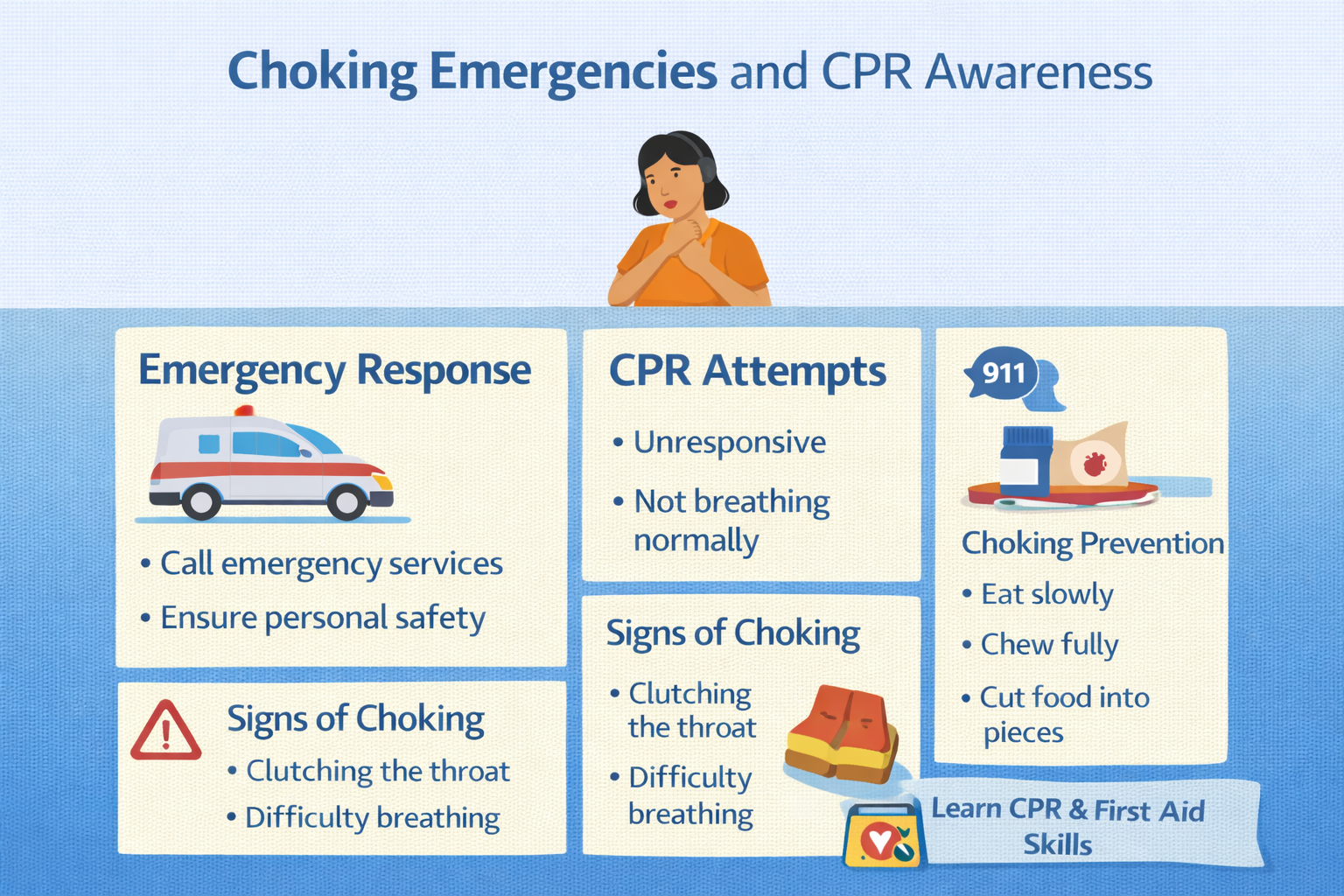
 Choking occurs when food or another object blocks the airway and prevents normal breathing. In severe cases, the blockage can stop oxygen from reaching the lungs and brain, creating a life-threatening emergency. Across Canada, including workplaces and public facilities in Vancouver and British Columbia, first aid and CPR training often includes education about choking recognition and emergency response.
Understanding the warning signs of choking and knowing how to react quickly can help improve emergency response while waiting for trained medical personnel to arrive.
A Realistic Emergency Response Scenario
In a reported incident at the Correctional Centre for Women in Clarenville, Newfoundland and Labrador, emergency responders were called after an inmate experienced a choking emergency during a meal.
According to RCMP reports, a 27-year-old woman was eating lunch in her cell when a piece of food reportedly became lodged in her airway. A corrections officer performing a routine check noticed the woman pointing toward her throat before collapsing, which can sometimes indicate a choking emergency.
Correctional staff quickly responded and initiated emergency care, including CPR, while arrangements were made for medical transport. The woman was taken to a healthcare facility for further treatment but later died after several hours under medical care.
Authorities indicated that the preliminary investigation suggested the incident was related to airway obstruction from food, though a medical examination was scheduled to confirm the exact cause.
Events like this highlight the importance of recognizing choking emergencies and responding quickly.
Signs of a Severe Choking Emergency
A person experiencing a serious airway obstruction may show warning signs such as:
-
Clutching or pointing at the throat
-
Difficulty breathing or speaking
-
Weak or silent coughing
-
High-pitched breathing sounds
-
Sudden loss of consciousness if the airway remains blocked
These signs indicate that immediate emergency assistance may be required.
Why Choking Can Become Dangerous Quickly
The airway allows oxygen to move from the mouth and nose into the lungs. When a solid object blocks this pathway, breathing becomes difficult or impossible.
Factors that may increase choking risk include:
-
Large or poorly chewed pieces of food
-
Eating quickly or while distracted
-
Medical conditions affecting swallowing
-
Reduced ability to cough forcefully
-
Certain medications or health conditions
Without oxygen, the body can quickly begin to experience serious complications, which is why rapid emergency response is important.
Emergency Response and First Aid Awareness
During a choking emergency, trained responders may attempt to clear the airway and support breathing. If a person becomes unresponsive and is not breathing normally, CPR may be attempted while waiting for emergency medical responders.
First aid training programs in Vancouver and across Canada teach several important emergency response priorities:
-
Recognize the signs of choking quickly
-
Call emergency services immediately
-
Provide assistance within your level of training
-
Follow instructions from emergency dispatchers if available
In institutional settings such as workplaces, schools, and correctional facilities, staff are often trained in basic first aid and choking response procedures.
Prevention and Food Safety Considerations
Although choking emergencies cannot always be prevented, certain practices may reduce risk.
Helpful safety practices include:
-
Eating slowly and chewing food thoroughly
-
Avoiding talking or laughing with food in the mouth
-
Cutting food into manageable pieces
-
Remaining seated while eating
-
Being aware of swallowing difficulties or medical conditions
Workplaces and institutions often provide first aid and emergency response training to help staff recognize and respond to choking incidents quickly.
Frequently Asked Questions
What is a choking emergency?
A choking emergency occurs when food or another object blocks the airway and prevents normal breathing.
What are common signs that someone is choking?
People experiencing severe choking may clutch their throat, struggle to breathe or speak, cough weakly, or become unresponsive if the airway remains blocked.
Why might CPR be used during a choking incident?
If a person becomes unresponsive and stops breathing normally due to airway obstruction, CPR may be attempted while emergency medical responders are on the way.
Are choking emergencies common during meals?
Choking incidents often occur while eating, particularly when food is not fully chewed or is swallowed too quickly.
Why is first aid training recommended in workplaces?
First aid training helps employees recognize emergencies and understand how to respond safely until trained medical responders arrive.
Educational Note
This article is intended for general public education about choking emergencies and first aid awareness. Learning CPR and basic first aid can help individuals recognize emergencies and provide assistance safely until trained emergency responders arrive.
About The Author

Mark Kascha
First Aid Instructor Trainer with 30+ years of experience in CPR, emergency response, and safety training across Canada.
👉 [View full credentials]🔗 View LinkedIn Profile
Last reviewed: March 2026