
A medical emergency at a community event in Newfoundland and Labrador demonstrates how life-saving training can make a difference — even when help is unexpected.
CPR (cardiopulmonary resuscitation) and AED use are not just for healthcare professionals. Across Canada, including Vancouver and throughout British Columbia, first aid and CPR training are essential skills for workplaces, community groups, and everyday citizens.
What Happened in Gander
During a community gathering at the Gander Legion, a man suddenly collapsed. Among those present was John Haggie, then Minister of Health and Community Services.
According to reports, the man was unresponsive and had no detectable pulse. CPR was initiated immediately. Emergency responders were called, and the individual was transported to hospital. By the time he left the scene, he was alert and speaking.
While the minister downplayed his role, the key takeaway was clear: recognizing cardiac arrest and acting quickly can influence outcomes.
Recognizing Cardiac Arrest
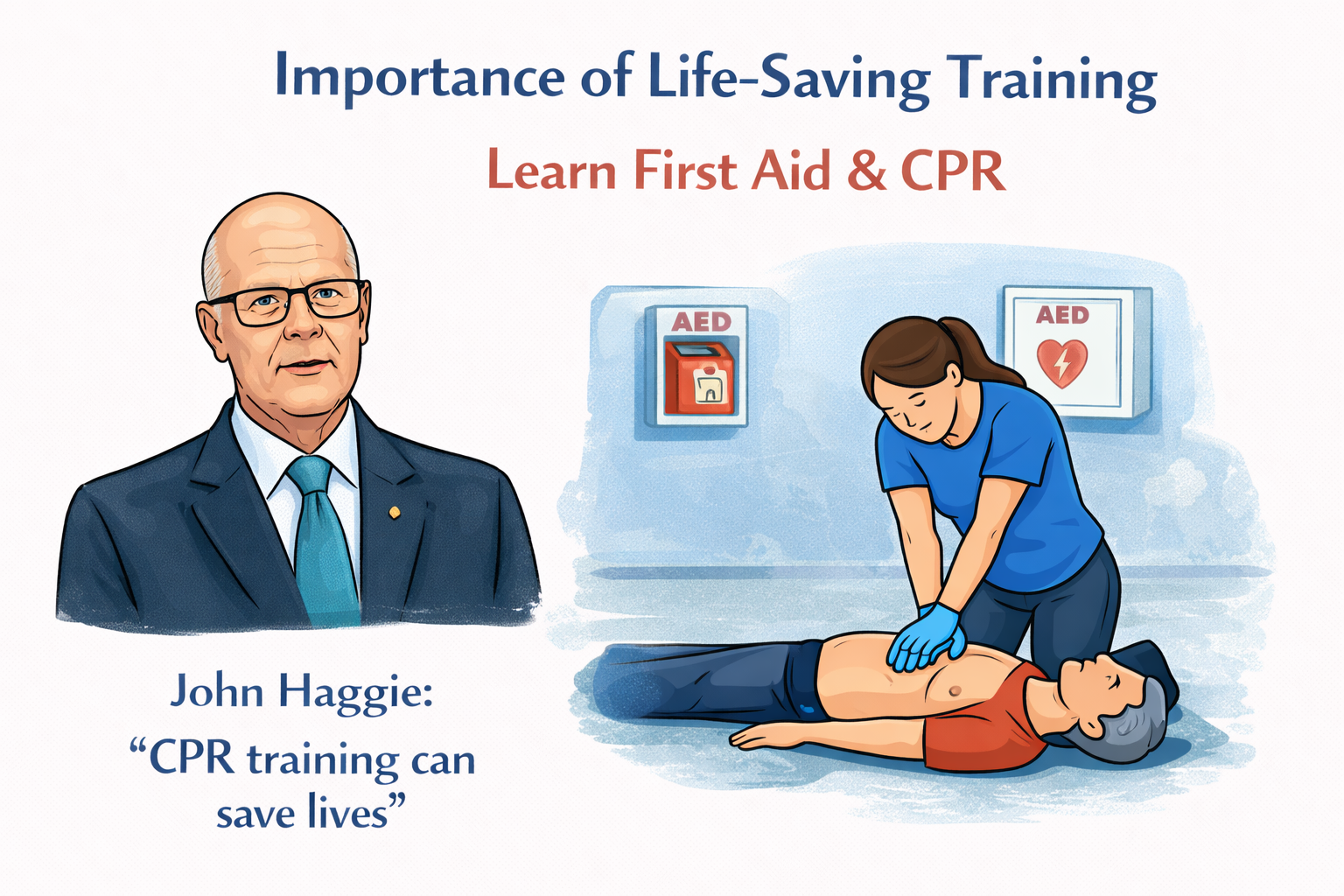 Cardiac arrest occurs when the heart suddenly stops pumping blood effectively due to an electrical malfunction.
Warning signs include:
-
Sudden collapse
-
Unresponsiveness
-
No normal breathing
-
No pulse (for trained responders)
These are the criteria used in Basic Life Support (BLS) training to determine when CPR should begin.
Why Immediate CPR Is Critical
When the heart stops:
-
Blood flow to the brain stops immediately
-
Loss of consciousness occurs within seconds
-
Brain injury risk increases within minutes
CPR helps circulate oxygenated blood to vital organs until:
-
The heart rhythm is restored
-
An AED delivers a shock if needed
-
Paramedics provide advanced care
Early CPR significantly improves survival rates in out-of-hospital cardiac arrest.
The Role of AEDs
Automated external defibrillators (AEDs) are designed for public use. They:
-
Analyze heart rhythm
-
Deliver a shock only if required
-
Provide clear voice instructions
Many community centres, workplaces, and recreation facilities across Vancouver and BC now have AEDs available.
Why First Aid Training Matters in Canada
This incident reinforces an important point: cardiac arrest can occur anywhere — at a community event, restaurant, workplace, or at home.
First aid and CPR training help individuals:
-
Recognize emergencies quickly
-
Act confidently under pressure
-
Follow structured response steps
-
Support professional responders
In British Columbia, CPR certification is a core component of Occupational First Aid training and is strongly encouraged for the general public.
Following Your Training
One key lesson emphasized in this story is the importance of following structured training protocols.
Basic life support training teaches responders to:
-
Check responsiveness
-
Assess breathing
-
Call 9-1-1
-
Begin chest compressions
-
Use an AED when available
Remaining calm and following this sequence supports effective emergency response.
Frequently Asked Questions
Who should learn CPR?
Anyone can benefit from CPR training, including office workers, parents, students, and community volunteers.
How do you know when to start CPR?
Start CPR if the person is unresponsive and not breathing normally.
Do you need medical experience to perform CPR?
No. CPR courses are designed for the general public and provide clear, practical instruction.
Are AEDs safe for public use?
Yes. AEDs are designed to guide users step-by-step and will only deliver a shock if appropriate.
Does CPR guarantee survival?
No. Outcomes depend on many factors, but early CPR significantly improves the chance of survival.
Educational Note
This article is provided for general first aid and emergency preparedness education in Canada. Formal CPR and AED training helps individuals respond confidently and appropriately during unexpected cardiac emergencies.
About The Author

Mark Kascha
First Aid Instructor Trainer with 30+ years of experience in CPR, emergency response, and safety training across Canada.
👉 [View full credentials]🔗 View LinkedIn Profile
Last reviewed: March 2026