
Large public events such as hockey games bring together thousands of spectators in arenas and stadiums. While these gatherings are typically safe, medical emergencies can occur unexpectedly among fans, athletes, or staff. When someone becomes unresponsive and is not breathing normally, trained personnel may attempt cardiopulmonary resuscitation (CPR) until advanced medical care arrives.
Across Canada, including Vancouver and British Columbia, many arenas, workplaces, and public venues prepare for emergencies by training staff in CPR and first aid. Emergency planning helps ensure rapid response when unexpected health incidents occur during crowded events.
A Realistic Arena Emergency Scenario
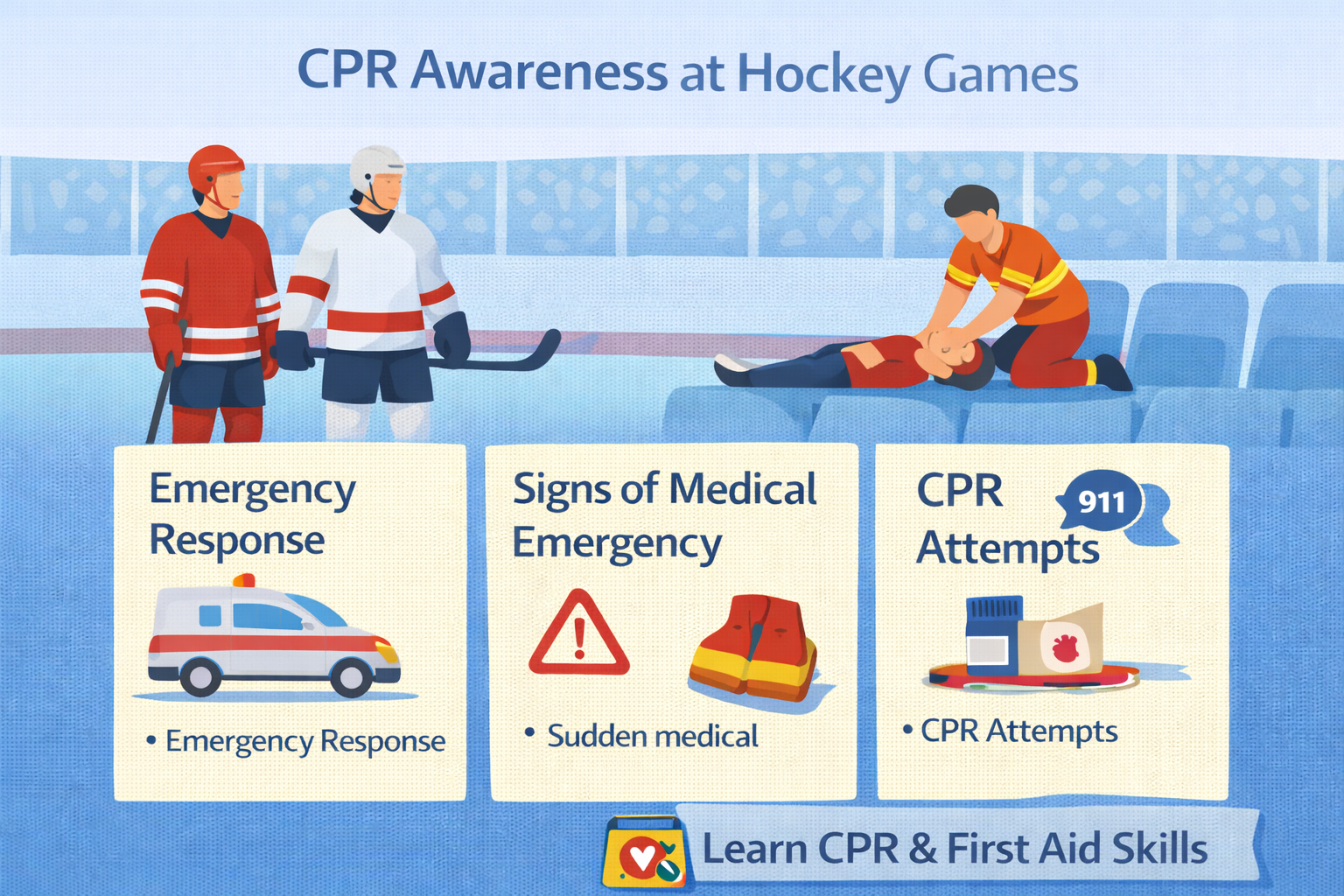 During a professional hockey game between the Ottawa Senators and the Florida Panthers, play was temporarily halted when a medical emergency occurred in the stands.
With approximately 3 minutes remaining in the first period, arena medical staff responded to a fan who required urgent medical attention. Teams were sent back to their dressing rooms while the emergency team provided medical assistance, including CPR, in the seating area.
After the situation was addressed, the game resumed and the remaining time in the first period was played at the beginning of the second period.
Later in the game, play was briefly delayed again when a player suffered an injury on the ice that required medical assistance and a stretcher.
Situations like this highlight how trained emergency staff are present at large events to respond quickly when spectators or participants experience medical emergencies.
Signs Someone May Need Immediate Medical Attention
During large events or crowded gatherings, a person may require urgent assistance if they show signs such as:
-
Sudden collapse or loss of consciousness
-
Not breathing normally or only gasping
-
No response to voice or touch
-
Pale, grey, or bluish skin tone
-
Seizure-like movements or confusion
Recognizing these warning signs and alerting event staff or emergency services immediately is critical.
Why CPR May Be Needed in Public Venues
Medical emergencies can occur anywhere, including sports arenas, workplaces, and entertainment venues.
Situations that may lead to someone becoming unresponsive include:
-
Cardiac emergencies
-
Sudden medical conditions
-
Heat or physical stress
-
Pre-existing health conditions
-
Traumatic injuries
When a person stops breathing normally, trained responders may begin CPR to help maintain circulation until paramedics arrive.
Emergency Response at Sporting Events
Most major sporting venues in Canada have emergency preparedness plans that include trained staff and medical equipment.
Common safety measures include:
-
On-site medical teams or first responders
-
Staff trained in CPR and first aid
-
Emergency communication systems
-
Clear procedures for pausing events during emergencies
-
Access to automated external defibrillators (AEDs)
These preparations help ensure that emergency responders can quickly reach individuals who require medical attention.
Prevention and Public Safety Awareness
Although not every medical emergency can be predicted, public safety planning helps improve response during large events.
Helpful safety considerations include:
-
Training venue staff in CPR and first aid
-
Ensuring easy access to medical assistance areas
-
Encouraging public awareness of emergency procedures
-
Maintaining clear pathways for emergency responders
Workplaces and public venues in Vancouver and across Canada often include first aid and CPR training as part of safety planning for large gatherings.
Frequently Asked Questions
Why might CPR be used at a sporting event?
CPR may be used if someone becomes unresponsive and is not breathing normally. It helps maintain circulation until professional medical responders arrive.
Are medical teams present at major sporting events?
Many arenas and stadiums have trained medical staff and emergency responders on site to handle health emergencies among fans or participants.
Why might a game be paused during a medical emergency?
Events may be paused to allow emergency responders space and time to provide care safely.
Can medical emergencies happen even during routine activities?
Yes. Medical emergencies can occur unexpectedly in many environments, including workplaces, homes, or public venues.
Why is CPR training encouraged for the public?
CPR training helps people recognize emergencies and understand how to assist safely until trained responders arrive.
Educational Note
This article is intended for general public education about emergency response awareness and first aid training. Learning CPR and basic first aid can help individuals recognize emergencies and provide assistance safely until professional medical responders arrive.
About The Author

Mark Kascha
First Aid Instructor Trainer with 30+ years of experience in CPR, emergency response, and safety training across Canada.
👉 [View full credentials]🔗 View LinkedIn Profile
Last reviewed: March 2026