
Cardiac emergencies can occur suddenly and without warning. When a person collapses and is not breathing normally, cardiopulmonary resuscitation (CPR) may help maintain circulation until paramedics arrive. Across Canada, including Vancouver and British Columbia, CPR awareness and first aid training are widely encouraged in workplaces, schools, and communities to prepare people for these unexpected situations.
Many successful emergency responses involve bystanders who recognize the signs of cardiac arrest and act quickly. Learning how to respond during those first few minutes can play an important role in community safety.
A Realistic Community Emergency Scenario
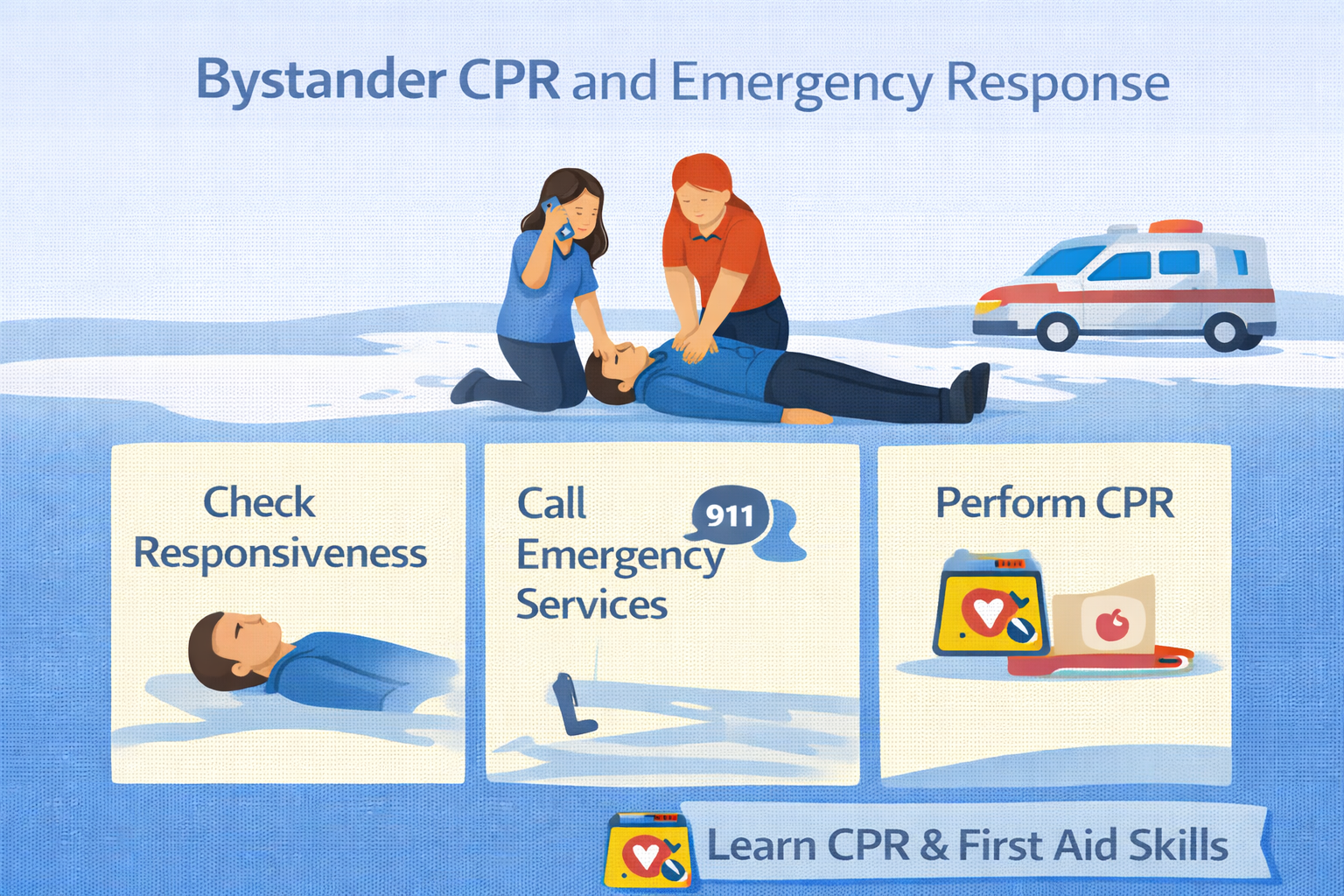 In March 2016, two teenage students demonstrated how quick thinking and teamwork can help during an emergency.
Brooklyn Rogers and Chloe Cuff, both 13 years old at the time, had just stepped off their school bus when they noticed a man lying motionless in a nearby snowbank. Chloe Cuff approached the man and realized he was unresponsive.
Recognizing that something was wrong, Cuff stayed with the man while Rogers ran to get her parents. When the adults arrived, they quickly called emergency services and began CPR while waiting for paramedics to reach the scene.
Emergency responders soon arrived and continued medical care.
Later, the two girls and Rogers’ parents were recognized with Rescuer Awards, which honour individuals who provide life-saving assistance, prevent further injury, or offer critical help before professional responders arrive.
This event highlights how community members of any age can play an important role in recognizing emergencies and seeking help quickly.
Signs of a Possible Cardiac Emergency
Cardiac arrest may occur suddenly and requires immediate attention. Warning signs can include:
-
Sudden collapse
-
Unresponsiveness
-
Not breathing normally or only gasping
-
No response to voice or touch
-
Pale or bluish skin tone
Recognizing these signs quickly and calling emergency services immediately is essential.
Why Bystander CPR Is Important
When the heart stops pumping effectively, oxygen circulation to the brain and vital organs is disrupted. CPR helps move oxygenated blood through the body while emergency medical responders are on the way.
Situations where CPR may be attempted include:
-
Sudden cardiac arrest
-
Unresponsiveness with no normal breathing
-
Medical emergencies affecting circulation
-
Collapse during physical activity or daily routines
Early assistance by bystanders can help bridge the time until professional responders arrive.
Emergency Response and First Aid Awareness
In many communities, bystanders are the first people present when an emergency occurs. First aid training programs across Vancouver and British Columbia emphasize several important response steps:
-
Check for responsiveness and breathing
-
Call emergency services immediately
-
Provide assistance within your level of training
-
Continue care until paramedics arrive
Public CPR training programs help communities build confidence and readiness during unexpected medical emergencies.
Community Preparedness and Prevention
While cardiac emergencies cannot always be predicted, community preparedness can improve response times and awareness.
Examples include:
-
First aid and CPR training in schools and workplaces
-
Public access to automated external defibrillators (AEDs)
-
Community awareness of emergency response steps
-
Encouraging bystander readiness during emergencies
Across Vancouver and Canada, many organizations promote CPR education to strengthen public safety and emergency preparedness.
Frequently Asked Questions
What is bystander CPR?
Bystander CPR refers to CPR performed by someone who witnesses an emergency before professional responders arrive.
Can teenagers learn CPR?
Yes. Many schools and community programs teach CPR awareness and basic first aid to young people.
Why is quick action important during cardiac arrest?
The brain requires oxygen to function. Early assistance helps maintain circulation until paramedics arrive.
What should someone do if they find a person collapsed?
The most important step is to call emergency services and follow instructions from emergency dispatchers while waiting for responders.
Why do communities promote CPR training?
CPR training helps people recognize emergencies and understand how to respond safely until trained responders arrive.
Educational Note
This article is intended for general public education about first aid awareness and emergency preparedness. Learning CPR and basic first aid can help individuals recognize emergencies and provide assistance safely until trained medical responders arrive.
About The Author

Mark Kascha
First Aid Instructor Trainer with 30+ years of experience in CPR, emergency response, and safety training across Canada.
👉 [View full credentials]🔗 View LinkedIn Profile
Last reviewed: March 2026