
A drowning at Buffalo Pound Provincial Park serves as a reminder that water emergencies can happen quickly — even during family gatherings and recreational outings.
Across Canada, including Vancouver and throughout British Columbia, lakes and beaches are popular destinations during warmer months. Understanding water safety and basic CPR principles is an important part of community and workplace preparedness.
What Happened at Buffalo Pound Provincial Park
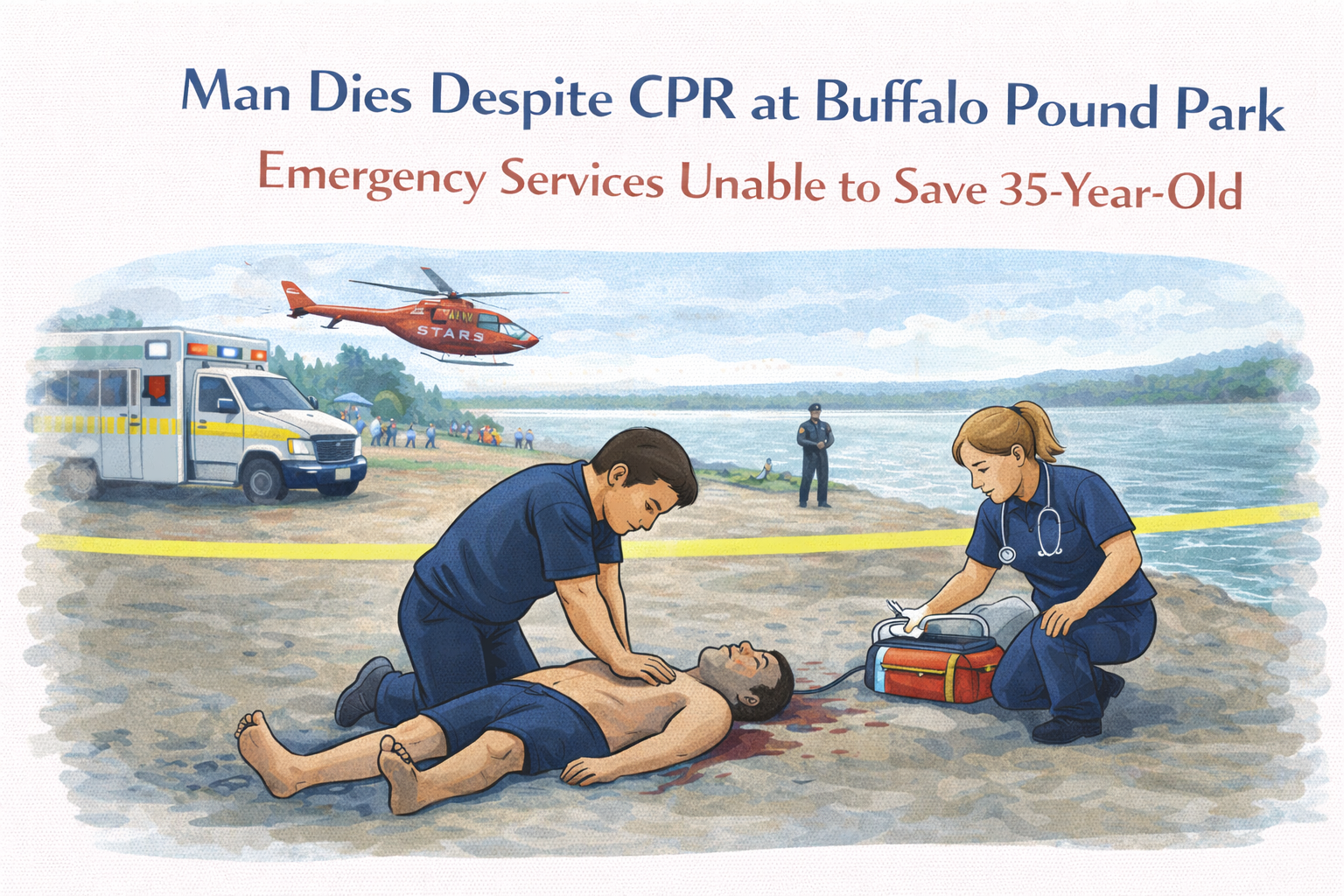
According to the Moose Jaw RCMP, a 35-year-old man from the Regina area was attending a family gathering at the beach when he entered the water and began to struggle.
A bystander brought him back to shore. Emergency services responded quickly and initiated CPR. Despite continued efforts, including response from air ambulance services, the man was later pronounced deceased.
Officials thanked those who attempted to help.
While not all outcomes can be changed, rapid recognition and response remain essential components of water safety.
Understanding Drowning
 Drowning occurs when breathing is impaired due to submersion or immersion in water.
It can happen:
-
In lakes, rivers, and reservoirs
-
In areas without lifeguards
-
In shallow or deep water
-
Quietly and without dramatic splashing
Even strong swimmers can encounter difficulties due to fatigue, cold water, sudden medical events, or unexpected changes in depth.
Signs Someone Is Struggling in Water
A person in distress may:
-
Be vertical in the water without kicking effectively
-
Attempt to push down on the water with their arms
-
Have difficulty speaking
-
Appear panicked or unusually quiet
Quick recognition is critical.
First Aid Response: Public Education Overview
If someone is struggling in the water:
-
Call 9-1-1 immediately
-
Avoid entering the water unless it is safe and you are capable
-
Use a reaching or throwing assist if possible (rope, flotation device, paddle)
If the person is removed from the water:
-
Check responsiveness
-
Assess breathing
-
Begin CPR if unresponsive and not breathing normally
-
Continue until emergency services take over
In drowning cases, oxygen deprivation is the primary concern. Early CPR may help restore circulation until advanced care is available.
The Role of Emergency Services
In this incident, local RCMP, EMS, and air ambulance services responded. In many rural or park settings, access routes and response times can vary depending on location.
This underscores the importance of bystander awareness and immediate action.
Water Safety in BC and Across Canada
Whether at Buffalo Pound or lakes in British Columbia, water safety considerations include:
-
Never swimming alone
-
Being aware of water temperature
-
Supervising children closely
-
Avoiding overestimation of swimming ability
-
Wearing appropriate flotation devices when boating
Cold water can impair coordination and endurance even in summer.
Why CPR Training Is Valuable
Learning CPR equips individuals to:
-
Respond quickly to sudden collapse
-
Provide care until paramedics arrive
-
Improve survival chances in cardiac and respiratory emergencies
-
Support safer communities and workplaces
In Vancouver and throughout BC, CPR certification is part of many workplace safety programs and is widely available to the public.
Frequently Asked Questions
Can drowning happen quickly?
Yes. Drowning can occur in minutes and often without loud splashing or shouting.
Should you jump in to rescue someone?
Only if it is safe and you are capable. Whenever possible, use a reaching or throwing assist instead.
Is CPR always successful after drowning?
Outcomes depend on many factors, including how long the person was without oxygen and how quickly care began.
Does water temperature matter?
Yes. Cold water can lead to rapid fatigue, hypothermia, and reduced swimming ability.
Is CPR training useful for recreational activities?
Yes. Many water-related emergencies occur during leisure activities and family gatherings.
Educational Note
This article is provided for general water safety and first aid awareness in Canada. Formal CPR and first aid training helps individuals respond appropriately during emergencies while waiting for professional medical services.
About The Author

Mark Kascha
First Aid Instructor Trainer with 30+ years of experience in CPR, emergency response, and safety training across Canada.
👉 [View full credentials]🔗 View LinkedIn Profile
Last reviewed: March 2026