
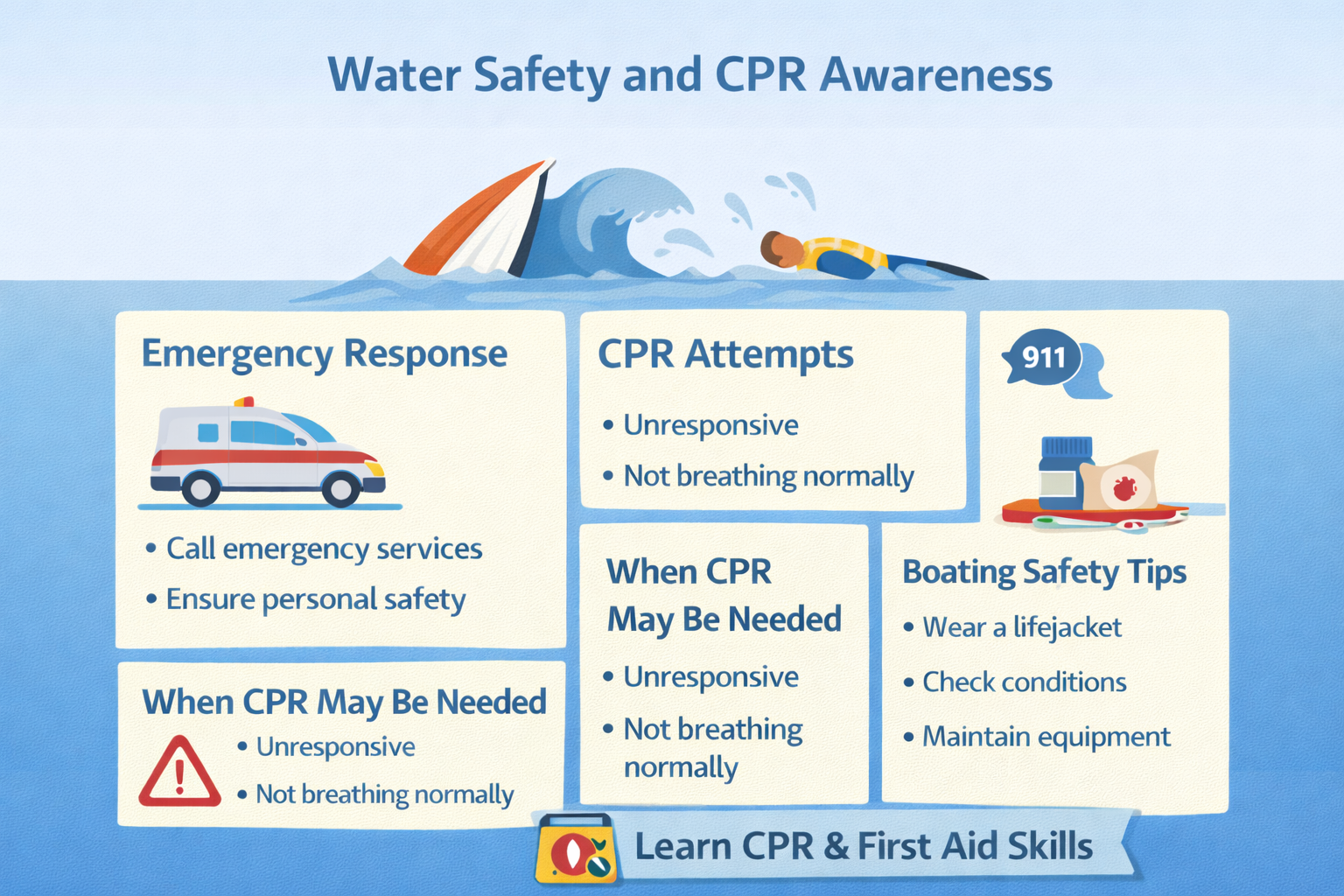
 Boating and fishing are common activities across Canada’s coastal communities and inland waterways. However, sudden weather changes, mechanical problems, or rough water can quickly create dangerous situations. When someone falls overboard and becomes unresponsive, emergency responders or bystanders may attempt cardiopulmonary resuscitation (CPR) while waiting for professional medical help.
Although this incident occurred in another Canadian coastal community, the lessons are relevant to boating, fishing, and marine work environments around Vancouver, British Columbia, and other coastal regions. Water safety awareness and first aid training are important parts of workplace and recreational safety in areas where people regularly work or travel on the water.
A Realistic Boating Emergency Scenario
In a reported incident in the coastal town of Conche, Newfoundland and Labrador, emergency responders were notified after a boating accident near an area known as Lighthouse Point.
According to Roddickton RCMP, a 65-year-old man was operating a small boat while moving between local wharves. Investigators believe the boat may have experienced engine difficulties, which left it drifting into larger waves.
During the incident, a swell reportedly knocked the man overboard.
A family member who was nearby on shore witnessed the situation and attempted to respond. Because another vessel was needed to reach the location, it took some time before rescuers were able to approach the boat.
The man was eventually recovered from the water and CPR was immediately attempted, but he remained unresponsive. Authorities later confirmed that the individual had drowned.
Investigators also reported that the man was not wearing a lifejacket when he was recovered, although the investigation continued to determine whether he had been wearing one earlier in the incident.
Events like this highlight how quickly conditions on the water can change and why boating safety awareness and emergency preparedness are important.
Signs of a Water Emergency
Someone who has fallen into the water may require urgent assistance if they show signs such as:
-
Struggling to stay afloat
-
Difficulty keeping the head above water
-
Panic or uncontrolled movements
-
Sudden disappearance beneath the surface
-
Lack of movement or unresponsiveness after rescue
Recognizing these warning signs quickly and contacting emergency services immediately is critical.
Factors That Can Contribute to Boating Incidents
Boating emergencies can occur for many reasons, particularly in coastal environments.
Common contributing factors include:
-
Sudden mechanical or engine failure
-
Rough water or unexpected swells
-
Loss of balance while standing in a small vessel
-
Limited flotation support after falling overboard
-
Cold water conditions that affect muscle control
-
Delays in rescue due to location or weather
Even experienced boaters can face unexpected hazards when operating on open water.
Emergency Response and First Aid Awareness
When someone is recovered from the water and is not breathing normally, trained responders or bystanders may attempt CPR while waiting for paramedics or marine rescue services.
First aid training programs across Vancouver and coastal British Columbia emphasize several priorities during water emergencies:
-
Ensure personal safety before attempting a rescue
-
Call emergency services immediately
-
Use flotation or rescue equipment when possible
-
Provide assistance within your level of training
Emergency responders, including coast guard units, paramedics, and local rescue teams, typically take over care once they arrive.
Prevention and Boating Safety Considerations
Many water-related incidents can be reduced through preparation and safety awareness.
Important boating safety practices include:
-
Wearing properly fitted lifejackets while on the water
-
Checking weather and water conditions before traveling
-
Maintaining boat engines and equipment regularly
-
Informing others of travel plans before leaving shore
-
Avoiding standing or unstable movements in small vessels
-
Carrying emergency communication equipment
In coastal communities and marine workplaces, boating safety training and CPR awareness are often included in occupational safety programs.
Frequently Asked Questions
Why might CPR be attempted after a water rescue?
CPR may be attempted if a person becomes unresponsive and is not breathing normally after being removed from the water. It helps circulate oxygenated blood while emergency medical responders are on the way.
Why are lifejackets important during boating?
Lifejackets help keep a person afloat if they fall into the water, especially if waves, fatigue, or cold water make swimming difficult.
Can rough water increase boating risks?
Yes. Waves, swells, and strong currents can affect the stability of small boats and increase the risk of someone falling overboard.
Why is rescue sometimes delayed during boating incidents?
Location, weather conditions, and the availability of nearby vessels can affect how quickly rescuers can reach someone in the water.
Why is CPR training recommended for people who spend time on the water?
CPR training helps individuals recognize emergencies and understand how to assist safely until professional responders arrive.
Educational Note
This article is intended for general public education about water safety and first aid awareness. Learning CPR and basic first aid can help individuals recognize emergencies and provide assistance safely until trained emergency responders arrive.
About The Author

Mark Kascha
First Aid Instructor Trainer with 30+ years of experience in CPR, emergency response, and safety training across Canada.
👉 [View full credentials]🔗 View LinkedIn Profile
Last reviewed: March 2026