
Smoke inhalation is a serious risk during fires and can quickly affect breathing and oxygen levels in the body. In severe situations, a person exposed to heavy smoke may lose consciousness or stop breathing. When this occurs, cardiopulmonary resuscitation (CPR) may be required to help maintain circulation and oxygen flow until advanced medical care is available.
Across Vancouver and throughout British Columbia, fire emergencies and smoke exposure incidents highlight the importance of first aid awareness in communities and workplaces. Knowing how to recognize breathing emergencies and understanding the basics of CPR can help support emergency response while waiting for paramedics or firefighters.
A Fire Emergency in East Vancouver
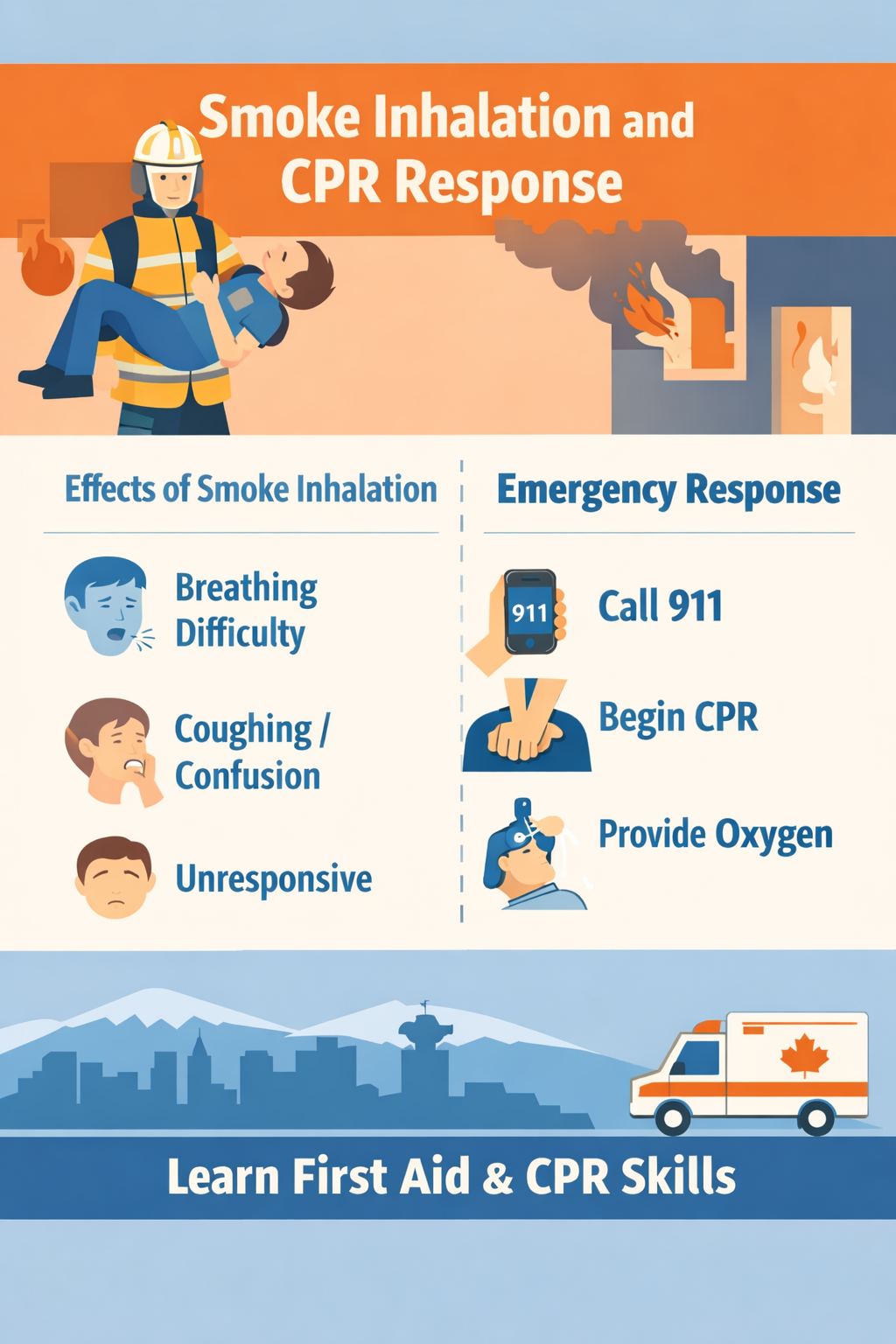 In East Vancouver, firefighters responded to a residential fire where a man required emergency assistance after being exposed to heavy smoke.
Fire crews were called to a four-storey apartment building on Wall Street near Oxford Park after reports of smoke coming from one of the units. When firefighters arrived, they encountered thick black smoke inside the building.
According to Vancouver Fire Rescue Services Battalion Chief Mike Sereda, crews quickly entered the building and located a man inside the affected apartment suite. Firefighters removed him from the smoke-filled unit and brought him outside the building.
Once outside, emergency responders began CPR at the exterior of the building after determining that the man required immediate assistance.
The man was believed to be suffering from smoke inhalation and was transported to a healthcare facility by ambulance for further care. Firefighters were also able to extinguish the flames quickly, preventing the fire from spreading to other units.
Residents in the building were temporarily evacuated while firefighters ventilated the structure to clear the smoke. Authorities later indicated that most residents could return to their homes, although the damaged suite would require repairs before it could be occupied again.
Events like this demonstrate how quickly fire emergencies can develop and how emergency responders rely on rapid rescue and life-saving procedures such as CPR.
Understanding Smoke Inhalation
Smoke inhalation occurs when a person breathes in harmful gases, hot air, and tiny particles released during a fire. These substances can irritate the lungs and airways and reduce the body’s ability to receive oxygen.
In enclosed spaces such as apartments, offices, or industrial buildings, smoke can accumulate quickly and create dangerous breathing conditions within minutes.
Possible symptoms of smoke inhalation include:
-
Difficulty breathing or shortness of breath
-
Persistent coughing
-
Headache or dizziness
-
Confusion or disorientation
-
Soot around the mouth or nose
-
Unconsciousness or unresponsiveness
Severe smoke exposure can interfere with oxygen delivery to the brain and organs, which may lead to life-threatening complications.
Why CPR May Be Needed After Smoke Exposure
CPR may be necessary when smoke inhalation leads to breathing failure or cardiac arrest. When a person stops breathing or becomes unresponsive, oxygen is no longer circulating effectively through the body.
CPR helps by providing manual chest compressions, which support blood circulation and help deliver oxygen to vital organs until professional medical care arrives.
In fire emergencies, firefighters and paramedics are trained to assess breathing and circulation quickly and begin life-saving care when needed.
Emergency Response and First Aid Awareness
During emergencies involving fire or smoke exposure, several steps are typically taken by trained responders:
-
Removing the person from the dangerous environment
-
Assessing breathing and responsiveness
-
Calling for emergency medical assistance
-
Beginning CPR if breathing or circulation has stopped
-
Providing continued care until advanced medical help arrives
Emergency dispatchers and first responders across British Columbia are trained to coordinate these steps quickly during critical incidents.
While members of the public should not place themselves in danger during fires, understanding basic first aid and CPR principles can support safer community response during medical emergencies.
Prevention and Workplace Fire Safety
Fire safety awareness plays an important role in preventing smoke-related injuries in residential buildings and workplaces.
Common safety measures include:
-
Maintaining working smoke alarms
-
Following fire safety plans in residential and workplace buildings
-
Keeping exits and hallways clear
-
Practicing evacuation procedures
-
Learning basic first aid and CPR skills
Workplace safety training in Vancouver and across British Columbia often includes emergency preparedness education, which helps individuals understand how to respond to medical emergencies while waiting for professional responders.
Frequently Asked Questions
What is smoke inhalation?
Smoke inhalation occurs when a person breathes in harmful gases, particles, and hot air produced during a fire. These substances can irritate the lungs and reduce the body’s ability to absorb oxygen.
Why can smoke inhalation become dangerous?
Smoke may contain toxic chemicals and carbon monoxide that interfere with oxygen delivery in the body. In severe situations, this can lead to confusion, unconsciousness, or breathing failure.
When might CPR be used during a fire emergency?
CPR may be required if a person becomes unresponsive and is not breathing normally after smoke exposure. Emergency responders assess breathing and circulation before beginning life-saving procedures.
How do firefighters respond to smoke inhalation incidents?
Firefighters are trained to rescue individuals from hazardous environments, assess their condition, and provide emergency care such as oxygen support or CPR until paramedics take over.
Why is CPR training important for the public?
CPR training helps individuals recognize breathing emergencies and understand how to respond while waiting for professional medical assistance. Early action can support emergency response in critical situations.
Educational Note
This article is intended for general first aid awareness and community safety education. Learning first aid and CPR can help individuals recognize emergencies and provide initial assistance until trained emergency responders arrive.
About The Author

Mark Kascha
First Aid Instructor Trainer with 30+ years of experience in CPR, emergency response, and safety training across Canada.
👉 [View full credentials]🔗 View LinkedIn Profile
Last reviewed: March 2026
 Support local, Canadian-owned businesses, with no connections to American corporations or partnerships.