Understanding CPR During Major Emergencies
 Cardiopulmonary resuscitation (CPR) is an emergency technique used when a person’s heart stops beating or they stop breathing normally. The goal of CPR is to help maintain blood circulation and oxygen flow to vital organs until professional medical responders can provide advanced care.
Across Canada, including British Columbia and the Vancouver region, CPR training is commonly encouraged in workplaces and communities. Emergencies such as transportation accidents, workplace incidents, or sudden medical events can occur unexpectedly, making basic life-saving skills valuable for bystanders.
First Aid and Workplace Relevance in Vancouver and British Columbia
Workplaces in British Columbia often include first aid and CPR training as part of occupational health and safety programs. Transportation industries, construction sites, recreation facilities, and public venues all benefit from having individuals who know how to respond during emergencies.
Quick response from nearby individuals can help support injured people during the critical minutes before paramedics arrive.
Scenario: Emergency Response After a Float Plane Crash
A float plane crash in Yellowknife resulted in multiple injuries and prompted immediate emergency response from nearby witnesses.
According to reports, nine people were aboard the Twin Otter aircraft when it crashed in the Old Town area of Yellowknife at around 1 p.m. The aircraft came down between buildings on a street, drawing the attention of nearby residents and businesses.
Witnesses reported hearing a loud sound before seeing the damaged aircraft. Several people rushed toward the scene to help those involved in the crash.
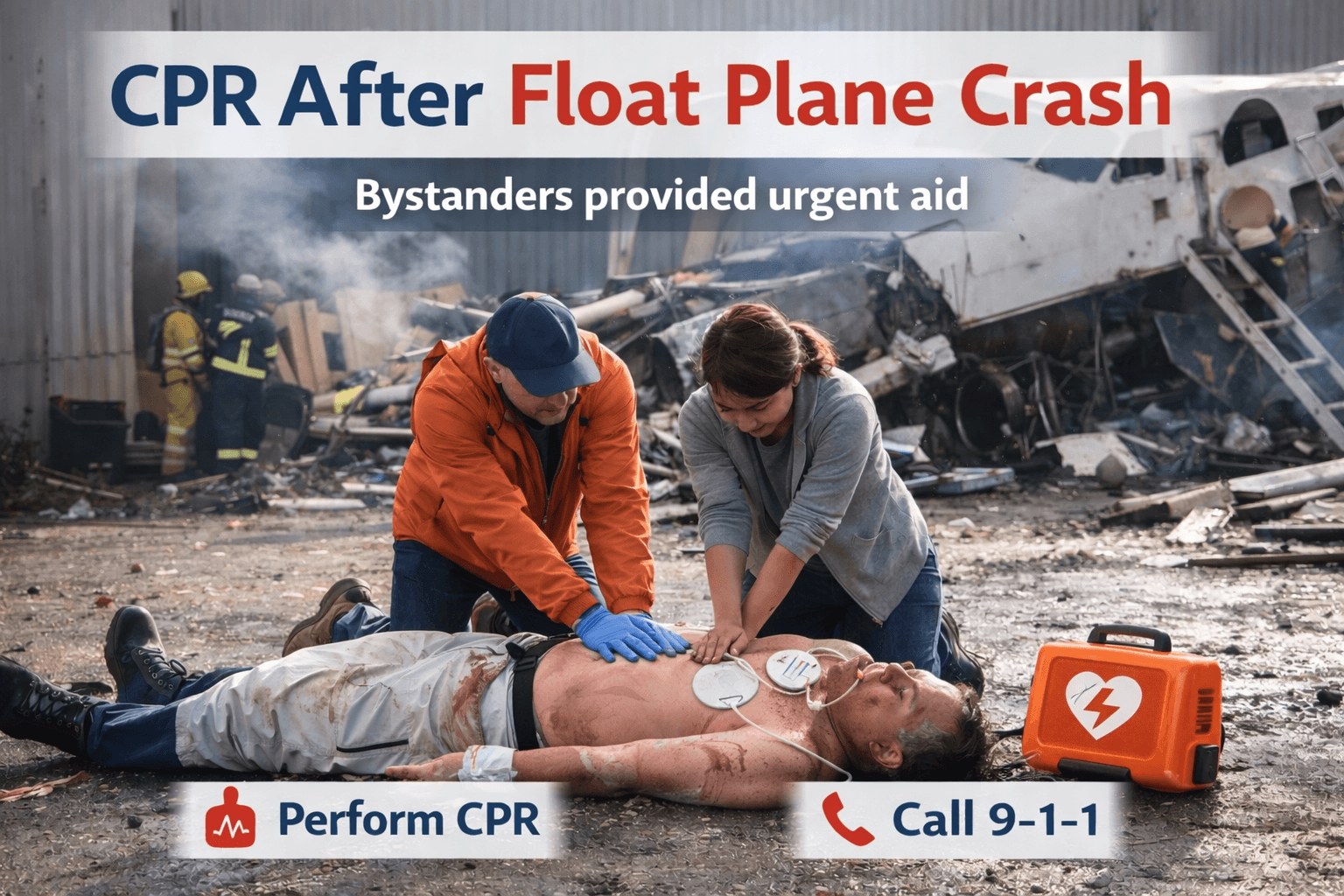
Two pilots on board the aircraft were critically injured in the incident. Witnesses attempted to provide CPR in an effort to resuscitate them while waiting for emergency responders to arrive. Despite these efforts, both pilots later died.
Seven additional passengers were transported to healthcare facilities for treatment. Reports indicated that some individuals were in critical condition while others were stable. At least one injured passenger was transferred to a hospital in Edmonton for further care.
Emergency services, including paramedics and investigators, responded to the scene. The Transportation Safety Board later began an investigation into the crash.
Incidents like this highlight how bystanders sometimes provide immediate assistance during unexpected emergencies until professional responders take over.
Signs of Cardiac Arrest After Trauma
Severe accidents can sometimes lead to cardiac arrest or loss of breathing. Signs that someone may require immediate assistance include:
-
Loss of consciousness
-
Absence of normal breathing
-
No detectable pulse
-
Severe trauma or injuries
-
Pale or bluish skin due to reduced oxygen circulation
These signs indicate a medical emergency that requires rapid response.
How CPR Helps During Emergencies
CPR helps maintain circulation by manually compressing the chest, which can assist in moving blood through the body. During cardiac arrest, this can help deliver oxygen to the brain and other vital organs until advanced medical treatment becomes available.
In many emergencies, CPR may be combined with other interventions such as defibrillation using an automated external defibrillator (AED) or advanced care from paramedics.
Emergency Response and Community Preparedness
While transportation accidents cannot always be prevented, community preparedness can improve response during emergencies.
Helpful preparedness measures include:
-
Encouraging CPR and first aid training in workplaces and communities
-
Maintaining emergency response plans in public spaces
-
Ensuring clear communication with emergency services
-
Supporting public education on life-saving skills
Communities with trained bystanders and accessible emergency equipment are often better prepared to respond to unexpected incidents.
Frequently Asked Questions
What is CPR used for during emergencies?
CPR is used when someone’s heart has stopped beating or they are not breathing normally. It helps circulate oxygenated blood until professional medical care is available.
Why might bystanders perform CPR after an accident?
In serious incidents, bystanders may provide CPR if someone is unresponsive and not breathing normally while waiting for paramedics to arrive.
Can CPR be used in trauma situations?
CPR may be used when cardiac arrest occurs after severe injury, although emergency responders will determine the most appropriate care once they arrive.
Do workplaces in Canada encourage CPR training?
Many workplaces include CPR and first aid training as part of safety planning and emergency preparedness.
Why are the first few minutes important during cardiac arrest?
Early assistance—such as calling emergency services and beginning CPR—can help support circulation until advanced medical treatment is available.
Educational Note
This article is intended for general public education about emergency preparedness and CPR awareness. Learning first aid and CPR can help individuals respond more confidently during unexpected emergencies in workplaces, public spaces, and community environments.
About The Author

Mark Kascha
First Aid Instructor Trainer with 30+ years of experience in CPR, emergency response, and safety training across Canada.
Last reviewed: March 2026
 Support local, Canadian-owned businesses, with no connections to American corporations or partnerships.