First Aid Awareness and Bystander Response After a Road Collision
Understanding the Role of Bystanders in Emergencies
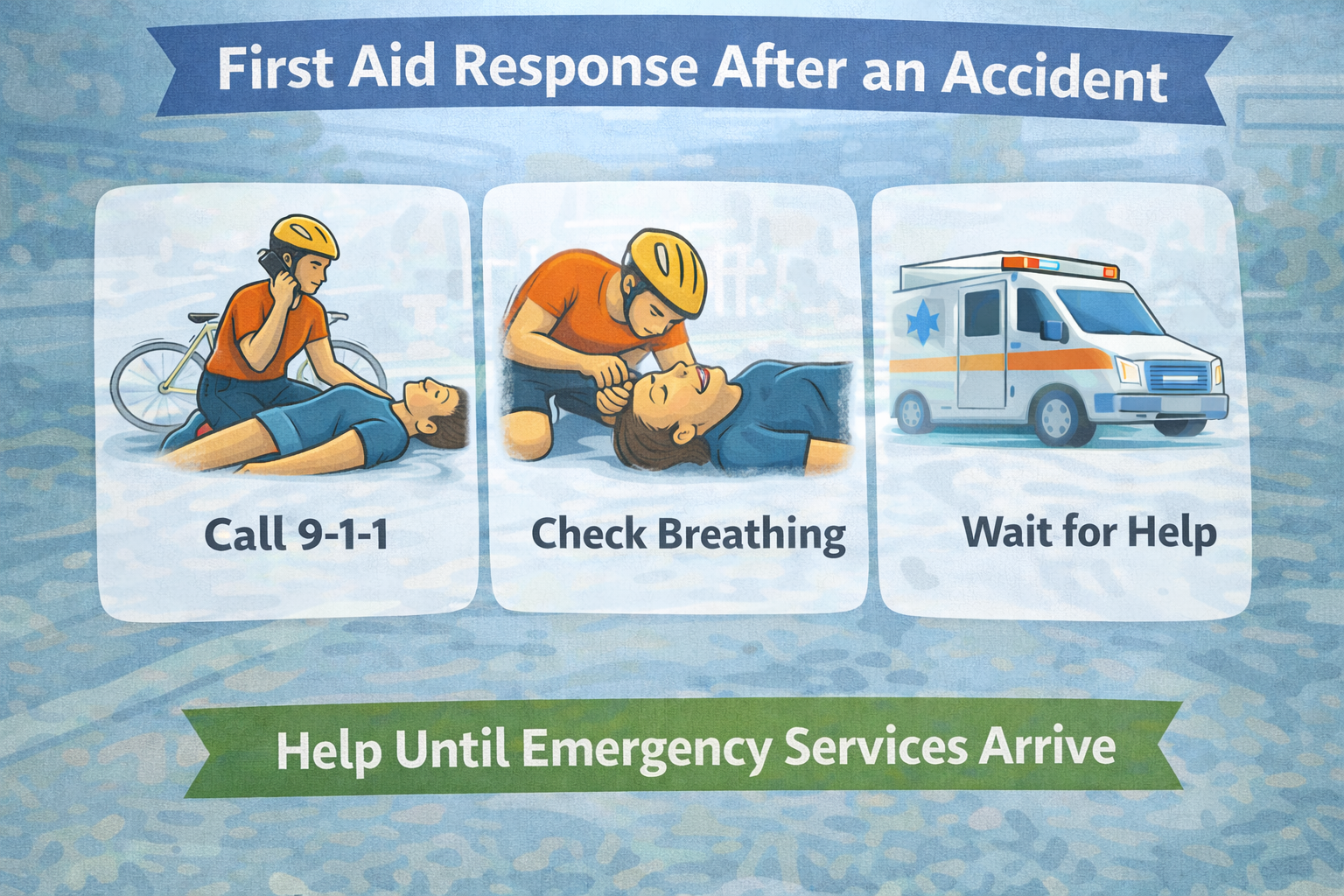 Traffic collisions can occur unexpectedly on busy streets and intersections. In many situations, bystanders are the first people to reach an injured individual before emergency services arrive. Having basic first aid knowledge can help bystanders respond calmly and support someone who may be seriously injured.
Across Canada, including Vancouver and communities throughout British Columbia, first aid education is widely encouraged in schools, workplaces, and community programs. These skills help individuals recognize emergencies, contact emergency services quickly, and assist until trained responders arrive.
First Aid and Workplace Safety Relevance in Vancouver and British Columbia
Many workplaces in Vancouver and across BC promote first aid training as part of workplace safety programs. Employees in construction, transportation, recreation facilities, and public services may encounter emergencies in public spaces.
First aid and CPR courses teach participants how to assess injuries, maintain a person’s airway, monitor breathing, and provide assistance until professional medical responders take over care.
Community awareness of these skills can make a meaningful difference during unexpected incidents.
Scenario: Bystander Assistance After a Collision
In a reported incident in Toronto’s Junction neighbourhood, a cyclist named Clayton Blackwood responded quickly after witnessing a collision involving a pedestrian and a van.
Blackwood was riding along Annette Street when he saw a woman attempting to cross the road. At the same time, a van driver was turning left when the vehicle struck the pedestrian.
The woman was left seriously injured on the roadway. Blackwood immediately stopped, dropped his bicycle, and rushed to assist while emergency services were contacted.
Using the basic first aid training he had previously completed, he helped support the woman while monitoring her breathing and condition until paramedics arrived.
Emergency responders later transported the woman to a healthcare facility for further medical care.
Blackwood later explained that his first aid training helped him stay calm and remember what steps to take while waiting for emergency crews.
Recognizing Signs of Serious Injury After a Collision
When someone is struck by a vehicle, injuries can be severe and may require urgent medical attention. Signs that someone may be seriously injured can include:
-
Loss of consciousness or confusion
-
Difficulty breathing
-
Visible bleeding or swelling
-
Pain in the head, neck, or limbs
-
Weakness or inability to move
Recognizing these signs quickly allows bystanders to call emergency services and assist safely.
First Aid Awareness at the Scene of an Accident
When assisting someone injured in a traffic collision, personal safety and emergency communication are priorities.
First aid training programs often teach responders to:
-
Call emergency services immediately
-
Ensure the surrounding area is safe before assisting
-
Avoid unnecessary movement of the injured person
-
Monitor breathing and responsiveness
-
Provide reassurance while waiting for emergency responders
These actions can help support the injured person while professional medical teams are on the way.
Prevention and Road Safety Considerations
Communities across Canada promote road safety awareness to help reduce collisions involving pedestrians and vehicles.
Common safety practices include:
-
Drivers checking carefully for pedestrians when turning at intersections
-
Pedestrians crossing at designated crosswalks when possible
-
Cyclists remaining alert to traffic movements
-
Drivers reducing speed in busy urban areas
-
Maintaining clear visibility at intersections and driveways
Public awareness and careful road use help improve safety for everyone sharing the roadway.
Frequently Asked Questions
Why is first aid training useful for everyday situations?
Emergencies can happen in public places such as streets, parks, and workplaces. First aid training helps individuals respond calmly and provide assistance until emergency responders arrive.
What should a bystander do after witnessing a road collision?
The first step is to contact emergency services. Bystanders can then help ensure the scene is safe and assist the injured person if they have appropriate training.
Why should injured individuals not be moved unnecessarily?
Moving someone who may have serious injuries can sometimes worsen their condition. Emergency responders are trained to move individuals safely when necessary.
How can communities improve emergency response awareness?
Community programs that promote CPR and first aid training help prepare residents to respond during unexpected incidents.
Why are calm and quick actions important during emergencies?
Remaining calm helps responders think clearly and follow emergency steps while waiting for trained medical professionals.
Educational Note
This article is intended for general first aid and public safety awareness education. Road traffic incidents can involve complex medical situations, and trained emergency responders are equipped to provide advanced care. Learning first aid and CPR principles can help individuals respond more effectively during unexpected emergencies.
About The Author

Mark Kascha
First Aid Instructor Trainer with 30+ years of experience in CPR, emergency response, and safety training across Canada.
Last reviewed: March 2026
 Support local, Canadian-owned businesses, with no connections to American corporations or partnerships.