
Rip currents are powerful, fast-moving channels of water that flow away from the shoreline. These currents can quickly pull swimmers away from shallow water and into deeper areas, creating dangerous situations even for experienced swimmers.
Across Canada, including coastal regions of British Columbia and Vancouver Island, beach safety education often highlights the risks associated with rip currents and other ocean hazards. Lifeguards, emergency responders, and trained bystanders may sometimes need to assist swimmers who become caught in strong currents.
During water emergencies, quick recognition, safe rescue practices, and first aid awareness—including cardiopulmonary resuscitation (CPR)—can help support people in distress until emergency services arrive.
First Aid and Workplace Safety Relevance in Vancouver and British Columbia
 British Columbia has many beaches, coastal parks, and waterfront recreation areas where residents and visitors participate in swimming, kayaking, and other water activities.
Because of these environments, many safety programs across Vancouver and BC emphasize:
-
Water safety awareness
-
Recognizing dangerous currents and surf conditions
-
First aid and CPR training
-
Emergency response procedures in outdoor recreation settings
Training helps lifeguards, recreation staff, outdoor guides, and community members respond more effectively during water-related emergencies.
A Rescue Attempt at Broad Cove Beach
A tragic incident at Broad Cove Beach near Sydney, Nova Scotia, highlighted both the risks of rip currents and the importance of emergency preparedness at coastal locations.
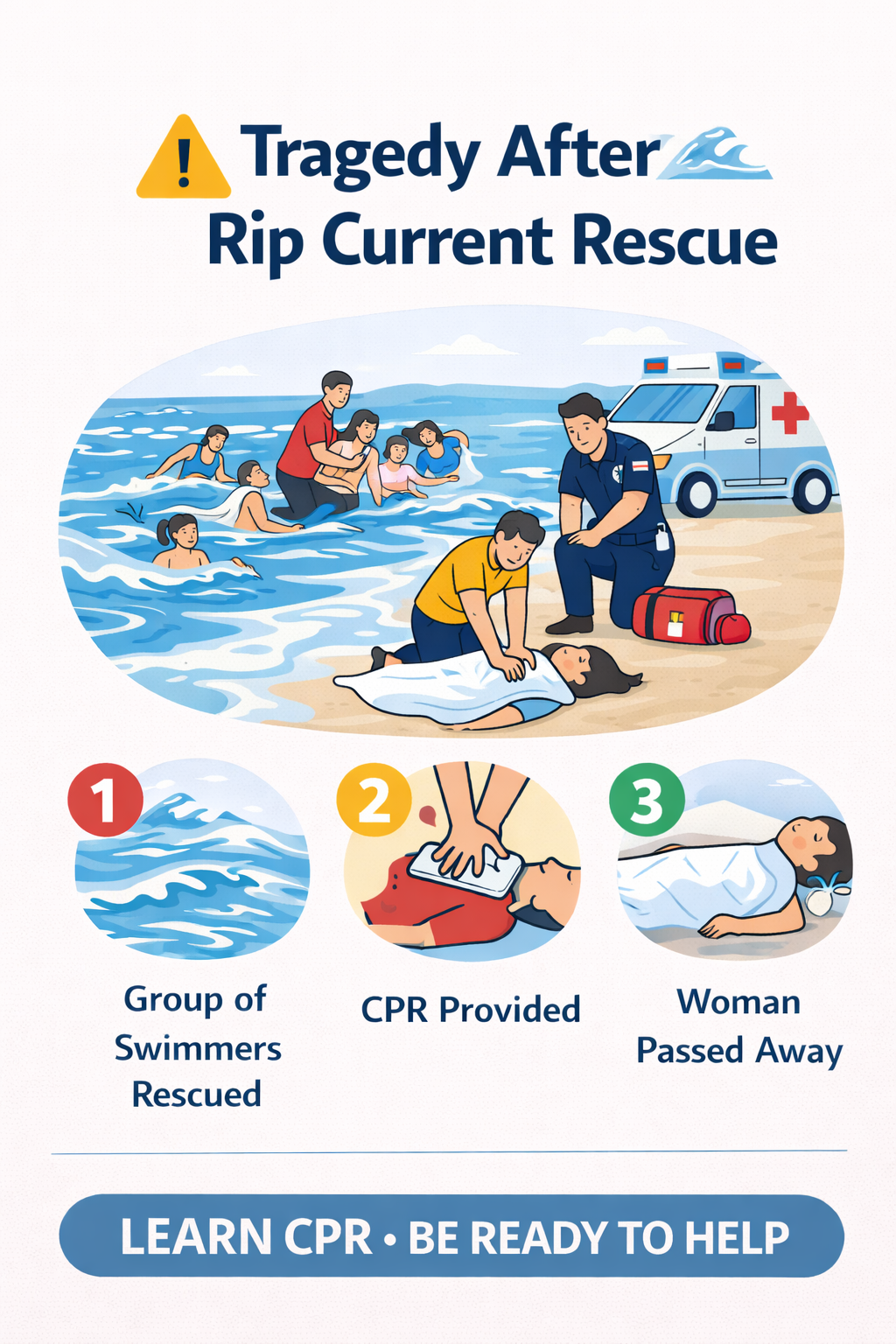
Emergency responders—including the RCMP, local firefighters, Emergency Health Services paramedics, and the Joint Rescue Coordination Centre—were dispatched after reports that several swimmers were in distress in the water.
Before emergency crews arrived, beachgoers nearby recognized the danger and entered the water to help rescue the swimmers who were struggling against the current.
Several people were successfully brought back to shore by those assisting in the rescue.
CPR Efforts on the Beach
After the rescue, one of the individuals who had entered the water—a 45-year-old woman from Sydney—collapsed on the beach.
Bystanders quickly began CPR while waiting for paramedics to arrive. Emergency responders continued medical care once they reached the scene.
Despite these efforts, the woman was later declared deceased. Authorities confirmed that the death was not considered suspicious, and standard investigations were conducted by the RCMP and the medical examiner’s office.
Another individual who had been rescued from the water received treatment at the scene and was transported to hospital with non-life-threatening injuries.
The incident served as a reminder of both the dangers of strong ocean currents and the courage of individuals who step forward to help others during emergencies.
Recognizing the Signs of a Rip Current
Rip currents can sometimes be difficult to identify, but several warning signs may be present:
-
A narrow channel of darker or calmer-looking water moving away from shore
-
Waves breaking unevenly across the beach
-
Water carrying foam, seaweed, or debris away from the shoreline
-
A visible gap in the breaking waves
Understanding these signs can help swimmers recognize potentially hazardous areas before entering the water.
Why CPR Awareness Matters in Water Emergencies
When someone experiences a water emergency and stops breathing normally after being removed from the water, CPR may help restore breathing and circulation until professional medical care becomes available.
First aid and CPR training programs commonly teach participants how to:
-
Recognize drowning or water-related emergencies
-
Contact emergency services quickly
-
Begin CPR when necessary
-
Continue care until emergency responders arrive
These skills are especially valuable for people who spend time around pools, lakes, rivers, or ocean beaches.
Beach and Water Safety Considerations
Several safety practices can help reduce risks when swimming in ocean environments:
-
Swim at beaches where lifeguards are present when possible
-
Pay attention to warning flags and posted safety signs
-
Avoid swimming alone
-
Be aware of changing weather and ocean conditions
-
Supervise children closely near water
Preparedness and awareness are key parts of preventing water-related emergencies.
Frequently Asked Questions
What is a rip current?
A rip current is a strong, narrow flow of water that moves away from the shoreline and can pull swimmers into deeper water.
What should someone do if caught in a rip current?
Lifeguards often advise swimmers to remain calm and attempt to swim parallel to the shoreline rather than directly against the current.
Why is CPR important after a water rescue?
CPR can help restore breathing and circulation if a person is not breathing normally after being removed from the water.
Should people attempt water rescues themselves?
Rescues in open water can be dangerous. When possible, alert lifeguards or emergency services who are trained to respond safely.
Why is beach safety education important?
Understanding ocean hazards, currents, and safe swimming practices helps reduce the risk of water-related emergencies.
Educational Note
This article provides general educational information about water safety, rip currents, and CPR awareness. First aid and CPR training help individuals learn how to respond during emergencies, but medical care should always be provided by qualified healthcare and emergency response professionals.
About The Author

Mark Kascha
First Aid Instructor Trainer with 30+ years of experience in CPR, emergency response, and safety training across Canada.
👉 [View full credentials]🔗 View LinkedIn Profile
Last reviewed: March 2026