Lifeguards Recognized for CPR Response During Pool Emergency
Understanding CPR in Water-Related Medical Emergencies
 Swimming pools and aquatic recreation facilities are designed with safety measures and trained staff to respond to emergencies. However, medical events such as cardiac arrest can still occur unexpectedly in or near the water.
Cardiopulmonary resuscitation (CPR) is a first aid technique used when a person becomes unresponsive and stops breathing normally. Across Canada, including Vancouver and British Columbia, CPR and first aid training are essential components of workplace safety programs and aquatic facility operations.
Lifeguards and aquatic staff are typically trained to respond quickly to emergencies, including drowning incidents, cardiac events, and other health emergencies that may occur in swimming pools.
Water Safety and Emergency Preparedness
Recreation centres and public pools across Canada maintain strict safety procedures to help protect visitors. Lifeguards monitor swimmers, watch for signs of distress, and respond rapidly if someone requires assistance.
Training for aquatic staff often includes:
-
Recognizing swimmers in distress
-
Performing water rescues
-
Providing CPR when required
-
Using automated external defibrillators (AEDs)
-
Coordinating with emergency medical services
Prepared staff and quick response can help support emergency care until paramedics arrive.
A Pool Emergency at the Beaconsfield Recreation Centre
Two experienced lifeguards at the Beaconsfield Recreation Centre were later recognized for their efforts during a medical emergency involving an elderly swimmer.
Peter Gruner, a retired physician, had arrived at the pool with his wife for a swim. Because the couple were not regular visitors during that time period, the lifeguards kept an attentive eye on them as part of routine safety monitoring.
During the swim, Gruner suddenly collapsed while in the pool.
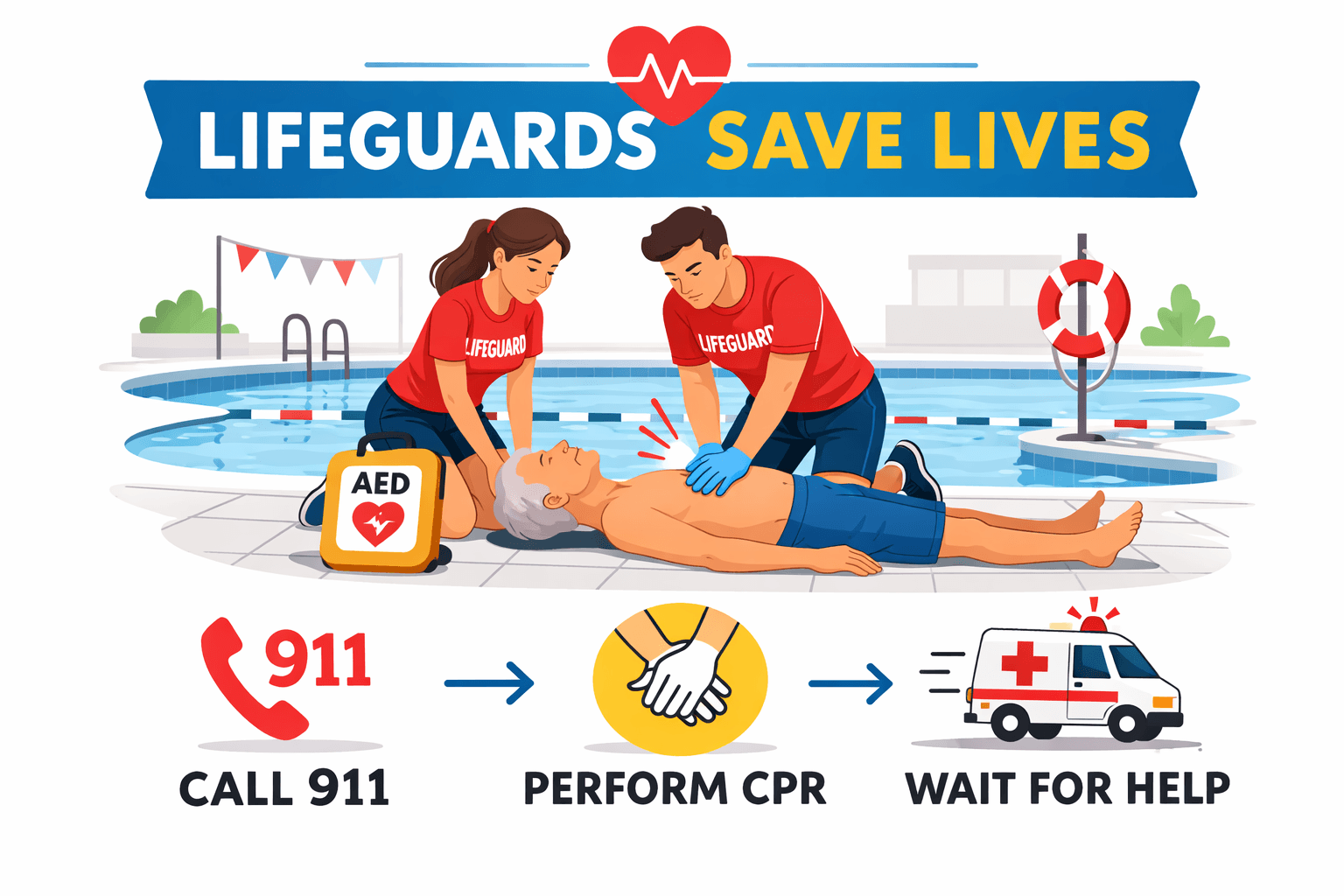
The lifeguards immediately responded by entering the water and assisting him. After removing him from the pool area, they began providing CPR and continued emergency care while waiting for paramedics.
Emergency responders soon arrived and took over medical treatment. Gruner reportedly regained consciousness briefly at several points before being transported to hospital.
Although he later died a few days afterward due to heart-related complications, the lifeguards were commended for their rapid and professional response during the incident.
Situations like this highlight the importance of trained responders and emergency preparedness in aquatic environments.
Recognizing Signs of a Medical Emergency in the Water
Swimmers experiencing a medical emergency may show several warning signs, including:
-
Sudden collapse in the water
-
Difficulty staying above water
-
Unresponsiveness or confusion
-
Irregular or abnormal breathing
-
Weak or uncoordinated movements
Lifeguards are trained to recognize these signs and respond quickly to protect swimmers.
Why CPR May Be Used in Pool Emergencies
If a swimmer becomes unresponsive and stops breathing normally, CPR may be performed after the person is safely removed from the water.
CPR helps maintain circulation of oxygen-rich blood to the brain and vital organs while emergency medical care is on the way.
Public health organizations across Canada emphasize that early CPR combined with rapid emergency response can improve survival outcomes in certain cardiac emergencies.
Prevention and Aquatic Safety Awareness
Aquatic facilities and recreation centres often promote several safety practices:
-
Maintaining trained lifeguards on duty
-
Supervising swimmers carefully
-
Encouraging swimmers to be aware of personal health conditions
-
Providing CPR and first aid training for staff
-
Ensuring emergency equipment such as AEDs is accessible
Prepared staff and safety-focused environments help support faster emergency response.
Frequently Asked Questions
What is CPR?
Cardiopulmonary resuscitation (CPR) is a first aid technique used when a person becomes unresponsive and stops breathing normally. It helps maintain circulation until emergency medical care arrives.
Why are lifeguards trained in CPR?
Lifeguards are trained to respond to water-related emergencies and medical incidents that may occur at pools or beaches.
Can cardiac arrest occur while swimming?
Yes. Medical events such as cardiac arrest or heart rhythm problems can occur during physical activity, including swimming.
What should bystanders do during a pool emergency?
Bystanders should alert lifeguards immediately and allow trained responders to provide assistance.
Where can people learn CPR in Canada?
CPR training is widely available through workplace safety programs, community organizations, and certified first aid training providers across Canada.
Educational Note
This article is intended for general first aid awareness and public safety education. Learning CPR and first aid can help individuals better understand how to respond during emergencies while waiting for trained emergency medical services.
About The Author

Mark Kascha
First Aid Instructor Trainer with 30+ years of experience in CPR, emergency response, and safety training across Canada.
Last reviewed: March 2026
 Support local, Canadian-owned businesses, with no connections to American corporations or partnerships.