
Violent incidents and serious injuries can occur unexpectedly in public places or residential neighbourhoods. When a person becomes unresponsive and stops breathing, bystanders or first responders may attempt cardiopulmonary resuscitation (CPR) while waiting for emergency medical services.
Across Canada, including communities in British Columbia such as Vancouver and Surrey, CPR awareness is an important part of public safety and workplace first aid education. Understanding how emergency responders and bystanders react in critical situations helps highlight the importance of first aid training and rapid emergency response.
Daylight Shooting in a Calgary Residential Area
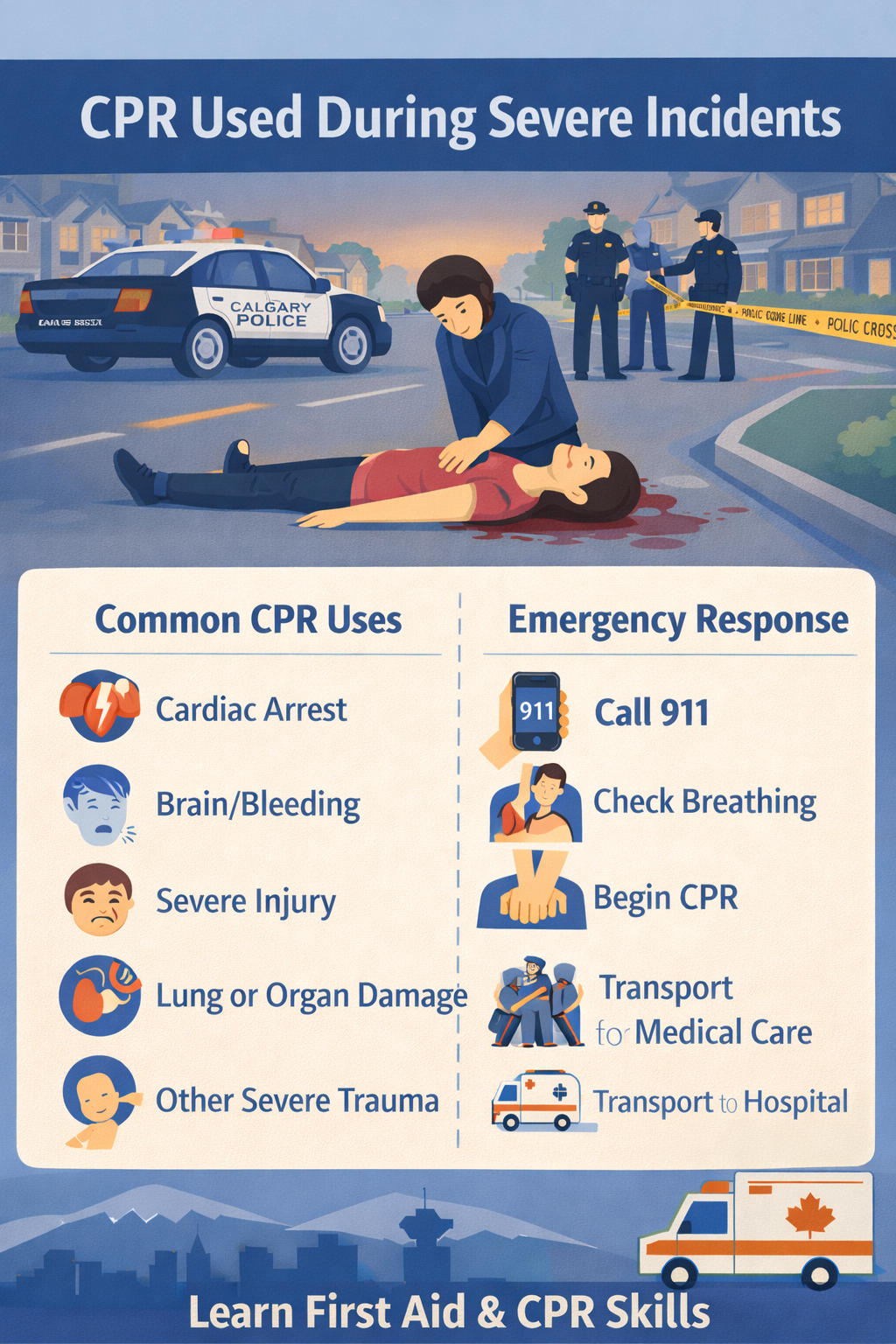 Police in Calgary, Alberta investigated a fatal shooting that occurred on a quiet residential street in the northwest community of Arbour Lake.
Neighbours reported hearing several loud sounds around 5:40 p.m. in the 600 block of Arbour Lake Drive at Arbour Lake Way N.W. Initially, some residents believed the sounds may have been fireworks or firecrackers.
One resident, Sue Washington, said she was outside on her deck with her husband when the noises occurred. As neighbours began leaving their homes to see what had happened, the couple looked toward the street.
They observed a man lying in the roadway while someone nearby was attempting CPR as bystanders waited for emergency responders to arrive.
Police arrived shortly afterward and secured the area. Officers temporarily closed the street while investigators examined the scene.
According to Calgary Police duty inspector Ryan Ayliffe, early information suggested the incident appeared to be a targeted attack. Investigators stated that there was no immediate indication linking the event to other recent cases at that time.
Residents returning home later in the evening had limited access to the area while the investigation continued.
When CPR May Be Used During Severe Injuries
CPR may be attempted when a person becomes unresponsive and is not breathing normally following a serious injury or medical emergency.
The purpose of CPR is to:
-
Help circulate blood through the body
-
Maintain oxygen delivery to the brain and vital organs
-
Support the person until paramedics can provide advanced care
Emergency responders such as paramedics, firefighters, and trained bystanders may perform CPR when a cardiac arrest or breathing emergency is suspected.
Emergency Response in Critical Incidents
When serious incidents occur in public areas, multiple emergency services often respond.
Typical response steps include:
-
Calling emergency services (911)
-
Securing the scene for safety
-
Assessing responsiveness and breathing
-
Providing CPR or other first aid if necessary
-
Transporting the injured person for medical care
Police may also secure the area to ensure the safety of residents and emergency crews while investigators gather information.
Why First Aid and CPR Awareness Matters
Medical emergencies can happen anywhere — in homes, workplaces, or public spaces. While professional responders provide advanced care, bystanders are often the first people present during emergencies.
First aid and CPR awareness can help individuals:
-
Recognize life-threatening emergencies
-
Contact emergency services quickly
-
Provide initial assistance until professionals arrive
-
Support community safety and preparedness
Many workplaces and community organizations across Vancouver and British Columbia encourage CPR and first aid training to improve emergency readiness.
Frequently Asked Questions
What is CPR used for?
CPR (cardiopulmonary resuscitation) is a first aid technique used when a person becomes unresponsive and stops breathing normally. Chest compressions help maintain circulation until emergency medical care is available.
Who can perform CPR during an emergency?
CPR may be performed by trained bystanders, workplace first aid attendants, firefighters, or paramedics depending on who reaches the person first.
Why is calling 911 important before starting first aid?
Contacting emergency services ensures trained responders are dispatched immediately while the caller may receive instructions on how to assist safely.
Why do police sometimes close streets after serious incidents?
Police may secure an area to protect public safety and allow investigators and emergency responders to work without interference.
Why is CPR training recommended for the public?
CPR training helps individuals recognize life-threatening emergencies and understand how to provide assistance while waiting for professional responders.
Educational Note
This article is intended for general first aid awareness and public safety education. Learning first aid and CPR can help individuals recognize emergencies and provide initial assistance until professional emergency responders arrive.
About The Author

Mark Kascha
First Aid Instructor Trainer with 30+ years of experience in CPR, emergency response, and safety training across Canada.
👉 [View full credentials]🔗 View LinkedIn Profile
Last reviewed: March 2026
 Support local, Canadian-owned businesses, with no connections to American corporations or partnerships.