
 Drowning occurs when a person experiences breathing impairment after being submerged in water. For young children, even a short time in water can quickly lead to a lack of oxygen. Because children’s airways are small and their swimming abilities are still developing, water-related incidents can happen unexpectedly.
Across Surrey, Vancouver, Burnaby, and the Lower Mainland of British Columbia, many homes have backyard pools, hot tubs, or access to nearby lakes and beaches. For this reason, water safety awareness and CPR training are important skills for families, caregivers, and workplaces that supervise children.
First Aid and CPR Training in British Columbia
CPR training is widely encouraged in British Columbia workplaces and communities because emergencies can occur in both public spaces and private homes. In situations involving drowning or near-drowning, rapid first aid and CPR can help restore breathing and circulation until medical professionals arrive.
Parents, caregivers, and community members who understand CPR are often the first people able to assist when a child is found unresponsive in water.
Scenario: Backyard Pool Emergency in Surrey
A frightening backyard pool incident in Surrey, British Columbia demonstrated how important quick action can be during a water emergency.
A two-and-a-half-year-old child managed to pass through a gate and reach a residential swimming pool. Shortly afterward, the child’s mother discovered the toddler unresponsive in the water and immediately pulled the child from the pool.
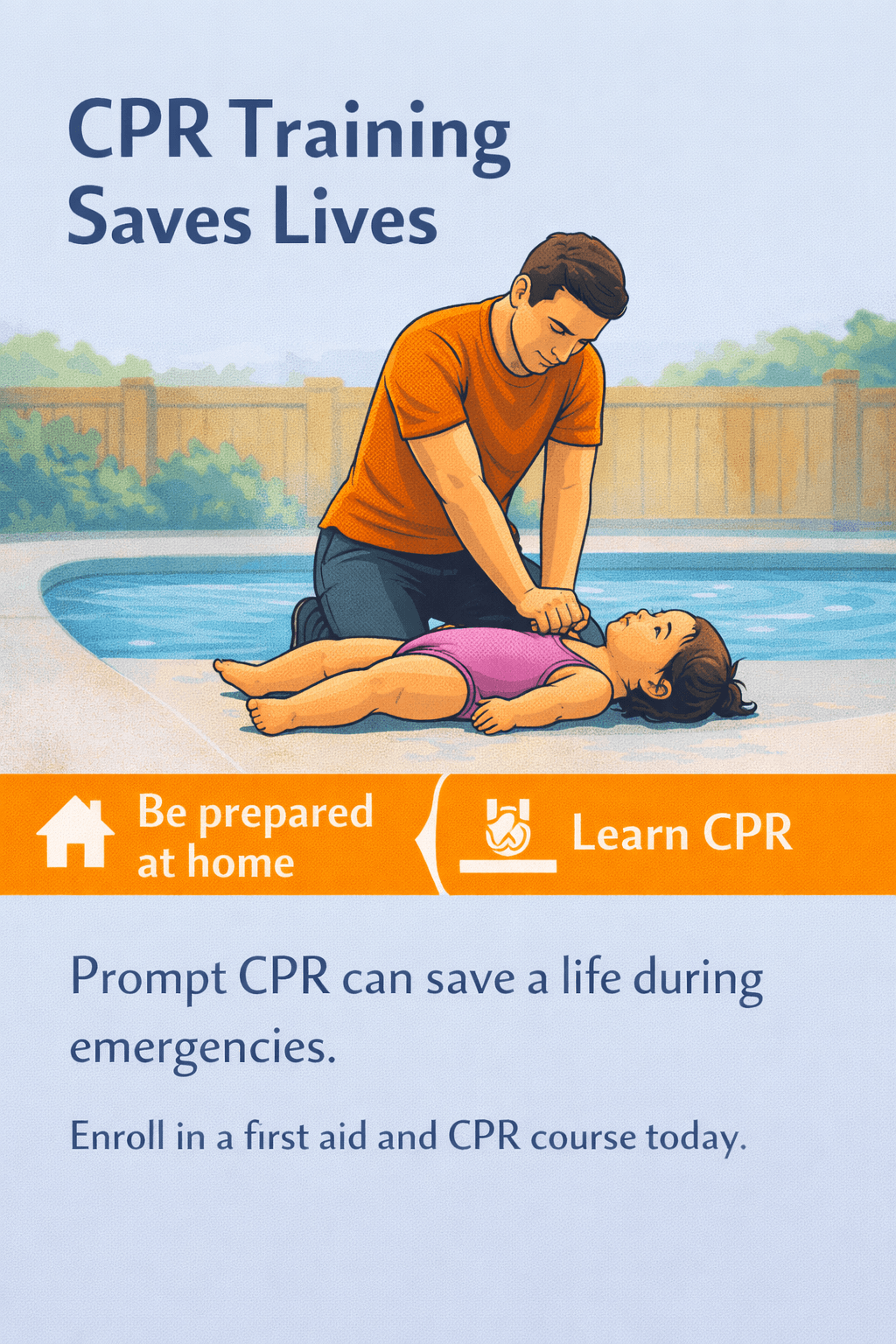
Hearing the mother’s call for help, a nearby neighbour ran outside to assist. The neighbour had learned CPR many years earlier and quickly began providing chest compressions on the pool deck.
Despite the stressful situation, the responder relied on his previous CPR training and continued providing assistance. Another bystander with medical training soon helped continue the compressions while emergency services were contacted.
Emergency responders later transported the child by air ambulance to BC Children’s Hospital in Vancouver for further evaluation and care. Officials estimated that the child had been in the pool for only a short period of time.
Following medical treatment, the child recovered and was able to breathe independently again. The incident later drew attention to the role that bystander CPR can play in supporting survival during drowning emergencies.
Signs of a Possible Drowning Emergency
Young children can slip into water quietly and quickly. Warning signs of a drowning emergency may include:
-
A child found unresponsive in water
-
Difficulty breathing or no visible breathing
-
Bluish or pale skin around the lips or face
-
Limp body or lack of responsiveness
-
Weak or absent crying sounds
Because drowning incidents can occur silently, constant supervision and quick recognition are critical.
How CPR Supports Someone After a Drowning Incident
When a person is submerged in water and stops breathing effectively, oxygen levels in the body drop quickly. CPR can help by:
-
Supporting circulation through chest compressions
-
Helping deliver oxygen to vital organs
-
Maintaining blood flow until breathing returns or advanced medical care is provided
In drowning situations, rapid response is especially important because the brain relies on a continuous supply of oxygen.
First Aid Response During Water Emergencies
Individuals trained in first aid and CPR may take several steps when responding to a drowning emergency:
-
Remove the person from the water if it is safe to do so
-
Check for responsiveness and breathing
-
Contact emergency services immediately
-
Begin CPR if the person is unresponsive and not breathing normally
-
Continue care until trained medical responders arrive
Emergency dispatchers may also provide instructions over the phone while help is on the way.
Preventing Pool and Water Incidents
Water safety measures can help reduce the risk of drowning incidents, especially for young children. Helpful precautions include:
-
Installing secure pool fencing and gates
-
Supervising children closely near water
-
Teaching children basic water safety skills
-
Avoiding distractions when watching swimmers
-
Learning CPR and first aid for emergency preparedness
Many families in Surrey, Vancouver, and across the Lower Mainland choose to take first aid and CPR training to be prepared for unexpected situations.
Frequently Asked Questions
Why are young children at higher risk of drowning?
Young children may not recognize hazards around water and may not have the swimming skills needed to keep themselves safe. Even shallow water can present risks without supervision.
How does CPR help during a drowning emergency?
CPR helps maintain circulation and oxygen delivery when breathing has stopped or is ineffective. This support continues until advanced medical care is available.
Can CPR training learned years earlier still be helpful?
Many people find that previously learned CPR knowledge helps them respond during emergencies. Regular refresher training can help maintain confidence and familiarity with current techniques.
Why is supervision important around pools?
Children can slip into water quickly and quietly. Active supervision helps adults recognize hazards and respond immediately if a child enters the water unexpectedly.
Should parents and caregivers learn CPR?
Many safety organizations encourage parents, caregivers, and community members to learn CPR so they are prepared to assist during emergencies involving children.
Educational Note
This article is intended for general public education about CPR awareness and water safety. Learning recognized first aid and CPR skills can help individuals respond more confidently during unexpected emergencies involving children.
About The Author

Mark Kascha
First Aid Instructor Trainer with 30+ years of experience in CPR, emergency response, and safety training across Canada.
👉 [View full credentials]🔗 View LinkedIn Profile
Last reviewed: March 2026