Understanding Severe Bleeding and Traumatic Injuries
 Severe bleeding, also known as major external bleeding, is a life-threatening condition that can occur when blood vessels are damaged due to trauma such as cuts, punctures, or impact injuries. While incidents like shootings are uncommon in most Canadian workplaces, the first aid response principles for severe bleeding are the same across many types of injuries, including workplace accidents involving tools, machinery, or sharp objects.
First Aid & Workplace Relevance in Vancouver and the Lower Mainland
Across Vancouver, Burnaby, Surrey, Richmond, and the Lower Mainland, workplaces are required to be prepared for medical emergencies, including injuries that involve significant bleeding. Construction sites, warehouses, kitchens, and public-facing environments may all carry some risk of traumatic injury.
Having employees trained in first aid, CPR, and bleeding control can make a meaningful difference in stabilizing a person until emergency services arrive.
A Realistic Scenario
During a busy holiday shift at a restaurant in downtown Vancouver, a staff member slips while carrying glassware and suffers a deep cut to the forearm. The injury results in heavy bleeding. A coworker quickly applies pressure using clean cloths while another calls emergency services. Their calm and immediate response helps slow the bleeding until paramedics arrive.
Signs and Symptoms of Severe Bleeding
Recognizing serious bleeding early is critical. Signs may include:
-
Continuous or heavy blood flow that does not stop easily
-
Blood soaking through bandages or clothing
-
Pale, cool, or clammy skin
-
Weakness, dizziness, or confusion
-
Loss of consciousness in more severe cases
Common Causes in Workplace Settings
Severe bleeding can result from:
-
Cuts from sharp tools or equipment
-
Machinery-related injuries
-
Broken glass or metal edges
-
Falls or collisions
-
Puncture wounds
Even though high-profile incidents like violent injuries may appear in the news, most severe bleeding cases in Canada occur from everyday workplace or household accidents.
First Aid Response for Severe Bleeding
In any situation involving heavy bleeding, the priority is to reduce blood loss and support the person until help arrives:
-
Ensure scene safety before approaching
-
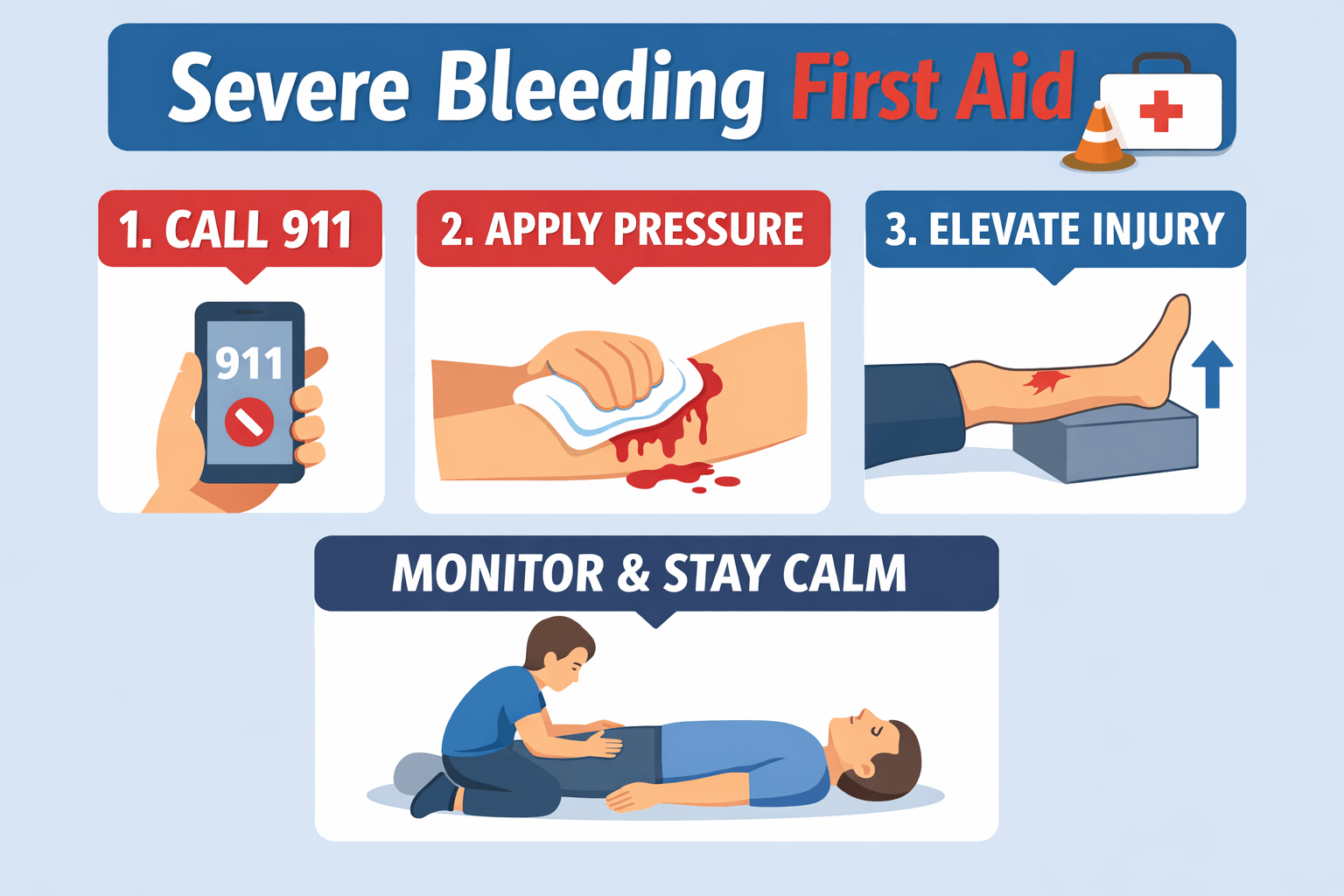
Call emergency services (911) or have someone else call
-
Apply firm, direct pressure to the wound using cloth, gauze, or a bandage
-
Keep pressure steady—avoid frequently checking the wound
-
If possible, elevate the injured area above heart level (if no fracture is suspected)
-
Help the person remain still and calm
-
Monitor breathing and responsiveness
If the person becomes unresponsive and is not breathing normally, CPR may be required until emergency responders take over.
Prevention and Workplace Safety Considerations
Reducing the risk of serious injuries includes:
-
Using proper protective equipment (gloves, guards, etc.)
-
Following safe work procedures and training
-
Keeping workspaces clean and hazard-free
-
Ensuring first aid kits are accessible and well-stocked
-
Providing regular first aid and CPR training for staff
Preparedness helps reduce the severity of injuries and supports safer workplaces across British Columbia.
Frequently Asked Questions
What is the first priority when someone is bleeding heavily?
The first priority is to apply firm, direct pressure to the wound to slow or stop the bleeding while emergency services are contacted.
Should I remove objects stuck in a wound?
No. Objects embedded in a wound should not be removed, as they may be limiting bleeding. Focus on applying pressure around the object.
When should CPR be started in a bleeding emergency?
CPR is only started if the person becomes unresponsive and is not breathing normally.
Can everyday workplaces have severe bleeding incidents?
Yes. Even common environments like kitchens, offices, and retail spaces can have accidents that lead to significant bleeding.
Is training really necessary for this type of emergency?
First aid training helps individuals respond quickly and confidently, which can improve outcomes before professional help arrives.
Educational Note
This article is intended for general first aid awareness and workplace safety education in Canada. First aid training provides practical skills that help individuals respond more effectively in real-life emergencies.
About The Author

Mark Kascha
First Aid Instructor Trainer with 30+ years of experience in CPR, emergency response, and safety training across Canada.
Last reviewed: March 2026
 Support local, Canadian-owned businesses, with no connections to American corporations or partnerships.