
A rescue at Calgary’s Glenmore Reservoir highlights how quickly water emergencies can develop — and how basic first aid knowledge can make a difference.
Across Canada, including Vancouver and throughout British Columbia, lakes and reservoirs are popular for recreation and exercise. Whether jogging along the seawall or paddling on local waterways, understanding water safety and hypothermia risks is an important part of community first aid awareness.
What Happened at Glenmore Reservoir
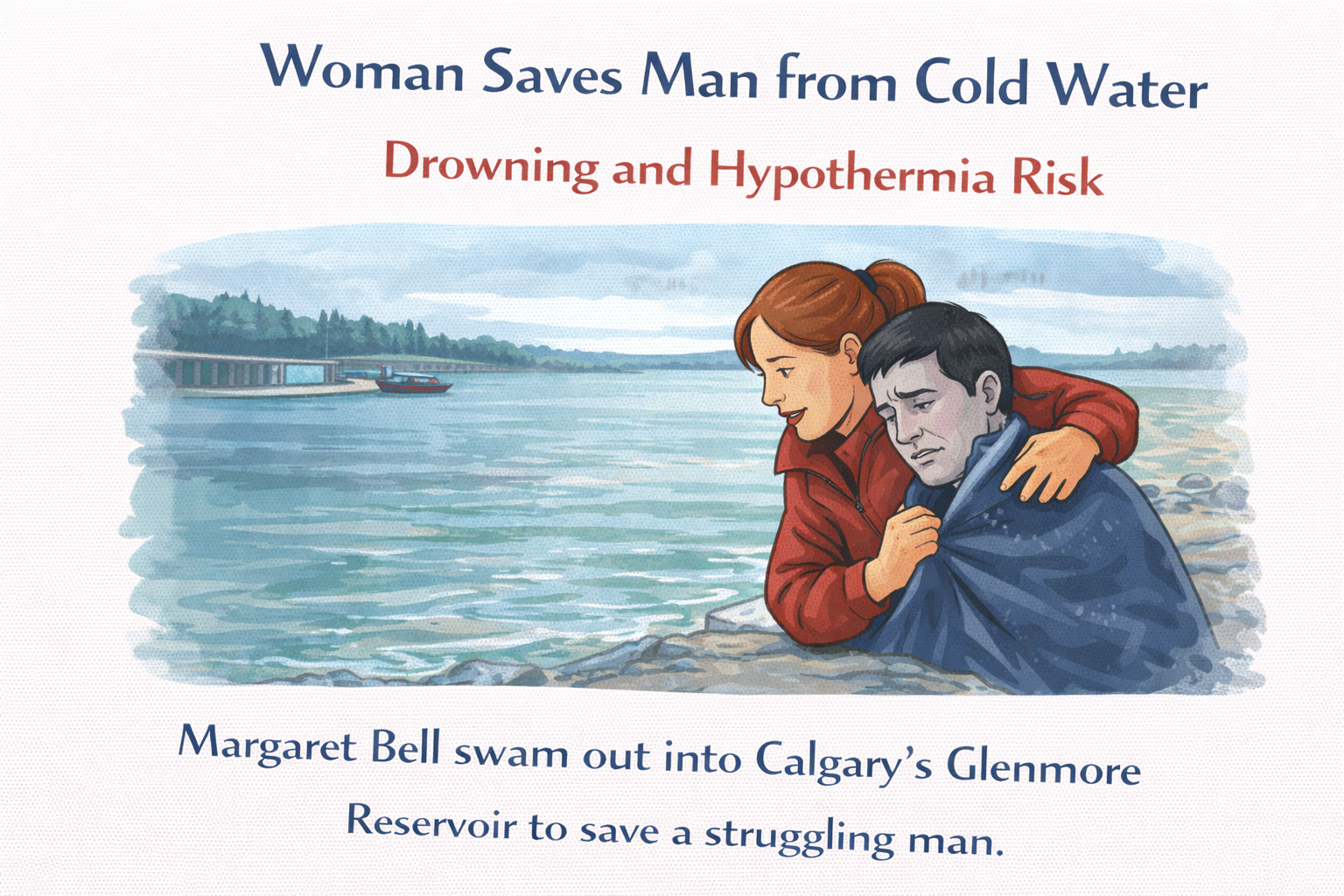
Margaret Bell was out for a jog near the Glenmore Reservoir in Calgary when she noticed something unusual in the water near the canoe club. At first, she thought it might be wildlife — but quickly realized it was a person struggling to stay afloat.
She entered the water and swam out to assist. The man was unable to make it back to shore on his own. Bell instructed him to hold onto her jacket while she guided him back to land.
Once on shore, she focused on keeping him warm and asked a passerby to call 9-1-1. Emergency responders later assessed the man, who was reportedly showing signs of hypothermia.
Recognizing Drowning Risk
 Drowning does not always involve splashing or shouting. In many cases, a person:
-
Cannot call for help
-
Struggles quietly
-
May slip below the surface quickly
Warning signs include:
-
Head low in the water
-
Gasping or hyperventilating
-
Attempting to roll onto the back
-
Minimal forward movement
Early recognition is critical.
Understanding Hypothermia
Hypothermia occurs when the body loses heat faster than it can produce it, causing core temperature to drop.
In Canadian lakes and reservoirs, even during warmer months, water temperatures can be significantly lower than air temperatures.
Signs of hypothermia may include:
-
Shivering
-
Slurred speech
-
Pale or bluish lips
-
Fatigue or confusion
-
Loss of coordination
After water rescue, preventing further heat loss is an important first aid priority.
First Aid Response: Public Education Overview
If someone is struggling in the water:
-
Call 9-1-1 immediately
-
Avoid entering the water unless it is safe and you are capable
-
Use a reaching or throwing assist if possible (rope, branch, flotation device)
If the person is brought to shore:
-
Begin CPR if unresponsive and not breathing normally
-
Remove wet clothing if possible
-
Cover with dry clothing or blankets
-
Protect from wind exposure
-
Monitor until emergency services arrive
These steps are taught in standard Canadian first aid training programs.
Water Safety Considerations in BC
British Columbia’s lakes, rivers, and reservoirs present similar risks to those in Alberta.
To reduce water-related emergencies:
-
Never swim alone
-
Be aware of water temperature
-
Wear appropriate flotation devices when boating
-
Avoid overestimating swimming ability
-
Supervise children closely near water
Cold water shock and fatigue can affect even strong swimmers.
The Importance of First Aid Training
Margaret Bell’s quick thinking and willingness to act helped prevent a potential drowning.
First aid and CPR training help individuals:
-
Recognize emergencies quickly
-
Respond calmly
-
Provide safe assistance
-
Support recovery while waiting for paramedics
In Vancouver and throughout BC, many workplaces and community members complete CPR and first aid certification to improve readiness.
Frequently Asked Questions
How quickly can someone drown?
Drowning can occur in minutes and often without obvious splashing or shouting.
Should you jump in to rescue someone?
Only if it is safe and you are confident in your ability. Whenever possible, use a reaching or throwing assist instead.
What are early signs of hypothermia?
Shivering, confusion, slurred speech, and pale or bluish lips may indicate hypothermia.
Is CPR needed in all water rescues?
CPR is only needed if the person is unresponsive and not breathing normally.
Are Canadian lakes cold even in summer?
Yes. Water temperatures can remain cold enough to contribute to hypothermia, even when air temperatures are warm.
Educational Note
This article is provided for general water safety and first aid awareness in Canada. Formal CPR and first aid training helps individuals respond confidently and appropriately during water-related emergencies while waiting for professional assistance.
About The Author

Mark Kascha
First Aid Instructor Trainer with 30+ years of experience in CPR, emergency response, and safety training across Canada.
👉 [View full credentials]🔗 View LinkedIn Profile
Last reviewed: March 2026