Serious road collisions can lead to complex injuries that require rapid emergency response. In the minutes immediately following a crash, basic first aid provided by bystanders or witnesses can play an important role while waiting for paramedics and rescue crews to arrive.
Across Canada, including communities in British Columbia such as Vancouver and Surrey, first aid awareness is an important part of workplace safety training and public education. Traffic incidents can occur on highways, rural roads, or busy intersections, and knowing how to respond calmly during emergencies may help support injured individuals until professional responders arrive.
A Crash Survivor Speaks Out About Intersection Safety
 A young man who survived a serious collision at a Manitoba highway intersection is encouraging officials to improve safety measures at the location where the crash occurred.
Dan Wischnewski, who was in his early twenties at the time of the crash, was travelling in his SUV on Highway 206 when a pickup truck approached the intersection from Garven Road, where there was a stop sign.
According to reports, the pickup truck was travelling at approximately 100 kilometres per hour when it entered the intersection and struck Wischnewski’s vehicle.
The force of the collision caused the SUV to roll down the roadway, leaving Wischnewski trapped inside the severely damaged vehicle.
Witnesses in the area quickly moved to help and began providing initial first aid to those involved in the crash while waiting for emergency services to arrive.
When first responders eventually reached the scene, rescue crews used specialized equipment to remove Wischnewski from the twisted wreckage of the vehicle.
The Royal Canadian Mounted Police reported that the impact left him trapped inside the SUV, requiring careful extrication before he could be transported for medical care.
Serious Injuries After the Crash
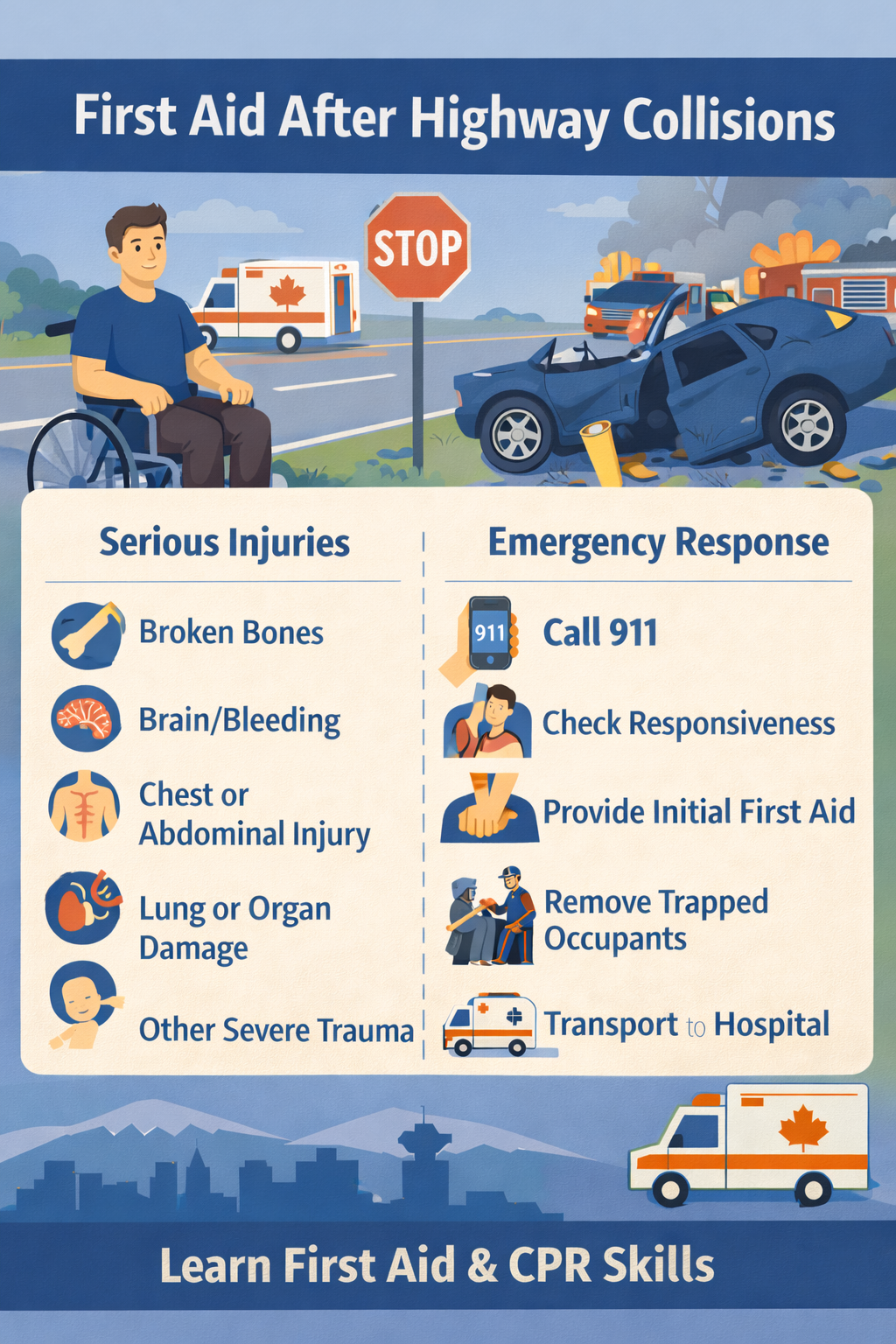
Wischnewski suffered multiple traumatic injuries as a result of the collision, including:
-
Two broken hips
-
Broken ribs and shoulder
-
Bleeding in the brain
-
A punctured lung
-
A ruptured spleen
His recovery required extensive medical treatment. For several months after the crash, he relied on a wheelchair and later walking aids during rehabilitation.
Despite the severity of the injuries, he eventually recovered and has spoken publicly about the importance of improving road safety at the intersection.
The collision also involved occupants of the pickup truck, including a 22-year-old man and an 18-year-old passenger, who were reported to have sustained relatively minor injuries and were treated by paramedics.
Sadly, another collision in the same area later resulted in the death of a young man, reinforcing concerns about the safety of the intersection.
The Role of Bystander First Aid
In many road collisions, the first people on the scene are bystanders or nearby drivers. Their actions during the first few minutes may help support injured individuals until emergency responders arrive.
Basic first aid awareness often focuses on:
-
Calling 911 immediately
-
Ensuring the scene is safe
-
Checking whether injured individuals are responsive
-
Providing reassurance while waiting for help
-
Avoiding unnecessary movement of injured persons
In situations involving severe trauma, trained emergency crews handle advanced medical treatment and vehicle extrication.
Emergency Response During Major Road Collisions
Traffic accidents often require a coordinated response from multiple emergency services.
Typical emergency actions may include:
-
Securing the crash scene
-
Providing initial first aid and medical assessment
-
Using rescue equipment to remove trapped occupants
-
Transporting injured individuals to hospital
-
Investigating the cause of the collision
Firefighters, paramedics, and police frequently work together during these incidents across Canadian highways and urban roadways.
Road Safety and Intersection Improvements
After recovering from his injuries, Wischnewski began advocating for improved safety measures at the intersection where the crash occurred.
Local authorities later installed rumble strips in the roadway approaching the stop sign, which help alert drivers when they are approaching an intersection.
Additional safety improvements discussed included increased visibility of stop signs and lighting, which may help drivers recognize intersections sooner.
Road safety measures such as improved signage, lighting, and traffic control devices are often implemented after serious incidents to help reduce the risk of future collisions.
Frequently Asked Questions
Why is first aid important after road collisions?
First aid awareness helps bystanders recognize injuries and provide basic assistance while waiting for emergency responders to arrive.
What should witnesses do first after a crash?
The first step is usually to contact emergency services so trained responders can reach the scene as quickly as possible.
Why do firefighters sometimes remove people from vehicles after crashes?
In serious collisions, people may become trapped inside damaged vehicles. Rescue crews use specialized equipment to safely remove occupants.
What are rumble strips on roads?
Rumble strips are textured sections of pavement designed to alert drivers through vibration and sound when approaching intersections or hazards.
Why are intersection safety improvements sometimes added after crashes?
Traffic studies and incident reports may identify locations where additional safety features such as signage, lighting, or roadway markings could help reduce future risks.
Educational Note
This article is intended for general first aid awareness and public safety education. First aid training helps individuals recognize emergencies and understand how to provide initial assistance until professional emergency responders arrive.
About The Author

Mark Kascha
First Aid Instructor Trainer with 30+ years of experience in CPR, emergency response, and safety training across Canada.
Last reviewed: March 2026
 Support local, Canadian-owned businesses, with no connections to American corporations or partnerships.