
 Motorcycles share the road with larger vehicles, but riders have less physical protection compared with drivers inside cars or trucks. Because of this, collisions involving motorcycles can lead to serious injuries, even at moderate speeds.
Across Canada, including Vancouver and communities throughout British Columbia, road safety education emphasizes both defensive driving and first aid awareness. When collisions occur, emergency responders and trained bystanders may provide immediate assistance while waiting for paramedics.
Understanding road risks and knowing how to respond during emergencies can help improve community safety.
First Aid and Workplace Safety Relevance in Vancouver and British Columbia
In Vancouver and across BC, many workplaces promote first aid and CPR training as part of workplace safety programs. Employees in transportation, construction, public services, and community facilities may encounter emergencies on or near roadways.
First aid training helps individuals recognize injuries, call emergency services quickly, and assist safely until professional medical responders arrive.
Road incident awareness is also an important component of many community safety education initiatives across British Columbia.
Scenario: Motorcycle Collision in Etobicoke
In a reported incident in Etobicoke, Ontario, a motorcycle collision occurred near the intersection of Scarlett Road and Hill Garden Road on a Friday evening.
According to Toronto Police, emergency crews received a call shortly before 7 p.m. reporting a crash involving a motorcycle and a car.
When responders arrived, the motorcyclist—a man in his 30s—was found on the roadway with severe injuries. Paramedics immediately began emergency response procedures and attempted CPR.
Despite these efforts, the individual showed no vital signs when emergency responders arrived. Due to the severity of the injuries, he was later pronounced dead at the scene.
Authorities reported that no other injuries were involved in the incident. The surrounding roads were temporarily closed while investigators reconstructed the collision to determine the circumstances leading to the crash.
Recognizing Signs of Serious Trauma After Road Collisions
Collisions involving motorcycles can result in significant injuries. Signs that someone may be experiencing severe trauma can include:
-
Loss of consciousness or lack of responsiveness
-
Difficulty breathing or absence of breathing
-
Severe bleeding or visible injuries
-
Inability to move or respond
-
Confusion or disorientation
Emergency responders are trained to assess these conditions quickly and provide life-saving care.
First Aid Awareness at the Scene of a Collision
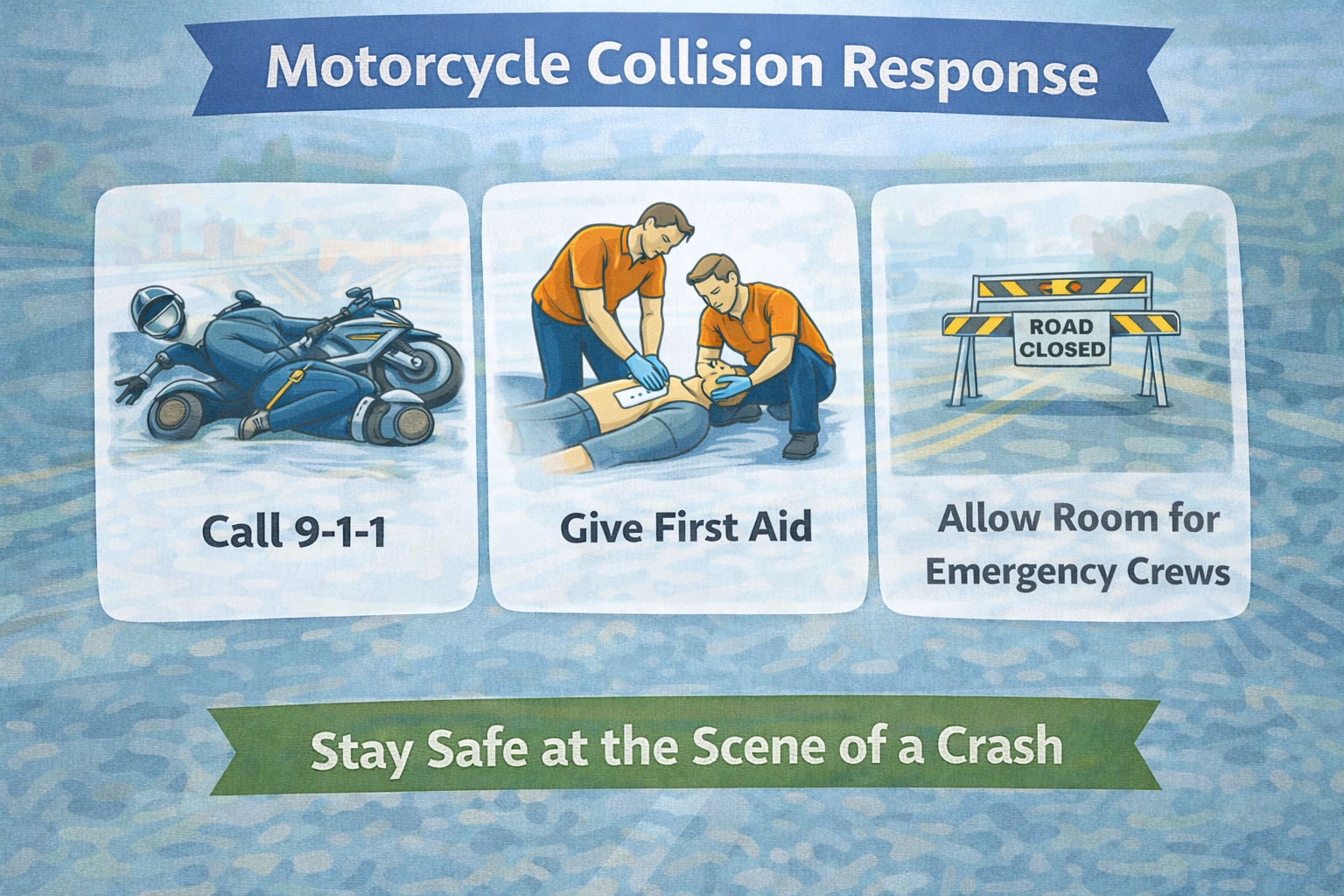
When a serious road collision occurs, the safety of bystanders and responders is the first priority. First aid training programs typically emphasize several key steps:
-
Contact emergency services immediately
-
Ensure the surrounding area is safe from traffic hazards
-
Avoid moving injured individuals unless there is immediate danger
-
Provide reassurance and monitor the person’s condition if possible
-
Assist emergency responders by directing them to the location
These actions can help support emergency response efforts while professional medical teams take over care.
Prevention and Motorcycle Road Safety
Reducing motorcycle collisions requires awareness from both riders and drivers sharing the road.
Common road safety practices include:
-
Drivers checking carefully for motorcycles when turning or changing lanes
-
Riders wearing appropriate protective gear such as helmets and protective clothing
-
Maintaining safe speeds and following road signals
-
Increasing visibility through proper lighting and reflective gear
-
Remaining alert to traffic conditions and potential hazards
Public safety campaigns across Canada often focus on encouraging drivers to remain aware of motorcycles, especially at intersections.
Frequently Asked Questions
Why are motorcycle collisions often more serious than other vehicle crashes?
Motorcycles provide less physical protection than enclosed vehicles, which can increase the risk of injury during a collision.
What should bystanders do after witnessing a serious collision?
Bystanders should contact emergency services immediately and ensure their own safety before approaching the scene.
Why might emergency crews close roads after a collision?
Road closures allow investigators and emergency crews to safely assess the scene, assist injured individuals, and document details related to the incident.
How can drivers help reduce the risk of motorcycle collisions?
Drivers can reduce risks by checking mirrors and blind spots carefully, especially when turning or changing lanes.
Why is first aid awareness useful during road emergencies?
First aid education helps individuals recognize emergencies and provide assistance safely while waiting for paramedics.
Educational Note
This article is intended for general road safety and first aid awareness education. Motor vehicle collisions can involve complex medical situations, and trained emergency responders are equipped to manage these incidents. Learning first aid principles and road safety awareness can help communities respond more effectively during unexpected emergencies.
About The Author

Mark Kascha
First Aid Instructor Trainer with 30+ years of experience in CPR, emergency response, and safety training across Canada.
👉 [View full credentials]🔗 View LinkedIn Profile
Last reviewed: March 2026