
Serious road collisions can lead to life-threatening injuries that require an immediate emergency response. In some cases, a person involved in a crash may become unresponsive or stop breathing normally, leading first responders to begin cardiopulmonary resuscitation (CPR) while advanced care is arranged.
Across Vancouver and British Columbia, CPR and first aid training are widely encouraged in workplaces and communities. These skills help people recognize emergencies and provide support until paramedics, firefighters, or other emergency crews take over.
Although CPR cannot always change the outcome in severe trauma incidents, it remains an important part of emergency response.
First Aid and Workplace Safety Relevance in Vancouver and British Columbia
 Motor vehicle and motorcycle collisions can happen on highways, rural roads, and busy community streets throughout Vancouver Island, Greater Victoria, and the rest of BC. Because of this, many workplace safety and public education programs encourage first aid and CPR training.
Training programs commonly include:
-
Recognizing life-threatening emergencies
-
Calling emergency services quickly
-
Beginning CPR if a person is unresponsive and not breathing normally
-
Supporting injured individuals until professional responders arrive
These skills can help improve emergency readiness in public spaces and road environments.
A Collision on Mills Road in North Saanich
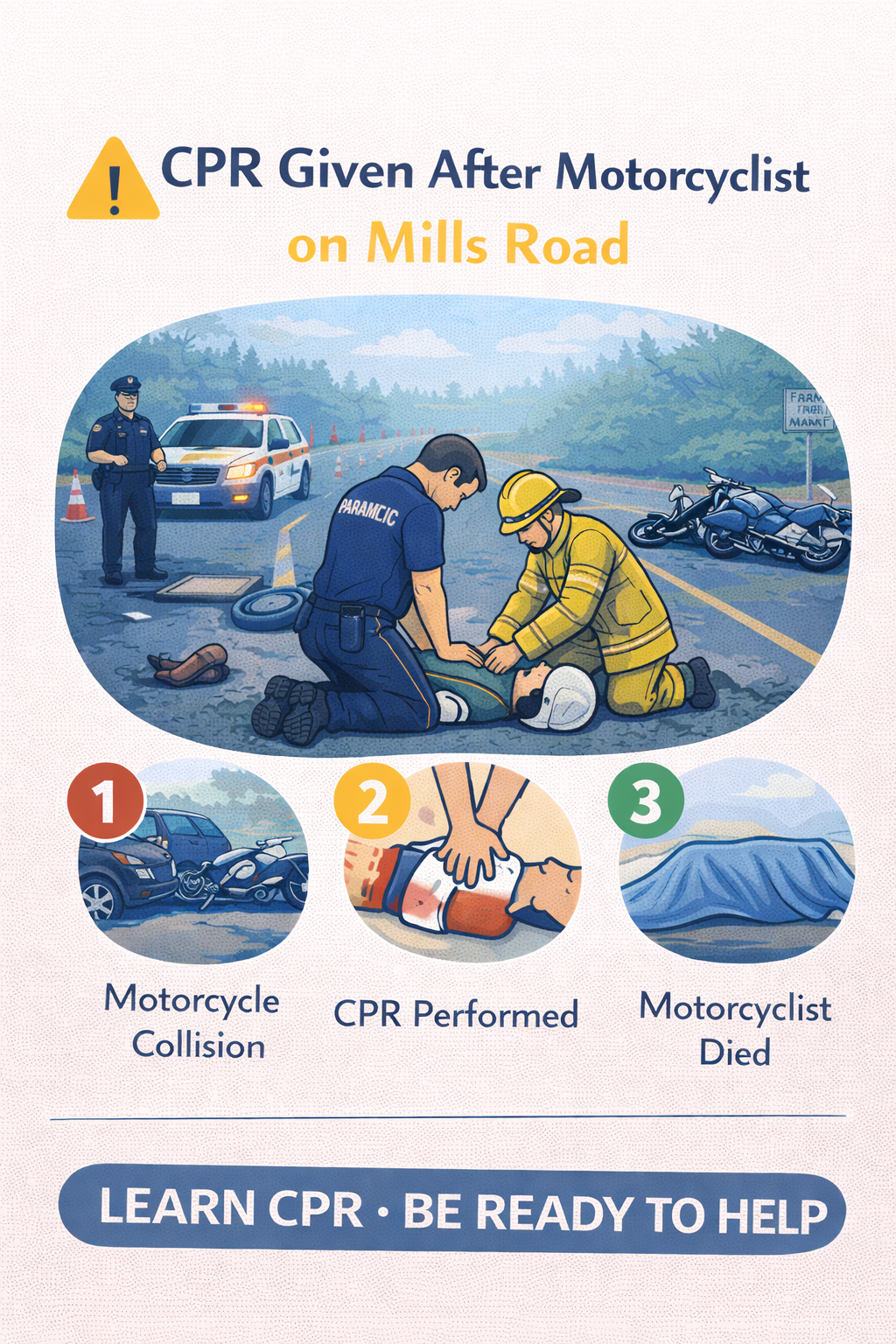
Emergency crews responded to a serious collision on Mills Road in North Saanich, British Columbia, near the entrance to the Fickle Fig farm market.
According to reports, police, firefighters, and ambulance personnel were called to the area shortly after 1:00 p.m. after receiving information that a motorcycle had been involved in a collision with another vehicle.
At the scene, emergency responders worked quickly to manage the area, assist the injured person, and begin investigating what had happened.
Emergency Response at the Scene
Witnesses reported seeing firefighters and paramedics performing CPR on a person lying on the road while police secured the location and began speaking with nearby drivers and witnesses.
As the response continued, the Sidney/North Saanich RCMP expanded the police cordon around the crash site. Reports also noted that the damaged motorcycle remained at the side of the road while the collision scene was examined.
Emergency response procedures in collisions like this often involve:
-
Immediate medical care for anyone injured
-
Traffic and scene control
-
Witness interviews
-
Crash investigation by police and other officials
These coordinated actions help ensure both patient care and public safety.
Why CPR Awareness Matters in Road Emergencies
In traumatic incidents, a person may become unresponsive due to severe injuries. When that happens, CPR may be attempted to help maintain circulation and oxygen flow until advanced medical care is available.
First aid and CPR training programs commonly teach participants how to:
-
Recognize when a person is unresponsive and not breathing normally
-
Contact emergency services
-
Begin chest compressions
-
Continue assistance until professionals arrive
Having more people trained in CPR helps communities respond more effectively during emergencies on roads, in workplaces, and in public spaces.
Road Safety and Motorcycle Awareness
Motorcyclists face greater physical risk in collisions because they have less protection than occupants of enclosed vehicles. This makes road awareness especially important for all drivers.
Important road safety reminders include:
-
Checking carefully for motorcycles at intersections and while turning
-
Maintaining safe following distances
-
Staying alert in rural and semi-rural road areas
-
Following posted speed limits and traffic rules
-
Remaining attentive around market entrances, farm roads, and busy access points
Shared awareness helps improve safety for drivers, riders, cyclists, and pedestrians.
Frequently Asked Questions
What is CPR and when is it used?
CPR is an emergency technique used when a person is unresponsive and not breathing normally. It helps support blood circulation until professional medical care is available.
Why might CPR be used after a road collision?
If someone involved in a collision stops breathing normally or goes into cardiac arrest, emergency responders may begin CPR as part of immediate lifesaving care.
Do firefighters and paramedics provide CPR?
Yes. Firefighters and paramedics are trained to provide emergency medical care, including CPR, during serious incidents.
Why do police block roads after major collisions?
Police secure collision scenes to protect responders, preserve evidence, manage traffic, and support the investigation.
Why is first aid training useful for the public?
First aid and CPR training help people recognize emergencies and take appropriate action until professional responders arrive.
Educational Note
This article provides general educational information about CPR awareness and road safety following serious traffic incidents. First aid and CPR training help individuals prepare for emergencies, but medical care should always be provided by qualified healthcare and emergency response professionals.
About The Author

Mark Kascha
First Aid Instructor Trainer with 30+ years of experience in CPR, emergency response, and safety training across Canada.
👉 [View full credentials]🔗 View LinkedIn Profile
Last reviewed: March 2026