Understanding Stab Wounds and Traumatic Bleeding
 A stab wound is a type of penetrating injury caused by a sharp object entering the body. These injuries can lead to serious internal or external bleeding, depending on the depth and location of the wound. While incidents involving violence are uncommon, the first aid principles for managing severe bleeding apply to many everyday workplace injuries across Canada.
First Aid & Workplace Relevance in Vancouver and the Lower Mainland
In Delta, Vancouver, Burnaby, Delta, and across the Lower Mainland, workplaces and public spaces must be prepared to respond to emergencies involving bleeding injuries. Schools, offices, construction sites, and public environments can all experience unexpected incidents where quick first aid response helps stabilize a person before paramedics arrive.
Training in first aid and CPR supports safer communities and workplaces by helping bystanders act confidently and effectively.
A Realistic Scenario
Outside a school in Delta during afternoon pick-up, a disagreement between two adults escalates unexpectedly. A nearby staff member and several parents quickly step in to create space and assist those injured. While one person calls emergency services, others apply pressure to wounds using available materials until paramedics arrive. Their calm and coordinated response helps manage the situation safely.
Signs and Symptoms of a Serious Penetrating Injury
Stab wounds and similar injuries may show:
-
Heavy or uncontrolled bleeding
-
Visible wound or puncture site
-
Pain or difficulty moving
-
Pale, cool, or clammy skin
-
Dizziness or confusion
-
Reduced responsiveness in more serious cases
Common Causes in Workplace and Public Settings
Penetrating injuries can occur from:
-
Sharp tools or equipment (knives, blades)
-
Broken glass or metal fragments
-
Construction or industrial accidents
-
Accidental contact with sharp objects
Although rare, incidents involving intentional harm highlight the importance of general emergency preparedness and awareness.
First Aid Response for Stab Wounds and Severe Bleeding
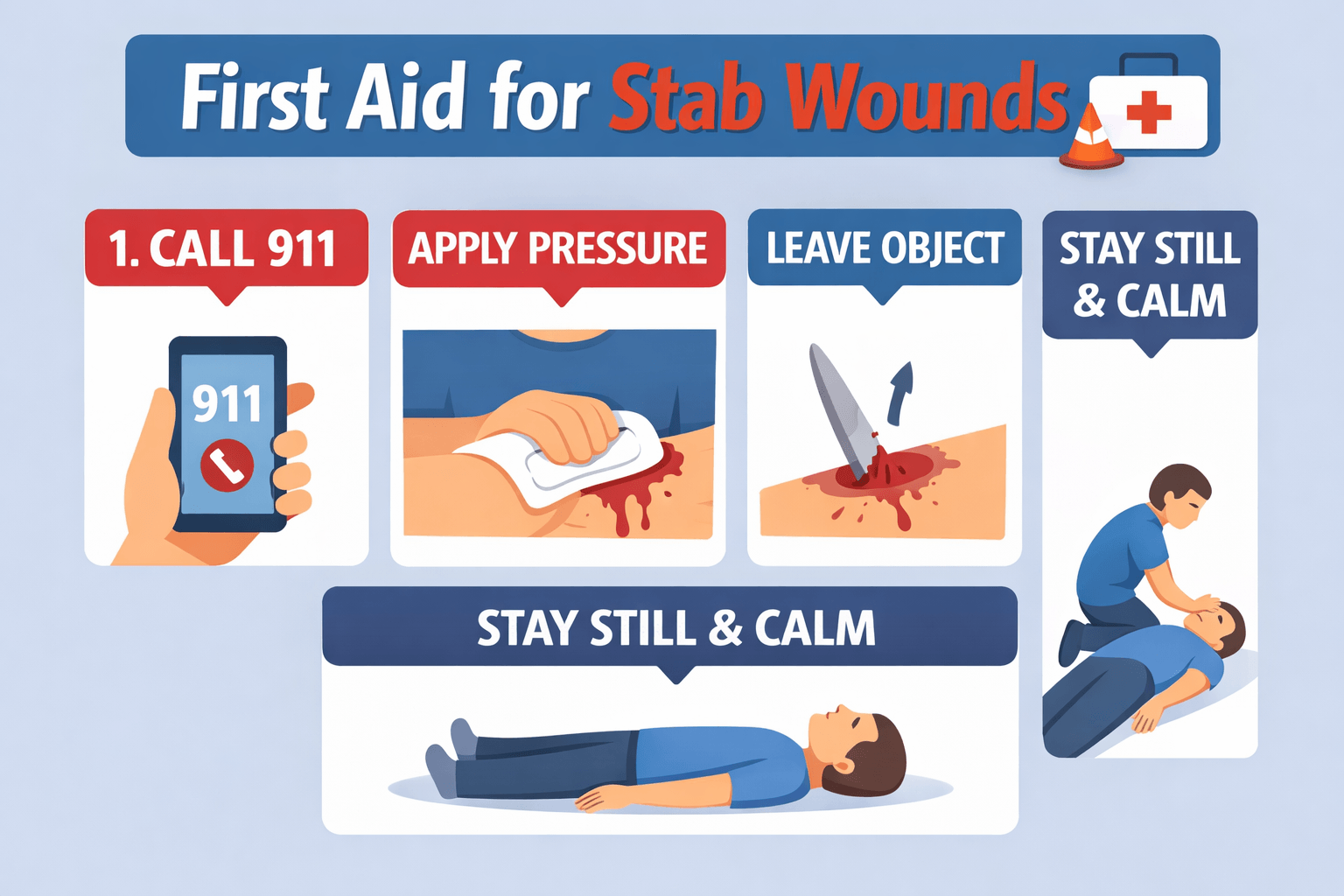
If someone has a serious bleeding injury:
-
Ensure the area is safe before helping
-
Call 911 immediately or direct someone else to call
-
Apply firm, direct pressure to control bleeding using cloth, gauze, or dressings
-
Do not remove any object stuck in the wound—apply pressure around it
-
Keep the person as still and calm as possible
-
Position them comfortably, ideally lying down if appropriate
-
Monitor breathing and responsiveness
If the person becomes unresponsive and is not breathing normally, CPR may be required until emergency services take over.
Prevention and Workplace Safety Considerations
Improving safety includes:
-
Proper storage and handling of sharp tools
-
Clear safety procedures and staff training
-
Awareness of surroundings in public and workplace settings
-
Maintaining accessible first aid kits
-
Encouraging first aid and CPR certification for employees
Preparedness helps reduce the impact of unexpected injuries and supports safer environments across British Columbia.
Frequently Asked Questions
What should I do first if someone is bleeding heavily from a wound?
Apply firm pressure to the wound and call emergency services as soon as possible. Controlling bleeding is the immediate priority.
Should I try to clean a deep or severe wound right away?
In serious cases, the focus should be on controlling bleeding rather than cleaning. Leave further care to medical professionals.
Is it safe to move someone with a stab wound?
Movement should be minimized unless necessary for safety. Keeping the person still can help prevent further injury.
What if I don’t have a first aid kit nearby?
Clean cloth, clothing, or other absorbent materials can be used to apply pressure until proper supplies are available.
Why is first aid training important in public places like schools or workplaces?
Training helps people respond quickly and appropriately, which can improve outcomes while waiting for emergency responders.
Educational Note
This article is intended for general first aid awareness and workplace safety education in Canada. Learning first aid skills can help individuals respond more effectively during unexpected situations.
About The Author

Mark Kascha
First Aid Instructor Trainer with 30+ years of experience in CPR, emergency response, and safety training across Canada.
Last reviewed: March 2026
 Support local, Canadian-owned businesses, with no connections to American corporations or partnerships.