
Understanding Cardiac Emergencies While Driving
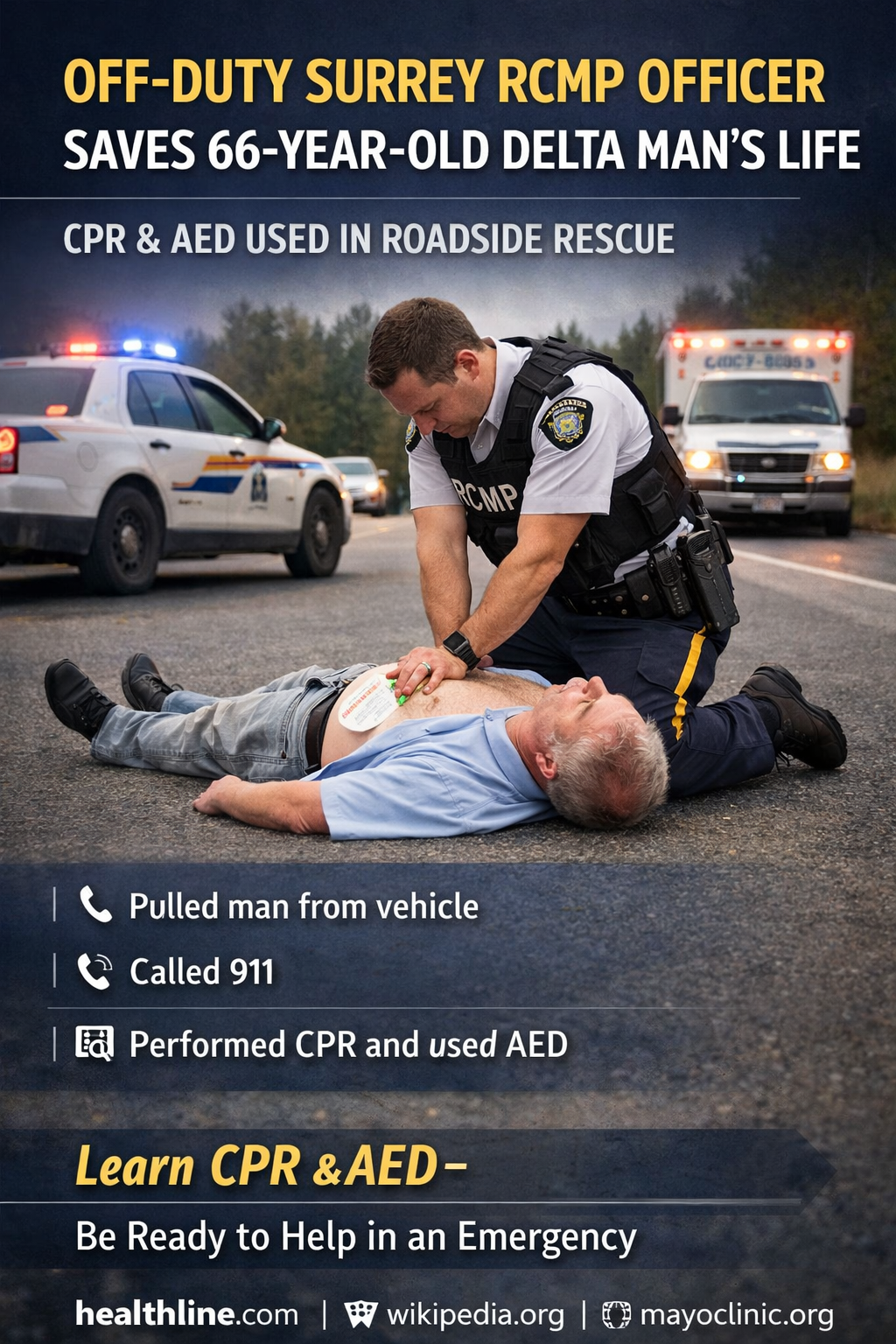 Medical emergencies such as heart attacks or sudden cardiac arrest can occur anywhere—including while driving. When a person becomes unresponsive or stops breathing normally, immediate assistance is critical.
Early CPR and the use of an automated external defibrillator (AED) can help restore circulation and improve the chances of survival until paramedics arrive.
First Aid & Workplace Relevance in Vancouver and the Lower Mainland
Across Surrey, Delta, Vancouver, and the Lower Mainland, many workers spend time commuting or driving as part of their job.
This incident highlights that first aid training is valuable not only in workplaces, but also in everyday situations—including on the road. Bystanders and off-duty personnel can play a key role in emergency response.
Real Incident Overview
A 66-year-old man from Delta survived a serious medical emergency thanks to the quick actions of an off-duty Surrey RCMP officer and nearby civilians.
The officer was on his way to work when he was flagged down by someone seeking help. A man inside a vehicle, stopped in a westbound lane, was experiencing medical distress.
Recognizing the urgency, the officer immediately called 911. With the help of another motorist, they safely removed the man from the vehicle and assessed his condition.
When it became clear that the man was unresponsive, they began CPR.
Additional officers arrived shortly after and assisted in continuing CPR. An AED was brought to the scene and used multiple times as part of the resuscitation efforts.
The man was then transported to a healthcare facility. Emergency Health Services personnel and attending medical staff later indicated that the rapid response, CPR, and AED use were key factors in saving his life.
Surrey RCMP Sgt. Allana Dunlop acknowledged both the officer and members of the public for their role in the successful outcome, emphasizing the importance of quick and coordinated action.
Signs of Cardiac Arrest
A person experiencing cardiac arrest may:
-
Collapse suddenly
-
Be unresponsive
-
Not breathe normally
-
Have no detectable pulse
Immediate recognition allows for faster intervention.
First Aid Response: CPR and AED on the Scene
If someone collapses in a vehicle or roadside setting:
-
Ensure the scene is safe (watch traffic)
-
Call 911 immediately
-
Check responsiveness and breathing
-
Begin CPR (chest compressions)
-
Retrieve and use an AED if available
-
Continue care until emergency services arrive
Early CPR and defibrillation can significantly improve outcomes.
Why Bystander Action Matters
This incident highlights:
-
The importance of acting quickly
-
The value of public CPR training
-
The impact of teamwork between responders and civilians
-
The accessibility and effectiveness of AEDs
Prepared individuals can make a life-saving difference.
Prevention and Safety Considerations
While not all cardiac events can be prevented:
-
Encourage CPR and AED training for the public
-
Increase access to AEDs in public spaces
-
Stay aware of surroundings when driving
-
Promote emergency readiness in communities
Preparedness supports safer communities.
Frequently Asked Questions
What should I do if someone collapses in a car?
Ensure safety, call 911, and begin first aid if needed.
Why is CPR important before paramedics arrive?
It helps maintain blood flow to vital organs.
Can bystanders use an AED?
Yes. AEDs are designed for public use with guided instructions.
Is it safe to move someone out of a vehicle?
Only if necessary and safe to do so.
Why is quick response important in cardiac emergencies?
Every minute without intervention reduces survival chances.
About The Author

Mark Kascha
First Aid Instructor Trainer with 30+ years of experience in CPR, emergency response, and safety training across Canada.
👉 [View full credentials]🔗 View LinkedIn Profile
Last reviewed: March 2026