
A serious multi-vehicle collision in Chilliwack serves as a reminder that road emergencies can escalate quickly — and that bystander first aid knowledge can be critical before paramedics arrive.
Motor vehicle crashes remain a leading cause of traumatic injury in British Columbia. Whether commuting through Vancouver, travelling the Fraser Valley, or working in transportation-related industries, understanding basic first aid and CPR principles supports safer communities and workplaces.
What Happened in Chilliwack
Emergency crews responded to a multi-vehicle crash just east of the Vedder Road overpass in the westbound lanes of Highway 1 in Chilliwack at approximately 4:30 PM.
Reports indicated that at least four vehicles were involved. In a severe impact, one vehicle reportedly came to rest on top of another. Ambulances, firefighters, and police attended the scene. CPR was performed on one of the victims as emergency responders worked to stabilize those injured.
Westbound traffic was diverted to Yale Road West while a landing zone was established for air ambulance support. The incident affected traffic in both directions for several hours.
While investigations determine contributing factors, events like this demonstrate how quickly traumatic injuries can occur on BC roadways.
Trauma and Cardiac Arrest After a Crash
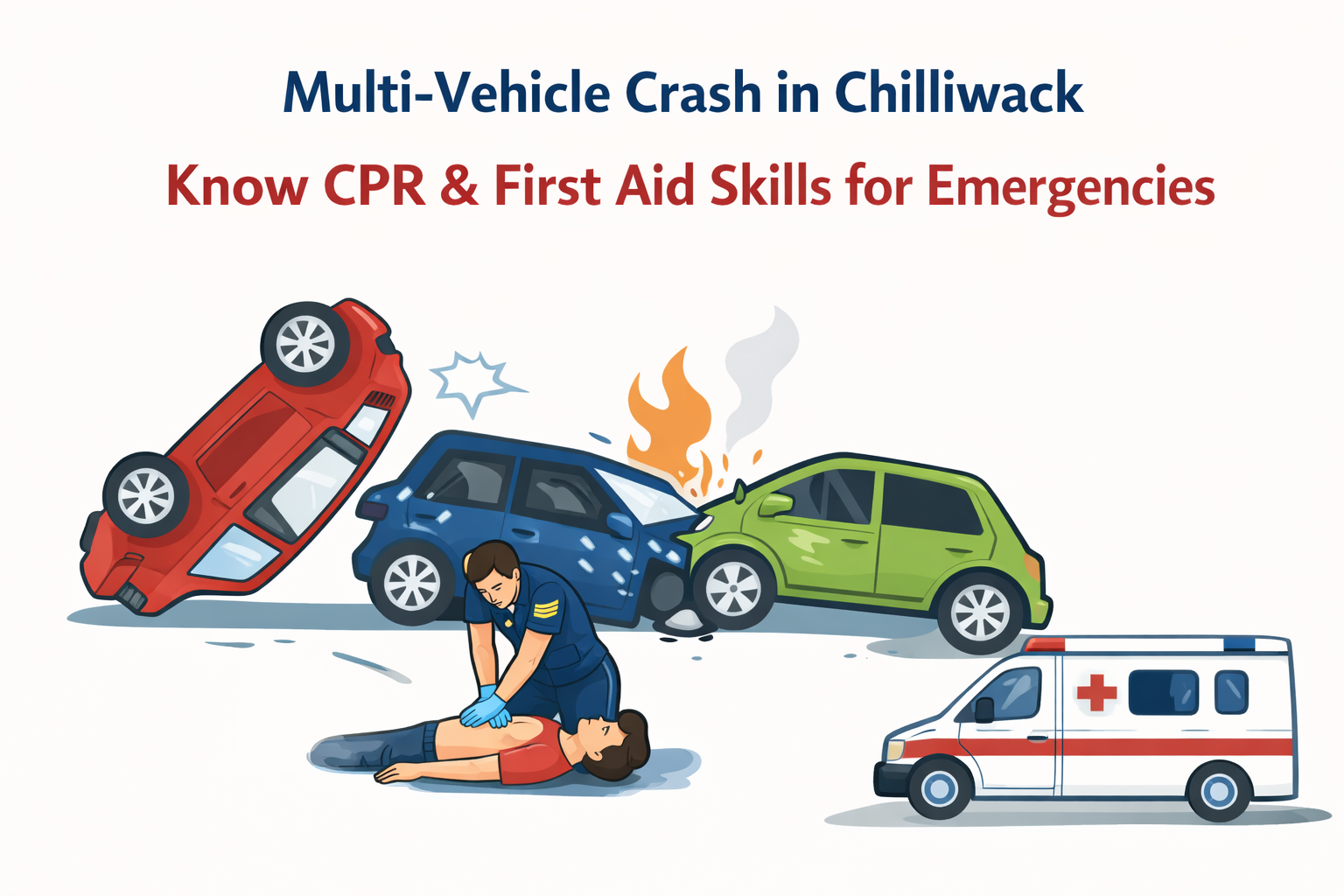 Motor vehicle collisions can result in:
-
Severe bleeding
-
Chest trauma
-
Internal injuries
-
Loss of consciousness
In some cases, traumatic injuries may lead to cardiac arrest. When a person becomes unresponsive and is not breathing normally, CPR may be required.
Paramedics are trained to manage complex trauma. However, the first few minutes before professional care arrives are often critical.
Recognizing a Life-Threatening Emergency
After a collision, warning signs that require immediate action include:
-
Unresponsiveness
-
No normal breathing
-
Severe bleeding
-
Trapped or crushed victims
-
Signs of shock (pale, cool skin, weakness)
Scene safety is the first priority. Traffic hazards, fuel leaks, or unstable vehicles may pose risks to bystanders.
First Aid Response: Public Education Overview
If you witness a crash:
-
Ensure your own safety before approaching
-
Call 9-1-1 immediately
-
Follow dispatcher instructions
-
Avoid moving injured persons unless there is immediate danger
-
Control visible bleeding with firm, direct pressure if safe to do so
-
Begin CPR if the person is unresponsive and not breathing normally
-
Use an AED if available and advised
Modern AEDs are increasingly available in public spaces, workplaces, and vehicles used in certain industries. The device will analyze heart rhythm and guide responders with voice prompts.
Air Ambulance and Advanced Response in BC
In serious highway incidents, landing zones may be established for air ambulance transport. This level of response reflects the severity of injuries and the importance of rapid access to advanced trauma care.
For workplaces in construction, transportation, delivery services, and field operations across Vancouver and the Fraser Valley, emergency response planning should account for road-related risks.
Workplace and Road Safety Considerations
Employers in BC can support safer outcomes by:
-
Providing Occupational First Aid training
-
Ensuring vehicles carry first aid kits
-
Establishing emergency communication protocols
-
Training staff in CPR and AED use
-
Encouraging defensive driving practices
Even individuals who do not work in high-risk industries benefit from CPR training. Road emergencies can involve coworkers, family members, or members of the public.
Why CPR Skills Matter
CPR (cardiopulmonary resuscitation) helps circulate oxygenated blood when the heart has stopped beating effectively. Early CPR:
-
Helps maintain blood flow to the brain
-
Increases survival chances
-
Bridges the gap until paramedics arrive
In traumatic incidents such as serious crashes, rapid recognition and action can make a meaningful difference.
Frequently Asked Questions
Should I move someone after a car crash?
Avoid moving injured individuals unless there is immediate danger, such as fire or ongoing traffic risk. Unnecessary movement can worsen spinal injuries.
When is CPR needed after a collision?
CPR is required if the person is unresponsive and not breathing normally.
Is it safe for bystanders to help at crash scenes?
Only assist if the scene is safe. Watch for traffic, leaking fuel, unstable vehicles, or other hazards.
Can an AED be used in a trauma situation?
Yes. If cardiac arrest occurs, an AED can analyze the heart rhythm and advise whether a shock is needed.
Is CPR training relevant for office workers?
Yes. Medical emergencies and traumatic events can occur anywhere, not only in high-risk workplaces.
Educational Note
This article is intended for general first aid awareness and workplace safety education in British Columbia. Formal first aid and CPR training equips individuals with the knowledge and confidence to respond appropriately during emergencies while waiting for professional medical services.
About The Author

Mark Kascha
First Aid Instructor Trainer with 30+ years of experience in CPR, emergency response, and safety training across Canada.
👉 [View full credentials]🔗 View LinkedIn Profile
Last reviewed: March 2026