
Understanding Cardiac Emergencies in Public Settings
Sudden cardiac arrest can occur anywhere—including busy public venues like sports arenas. When a person becomes unresponsive, not breathing normally, and without a pulse, immediate CPR can help maintain circulation until emergency medical services arrive.
Quick action from trained bystanders is often a critical link in survival.
First Aid & Workplace Relevance in Vancouver and the Lower Mainland
Across Vancouver, Burnaby, Surrey, and the Lower Mainland, large gatherings such as sporting events, concerts, and community activities increase the likelihood of medical emergencies occurring in public spaces.
This reinforces the importance of:
-
CPR and AED training for staff and volunteers
-
Readily accessible defibrillators in arenas and recreation centres
-
Public awareness of how to respond during emergencies
Whether at work or in the community, these skills can make a meaningful difference.
Real Incident Overview
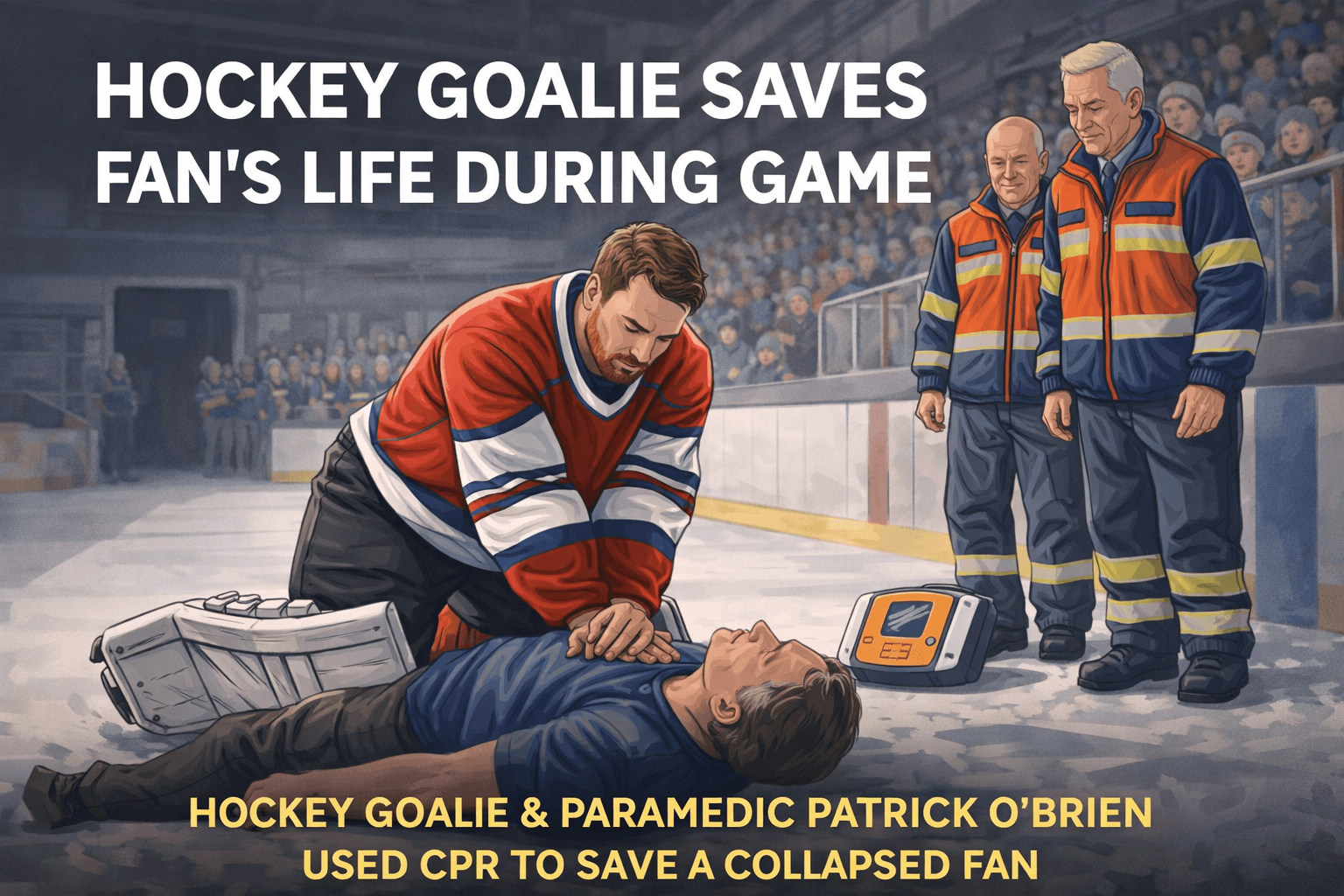 During a Newfoundland Senior Hockey League game in Gander, an unexpected medical emergency unfolded just before the Gander Flyers were set to face the Corner Brook Royals.
A fan in attendance suddenly collapsed and lost consciousness. Bystanders quickly reacted and rushed to the Flyers’ change room to seek help from Patrick O’Brien, a paramedic who also plays as the team’s goalie.
O’Brien responded immediately, still wearing part of his hockey gear, and began performing CPR on the unresponsive man.
Other trained individuals at the scene, including additional paramedics and Gander Mayor Claude Elliott, assisted by taking turns delivering chest compressions while waiting for emergency services to arrive.
Throughout the incident, responders remained focused and coordinated, ensuring continuous CPR. By the time the ambulance arrived, the man had started breathing again and was later reported to be in stable condition.
Although a portable defibrillator was available in the arena, it was not required in this case.
O’Brien later noted that he was simply in the right place at the right time—highlighting how trained individuals in everyday settings can step in during emergencies.
Signs of Cardiac Arrest
A person experiencing cardiac arrest may:
-
Collapse suddenly
-
Be unresponsive
-
Not breathe normally
-
Have no detectable pulse
Recognizing these signs quickly allows for faster response.
First Aid Response: CPR in Public Places
If someone collapses in a public setting:
-
Call 911 or direct someone to call
-
Check for responsiveness and breathing
-
Begin CPR (chest compressions)
-
Ask someone to locate an AED
-
Continue CPR until help arrives
Working together with others can help maintain continuous care.
Why Immediate CPR Matters
This incident highlights:
-
The importance of trained bystanders in public settings
-
The value of teamwork during emergencies
-
The role of early CPR in improving outcomes
-
The benefit of having AEDs available in recreation facilities
Even before paramedics arrive, early action can support survival.
Prevention and Safety Considerations
In public venues and workplaces:
-
Ensure staff are trained in CPR and AED use
-
Know the location of emergency equipment
-
Have clear emergency response plans
-
Encourage community members to learn first aid
Prepared environments can improve response times.
Frequently Asked Questions
What should I do if someone collapses at a public event?
Call 911, assess breathing, and begin CPR if needed while asking others for help.
Can multiple people assist with CPR?
Yes. Rotating rescuers can help maintain effective chest compressions.
Is an AED always required?
Not always, but it can be critical in certain cardiac emergencies.
Why is CPR important before paramedics arrive?
It helps maintain blood flow to the brain and vital organs.
Should public venues have trained staff?
Yes. Training improves emergency response and safety.
Educational Note
This article is intended for general first aid awareness and workplace safety education in Canada. Learning CPR and AED use can help individuals respond effectively in emergencies.
About The Author

Mark Kascha
First Aid Instructor Trainer with 30+ years of experience in CPR, emergency response, and safety training across Canada.
👉 [View full credentials]🔗 View LinkedIn Profile
Last reviewed: March 2026