 Cardiac arrest can happen unexpectedly, even in children and young people. It occurs when the heart suddenly stops pumping effectively, preventing oxygen from reaching the brain and vital organs. Without immediate help, the situation can quickly become life-threatening.
Across Vancouver, Burnaby, Surrey, and schools throughout British Columbia and Canada, many institutions now emphasize CPR (cardiopulmonary resuscitation) and AED (automated external defibrillator) training for staff. Being prepared allows school personnel to respond quickly when emergencies occur on school grounds.
First Aid and AED Preparedness in Canadian Schools
Schools across Canada are increasingly equipping staff with:
-
CPR training
-
Access to AED devices
-
Emergency response planning
This preparation helps ensure that students receive immediate care during medical emergencies, especially when paramedics are still on the way.
Scenario: Rapid Response at a Calgary School
At a school in Calgary, Alberta, staff had recently completed a month of training in first aid, CPR, and AED use before the school year began.
Just days into the new school year, an emergency occurred when an 11-year-old student collapsed on the school field. She was later identified as being in cardiac arrest.
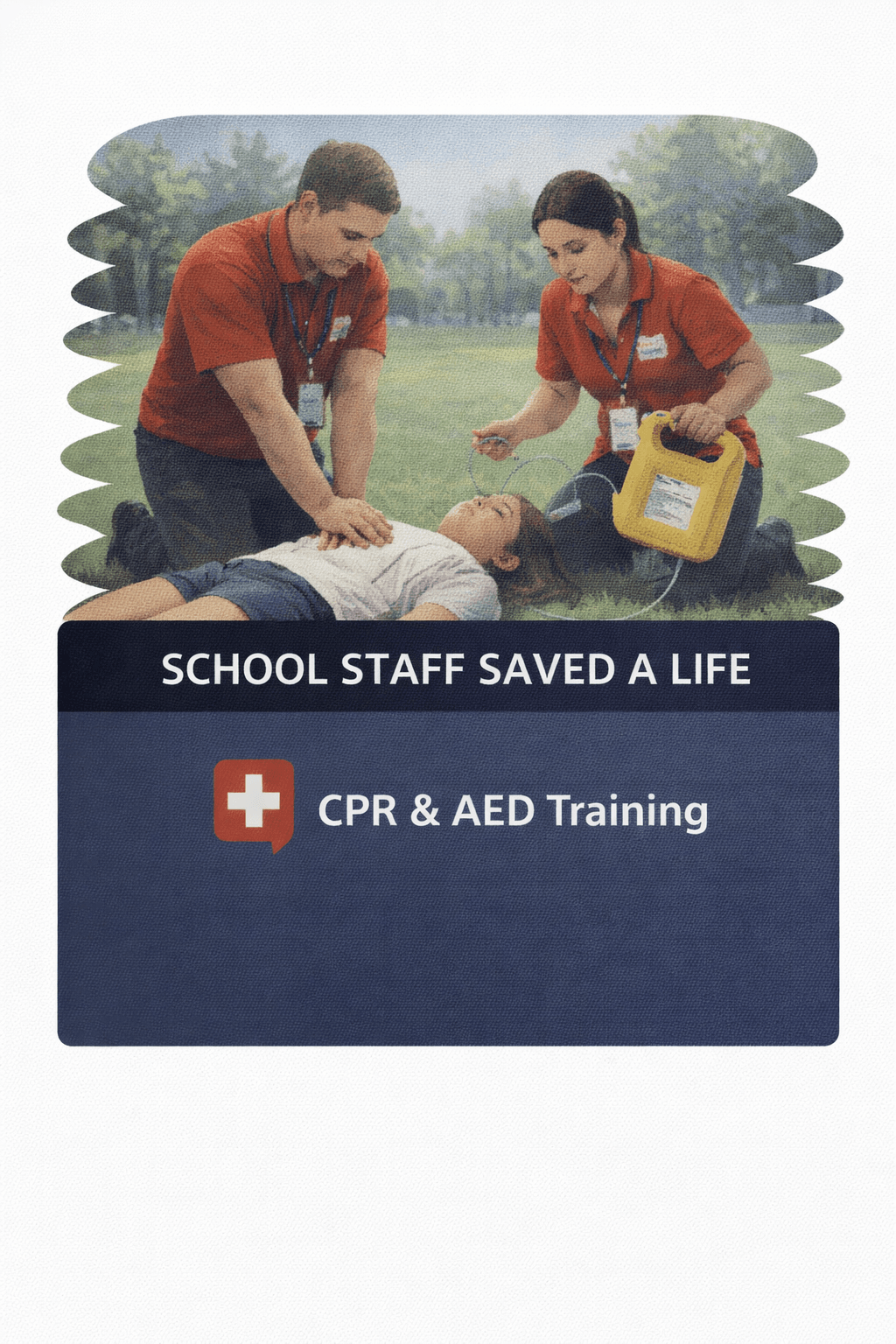
A physical education teacher quickly recognized the seriousness of the situation and immediately began CPR while another staff member retrieved the school’s AED.
The student was unresponsive and had no detectable pulse. Staff followed their training and used the AED to deliver a shock. Shortly after, the student regained signs of life.
Emergency medical services arrived and continued care, transporting the student to hospital for further evaluation.
In the days following the incident, the student recovered and was able to return to school. Her family later expressed gratitude for the staff’s quick response and preparedness.
Emergency responders noted that early CPR and AED use played a key role in supporting the student during cardiac arrest.
Recognizing Signs of Cardiac Arrest in Children
Cardiac arrest can occur without warning. Signs may include:
-
Sudden collapse
-
Unresponsiveness
-
No normal breathing or only gasping
-
No detectable pulse
-
Bluish or pale skin
Recognizing these signs quickly allows for immediate action.
How CPR and AED Work Together
CPR and AED use are often combined during cardiac arrest:
-
CPR helps circulate blood and oxygen through the body
-
AED analyzes heart rhythm and may deliver a shock if needed
-
Together, they support the body until advanced care arrives
Early use of both techniques is an important part of the chain of survival.
First Aid Response in School Settings
Trained staff may respond to emergencies by:
-
Calling emergency services immediately
-
Checking responsiveness and breathing
-
Starting CPR if the person is unresponsive and not breathing normally
-
Using an AED as soon as it becomes available
-
Continuing care until paramedics arrive
Prepared staff can make a critical difference during school emergencies.
Importance of Training for Staff and Communities
This incident highlights the value of preparation. Safety measures may include:
-
Providing regular CPR and AED training for school staff
-
Ensuring AEDs are accessible and maintained
-
Practicing emergency response procedures
-
Encouraging first aid training in workplaces and communities
Across British Columbia and the Lower Mainland, training programs help individuals feel more confident responding during emergencies.
Frequently Asked Questions
What is an AED and how does it help?
An AED is a device that analyzes heart rhythm and can deliver a shock if needed to help restore a normal heartbeat.
Why is CPR important during cardiac arrest?
CPR helps maintain blood flow and oxygen delivery to the brain and vital organs until advanced care arrives.
Can children experience cardiac arrest?
Yes. Although less common, cardiac arrest can occur in children and requires immediate response.
Should schools have AEDs?
Many schools across Canada have AEDs as part of their emergency preparedness plans.
Why is training important for school staff?
Training helps staff respond quickly and confidently, which can improve outcomes during emergencies.
Educational Note
This article is intended for general public education about CPR, AED awareness, and emergency preparedness. Learning recognized first aid skills can help individuals respond effectively during unexpected emergencies in schools, workplaces, and communities.
About The Author

Mark Kascha
First Aid Instructor Trainer with 30+ years of experience in CPR, emergency response, and safety training across Canada.
Last reviewed: March 2026
 Support local, Canadian-owned businesses, with no connections to American corporations or partnerships.