
Understanding Drowning and Water Emergencies
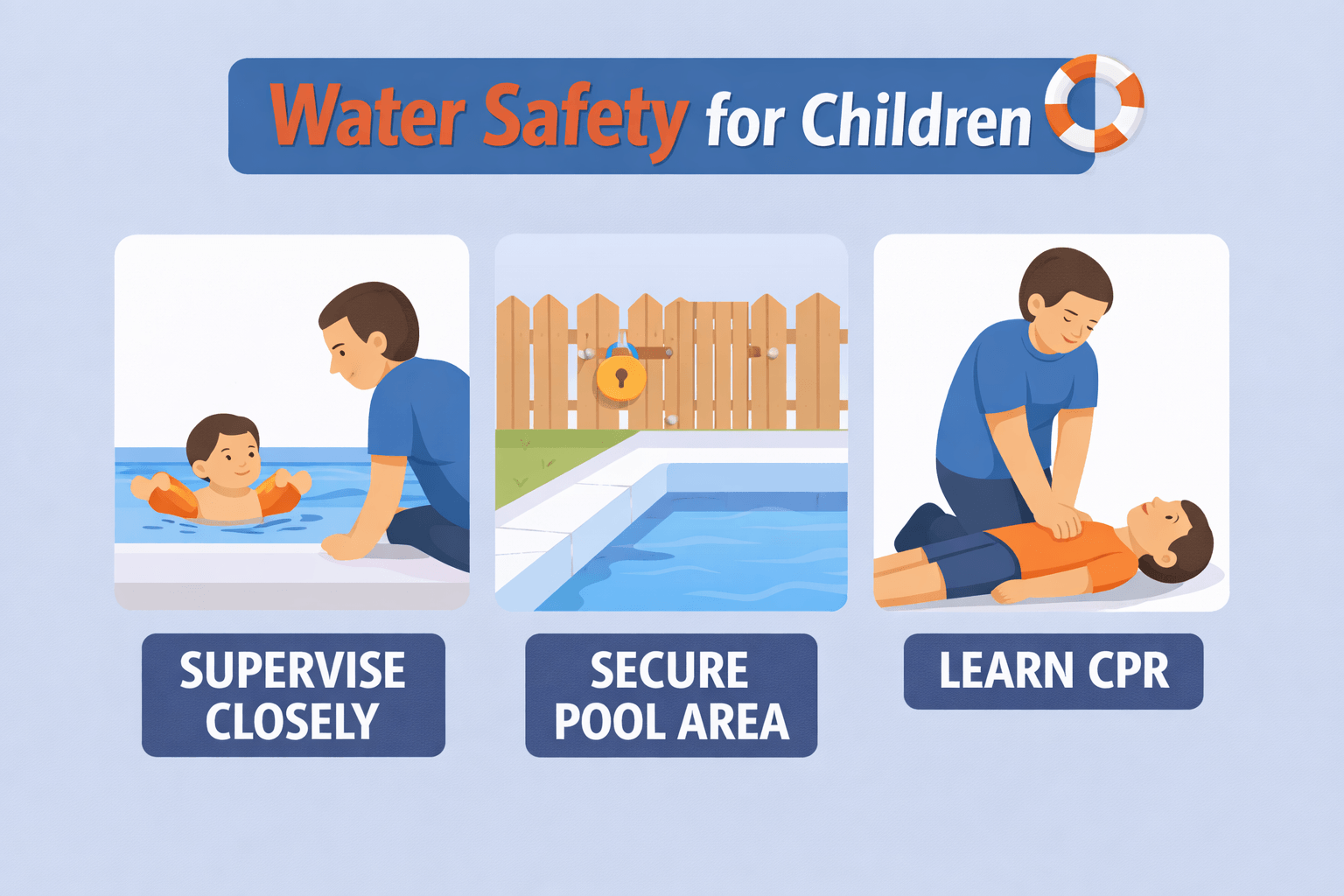 Drowning occurs when a person is unable to breathe due to being submerged in water. It can happen quickly and quietly, especially with young children. Even a short lapse in supervision can lead to a serious emergency. Immediate response—particularly early rescue and CPR (cardiopulmonary resuscitation)—plays a critical role in improving outcomes.
First Aid & Workplace Relevance in Vancouver and the Lower Mainland
Across Mission, Vancouver, Surrey, Abbotsford, and the Lower Mainland, childcare centres, daycares, schools, and homes with pools must follow strict safety practices. Young children are especially vulnerable around water, making supervision, barriers, and staff training in CPR and first aid essential.
For childcare providers and workplaces responsible for children, emergency preparedness is a key part of maintaining a safe environment.
A Realistic Scenario
At a small daycare in Mission, children are playing both indoors and in the yard. During a brief transition between activities, a toddler wanders toward an unfenced neighbouring area with a pool. Within minutes, staff notice the child is missing and begin searching. Emergency services are called while a nearby adult retrieves the child from the water. CPR is started right away until paramedics arrive.
This type of situation highlights how quickly water-related emergencies can develop—and the importance of immediate action.
Signs of Drowning or Water Distress
Drowning is often silent and may not involve splashing or yelling. Signs can include:
-
Submersion or floating face-down in water
-
Unresponsiveness
-
Absence of normal breathing
-
Weak or ineffective movements in water
-
Pale or bluish skin in more serious cases
Common Causes and Risk Factors
In British Columbia, drowning incidents involving children are often linked to:
-
Lack of constant, direct supervision
-
Unsecured or unfenced pools
-
Easy access to nearby water (pools, ponds, hot tubs)
-
Brief lapses during busy transitions or distractions
-
Limited awareness of water hazards
Young children can access water quickly, even in familiar environments.
First Aid Response: Drowning and CPR
If a child is found in water and unresponsive:
-
Ensure the area is safe before entering the water
-
Remove the child from the water as quickly as possible
-
Call 911 immediately or direct someone else to call
-
Check for breathing and responsiveness
-
Begin CPR if the child is not breathing normally
-
Continue CPR until emergency responders arrive
Early CPR can help circulate oxygen to the brain and vital organs while waiting for professional care.
Prevention and Childcare Safety Considerations
Preventing water-related incidents involves:
-
Constant, active supervision—especially for toddlers
-
Installing secure fencing and locked gates around pools
-
Ensuring doors and access points to water are controlled
-
Keeping child-to-staff ratios appropriate in daycare settings
-
Providing CPR and first aid training for all caregivers
-
Conducting regular safety checks of indoor and outdoor areas
Strong safety practices help reduce risks in childcare and home environments.
Frequently Asked Questions
How quickly can drowning happen in young children?
Drowning can occur in a very short time and often without noise, which is why constant supervision is critical.
What should I do first if a child is found in water?
Remove the child from the water safely, call emergency services, and check breathing right away.
Is CPR different for children compared to adults?
Yes, techniques are adapted for children and infants, which is why training is important for caregivers.
Do small amounts of water, like shallow pools, pose a risk?
Yes. Even small amounts of water can be dangerous for young children.
Why is CPR training important in childcare settings?
It helps caregivers respond quickly and confidently during emergencies, which can improve outcomes.
Educational Note
This article is intended for general first aid awareness and workplace safety education in Canada. CPR and first aid training can help caregivers and staff respond more effectively during emergencies involving children.
About The Author

Mark Kascha
First Aid Instructor Trainer with 30+ years of experience in CPR, emergency response, and safety training across Canada.
👉 [View full credentials]🔗 View LinkedIn Profile
Last reviewed: March 2026