
Understanding Cardiac Arrest and Arrhythmia
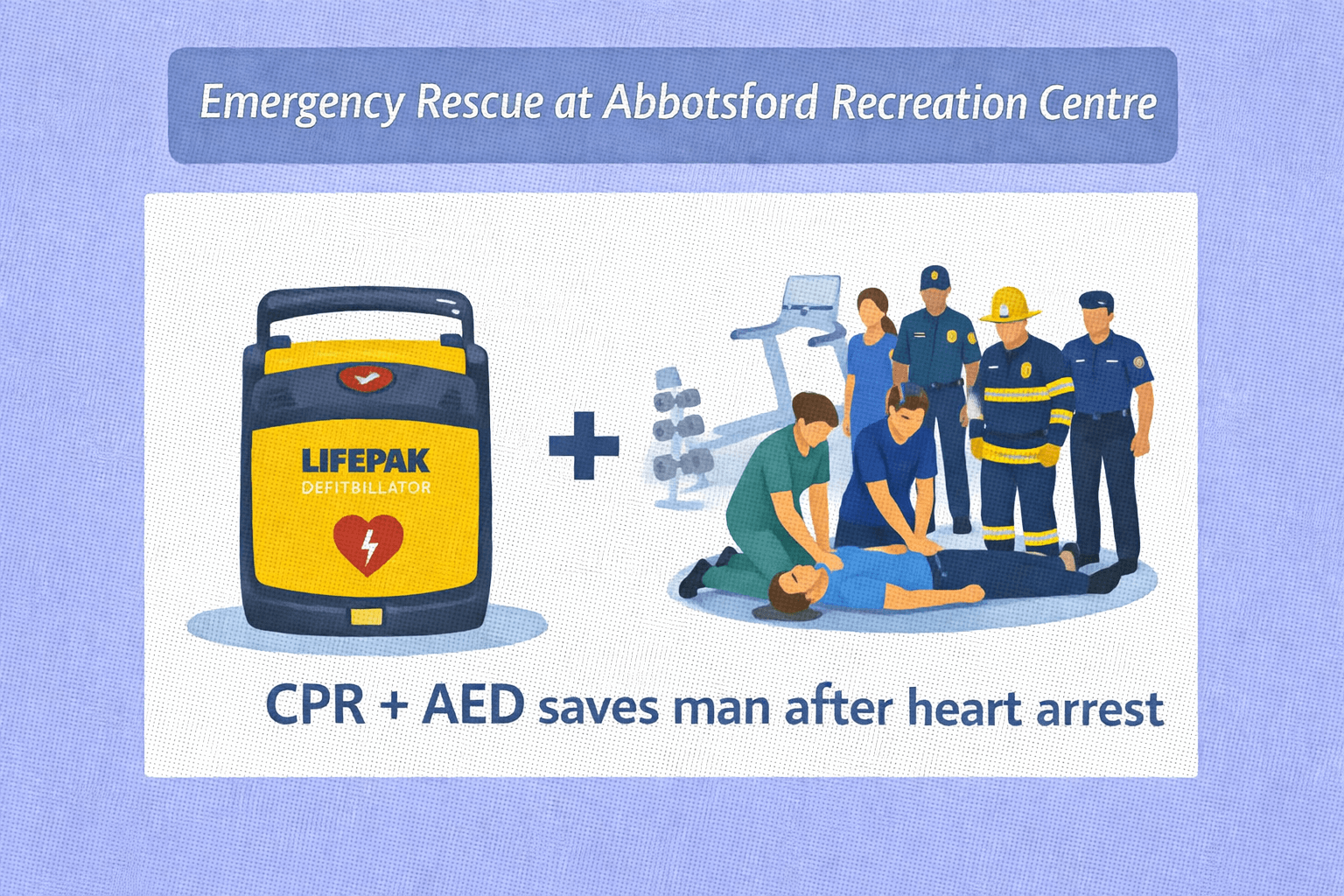 Cardiac arrest can occur when the heart develops a serious rhythm problem (arrhythmia), causing it to stop pumping effectively. This prevents oxygen-rich blood from reaching the brain and vital organs. Immediate response—especially CPR (cardiopulmonary resuscitation) and the use of an automated external defibrillator (AED)—is critical in helping restore a normal heart rhythm.
Some arrhythmias require defibrillation, meaning an AED shock may be the only way to correct the heart rhythm.
First Aid & Workplace Relevance in Vancouver and the Lower Mainland
Across Abbotsford, Surrey, Burnaby, Vancouver, and the Lower Mainland, recreation centres, gyms, and workplaces are common locations where cardiac emergencies can occur.
Facilities that provide accessible AEDs and have trained individuals on-site are better prepared to respond quickly. This highlights the importance of CPR and AED training for staff, fitness centres, and the public.
Real Incident Overview
At the Abbotsford Recreation Centre, a middle-aged man had just finished exercising on a treadmill and joined his wife on the running track. Shortly after, he suddenly collapsed.
Fortunately, several individuals with medical and emergency training were present in the facility. An off-duty paramedic, an auxiliary firefighter, and two emergency room nurses quickly responded. A corrections officer with CPR training also assisted.
They assessed the man and found he was unresponsive. CPR was started immediately, with responders rotating every two minutes to maintain effective compressions.
An AED (Lifepak defibrillator), which had been installed at the facility about a year earlier, was brought to the scene. The device delivered a shock, which helped restore the man’s heart rhythm.
By the time on-duty paramedics arrived, the man had regained consciousness and was able to speak. He was later transported to Abbotsford Regional Hospital for further observation. Reports indicated he had suffered a serious arrhythmia, and early defibrillation played a key role in his survival.
Signs and Symptoms of Cardiac Arrest
Cardiac arrest may include:
-
Sudden collapse
-
Unresponsiveness
-
No normal breathing
-
No pulse or signs of circulation
Immediate recognition is essential for a fast response.
Common Causes of Cardiac Emergencies During Exercise
Cardiac arrest during or after physical activity may be linked to:
-
Underlying heart conditions
-
Electrical disturbances (arrhythmias)
-
Physical exertion triggering an existing issue
While exercise is beneficial, emergency preparedness remains important in fitness environments.
First Aid Response: CPR and AED Use
If someone collapses and is unresponsive:
-
Call 911 immediately
-
Check breathing and responsiveness
-
Begin CPR (chest compressions) if trained
-
Have someone retrieve an AED
-
Turn on the AED and follow instructions
-
Continue CPR and AED use until help arrives
Early CPR and AED use can significantly improve survival outcomes.
Prevention and Workplace Safety Considerations
To improve safety in recreation and workplace settings:
-
Install AEDs in visible, accessible locations
-
Train staff and regular users in CPR and AED use
-
Clearly mark AED locations
-
Include emergency response planning in safety programs
Preparedness can make a critical difference in emergencies.
Frequently Asked Questions
What is an arrhythmia and why is it dangerous?
An arrhythmia is an abnormal heart rhythm that can disrupt blood flow and lead to cardiac arrest.
Why is an AED important in gyms or recreation centres?
It allows for rapid defibrillation, which may be necessary to restore a normal heart rhythm.
Can CPR alone restart the heart?
CPR helps maintain circulation, but an AED may be needed to correct the heart rhythm.
Who can use an AED in an emergency?
AEDs are designed for public use and provide clear instructions for bystanders.
Why were multiple responders rotating during CPR?
Rotating helps maintain effective compressions, as CPR can be physically demanding.
Educational Note
This article is intended for general first aid awareness and workplace safety education in Canada. Learning CPR and AED use can help individuals respond effectively in cardiac emergencies.
About The Author

Mark Kascha
First Aid Instructor Trainer with 30+ years of experience in CPR, emergency response, and safety training across Canada.
👉 [View full credentials]🔗 View LinkedIn Profile
Last reviewed: March 2026
 Support local, Canadian-owned businesses, with no connections to American corporations or partnerships.