
A near-drowning occurs when a person survives a submersion incident in water but experiences breathing impairment or loss of consciousness. In severe cases, lack of oxygen can lead to cardiac arrest, where the heart stops pumping effectively and the person becomes unresponsive.
In Vancouver and across British Columbia, water-related environments such as pools, lakes, waterfront areas, and recreational facilities are common. Because of this, CPR (cardiopulmonary resuscitation) and AED awareness are essential first aid skills for workplaces, hotels, recreation centres, and the general public. Quick action by bystanders or staff members can make a critical difference before emergency services arrive.
A Realistic Scenario: Rapid Response at a Motel Pool
 In one reported incident, two adult men were pulled from the bottom of a motel swimming pool after they were discovered unresponsive. Witnesses reported that the men had entered the water earlier and were later noticed at the bottom of the pool approximately ten minutes afterward.
Police officers were the first to arrive on scene. They immediately entered the pool, removed the individuals, and began CPR while waiting for paramedics. When emergency medical crews arrived, they continued advanced care. Both individuals regained vital signs at the scene and were transported to hospital in critical condition.
While the exact circumstances surrounding the incident were unclear, authorities believed the event appeared to be accidental. The situation illustrates how immediate intervention by trained responders can improve the chances of survival after a drowning incident.
Common Signs of a Drowning Emergency
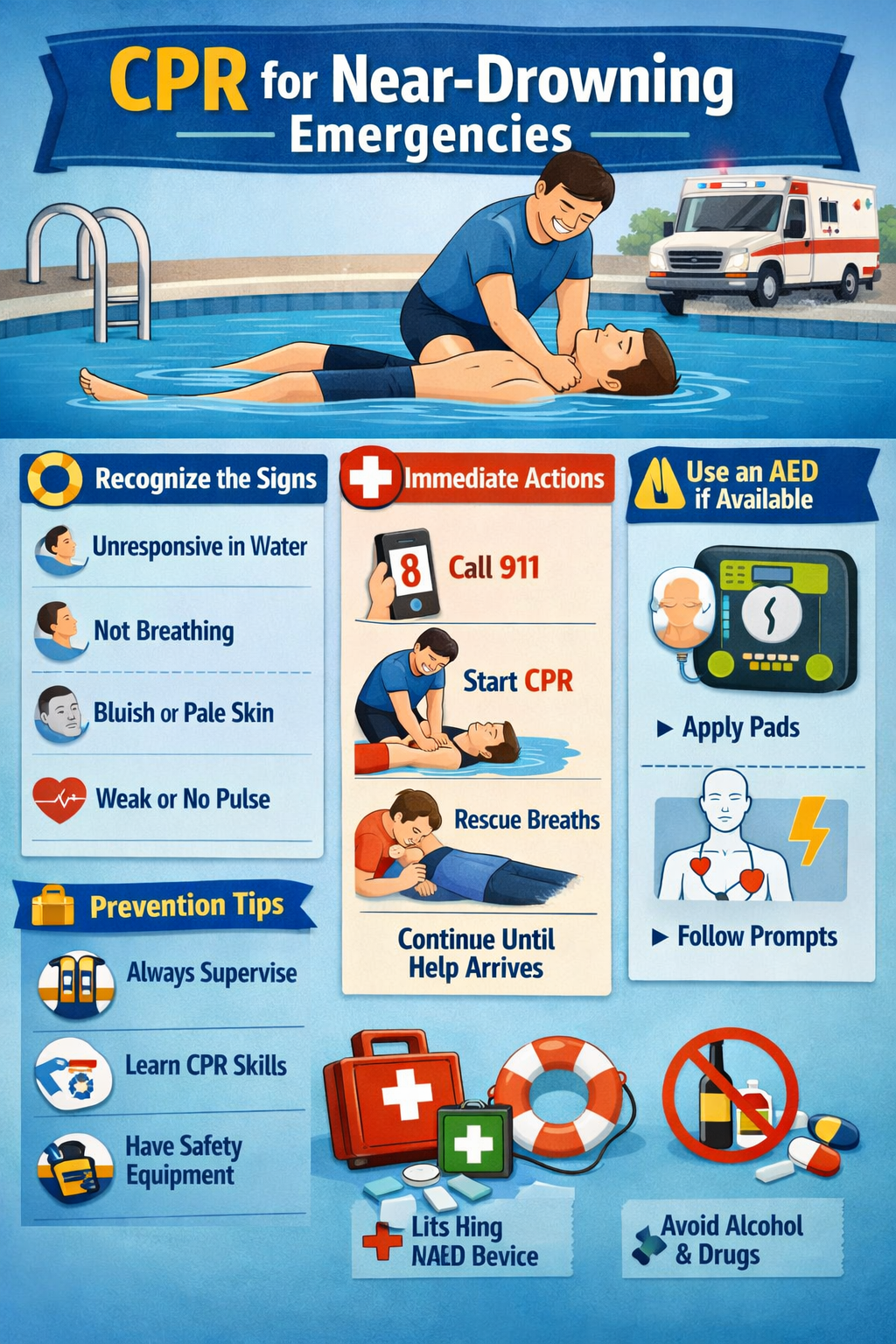
Recognizing the signs of drowning or near-drowning is important for early response. Symptoms can vary depending on how long a person has been underwater and how quickly oxygen deprivation occurs.
Possible signs may include:
-
Unresponsiveness in water
-
Blue or pale skin tone
-
Weak or absent pulse
-
Coughing or gasping after being rescued
-
Confusion or unusual behaviour
In some cases, individuals pulled from water may appear unconscious or not breathing normally, which is why rapid assessment and first aid response are essential.
Causes and Mechanisms of Drowning
Drowning occurs when water interferes with breathing, preventing oxygen from reaching the lungs and brain. When oxygen levels drop, the body’s vital organs can be affected within minutes.
Common factors that can contribute to drowning incidents include:
-
Swimming fatigue or exhaustion
-
Alcohol or substance impairment
-
Lack of supervision around water
-
Slips or falls into pools or water bodies
-
Medical events occurring in water
-
Inability to swim or sudden panic in water
Even experienced swimmers can encounter difficulties, particularly if environmental conditions change or fatigue sets in.
First Aid Response and Emergency Management
When someone is removed from the water and is not responsive or not breathing normally, CPR may be required until emergency medical services arrive.
In general first aid training, responders learn to:
-
Ensure the scene is safe before approaching
-
Remove the person from the water if it can be done safely
-
Check responsiveness and breathing
-
Call emergency services immediately
-
Begin CPR if the person is unresponsive and not breathing normally
-
Use an automated external defibrillator (AED) if one is available
-
Continue care until trained emergency personnel take over
Early CPR helps maintain circulation and oxygen delivery to the brain and vital organs during cardiac arrest. When available, AEDs can assist responders by analyzing heart rhythm and guiding the resuscitation process.
Prevention and Workplace Safety Considerations
Water-related incidents can occur in many settings, including hotels, recreation centres, pools, construction sites near water, waterfront workplaces, and residential properties.
Prevention strategies may include:
-
Ensuring trained staff or lifeguards are present at aquatic facilities
-
Installing visible emergency equipment such as rescue devices and AEDs
-
Providing CPR and first aid training for employees
-
Maintaining clear pool safety rules and supervision
-
Avoiding swimming alone
-
Encouraging responsible behaviour around water
Workplace safety programs in British Columbia often encourage CPR and first aid training because trained individuals are more prepared to respond during emergencies involving cardiac arrest or drowning.
FAQ
How quickly can drowning become life-threatening?
Drowning can become serious within minutes because the brain requires a continuous supply of oxygen. Rapid recognition and immediate emergency response are important factors in improving outcomes.
Why is CPR important in drowning situations?
CPR helps circulate oxygenated blood to the brain and vital organs when a person is not breathing or when the heart is not functioning effectively. This support can help sustain the body until advanced medical care arrives.
Can someone recover after being underwater for several minutes?
Outcomes vary depending on factors such as water temperature, duration of submersion, and how quickly resuscitation begins. Early rescue and prompt CPR significantly improve the chances of survival.
What role does an AED play in water-related emergencies?
An automated external defibrillator analyzes heart rhythms and may deliver a shock if a life-threatening rhythm is detected. AEDs are commonly found in many public locations and are designed for use by trained responders or bystanders.
Why is CPR training recommended for workplaces and public settings?
CPR training prepares individuals to recognize cardiac arrest and respond quickly during emergencies. In environments where people gather or where water hazards exist, trained responders can provide early assistance before emergency services arrive.
Educational Note:
This article is intended for general first aid awareness and public education. First aid and CPR training help individuals recognize emergencies and respond safely while waiting for professional medical care.
About The Author

Mark Kascha
First Aid Instructor Trainer with 30+ years of experience in CPR, emergency response, and safety training across Canada.
👉 [View full credentials]🔗 View LinkedIn Profile
Last reviewed: March 2026