
Motor vehicle collisions can happen suddenly and may involve multiple vehicles, creating complex emergency situations. Multi-vehicle crashes often require coordinated response from firefighters, paramedics, and police because several people may be injured and vehicles may be damaged in ways that make rescue more difficult.
In Vancouver, Chilliwack, and across British Columbia, busy highways and commuter routes mean that traffic incidents can occur at any time. Because emergency responders may take time to reach the scene, first aid awareness and CPR knowledge can be valuable skills for workers and members of the public who may witness a crash.
Preparedness and basic emergency response knowledge can help support injured individuals until professional medical teams arrive.
A Realistic Scenario: Collision Near the Vedder Road Overpass
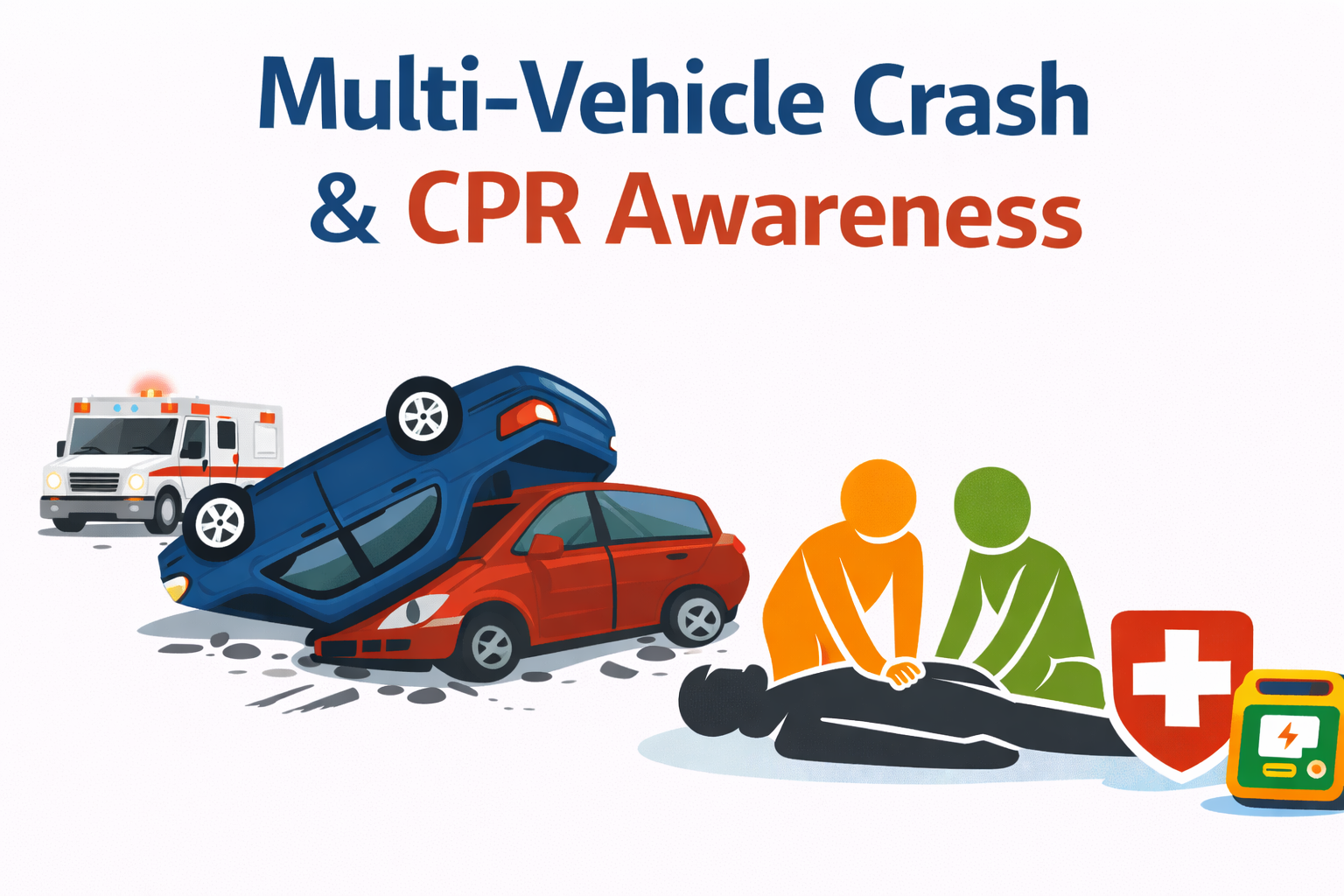 In a reported incident in Chilliwack, emergency crews responded to a serious multi-vehicle crash in the westbound lanes of a highway near the Vedder Road overpass.
The collision involved several vehicles and created a complex crash scene. One vehicle reportedly came to rest on top of another vehicle, resting on its roof and windshield.
Multiple ambulances, firefighters, and police officers responded to the scene shortly after the incident occurred. During the emergency response, first responders were observed performing CPR on one of the victims while other crews worked to manage the crash site.
Because of the severity of the collision, authorities temporarily diverted westbound traffic to Yale Road West while a landing zone was prepared for emergency medical transport. The crash affected traffic in both directions as responders worked to assist those involved and investigate the incident.
While tragic incidents like this are uncommon, they demonstrate the importance of rapid emergency response and the potential role of life-saving techniques such as CPR during serious accidents.
Signs of Medical Distress After a Motor Vehicle Crash
Following a collision, individuals may experience a range of injuries or medical complications. Recognizing signs of serious distress can help determine when immediate assistance is needed.
Possible warning signs include:
-
Loss of consciousness or unresponsiveness
-
Difficulty breathing or absence of breathing
-
Severe bleeding or visible trauma
-
Confusion or disorientation
-
Chest pain or irregular pulse
-
Pale, cool, or clammy skin indicating possible shock
Emergency responders assess these signs quickly to determine the most appropriate care.
Causes and Factors in Multi-Vehicle Crashes
Multi-vehicle collisions can occur for several reasons, particularly on busy highways or during heavy traffic conditions.
Common contributing factors may include:
-
Sudden braking or chain-reaction collisions
-
Reduced visibility from weather or road conditions
-
Driver distraction or inattention
-
High traffic volume or congestion
-
Mechanical vehicle issues
-
Road design or merging traffic patterns
When several vehicles are involved, the force of impact and the number of occupants can increase the complexity of rescue operations.
First Aid Response and CPR Awareness
At serious crash scenes, emergency responders prioritize scene safety, rapid medical assessment, and immediate life-saving interventions.
First aid training often teaches responders and bystanders to focus on several key steps:
-
Ensure the scene is safe before approaching
-
Contact emergency services immediately
-
Check if individuals are responsive and breathing
-
Provide assistance without moving injured persons unnecessarily
-
Begin CPR if someone is unresponsive and not breathing normally, if trained to do so
-
Continue care until emergency medical services take over
While advanced rescue equipment and medical care are typically required at major collisions, early recognition of life-threatening conditions and prompt assistance can support emergency response efforts.
Prevention and Workplace Road Safety
Road safety is an important component of workplace safety programs across British Columbia, particularly for employees who drive as part of their job or work near roadways.
Important prevention considerations include:
-
Following posted speed limits and road safety rules
-
Maintaining safe following distances between vehicles
-
Avoiding distractions while driving
-
Staying alert during heavy traffic or poor weather conditions
-
Ensuring vehicles are properly maintained
Workplaces often include first aid and CPR training in safety programs so employees are prepared to respond appropriately if an emergency occurs during travel or transportation activities.
FAQ
Why are multi-vehicle crashes often more complex than single-vehicle accidents?
Multi-vehicle crashes can involve several drivers, passengers, and vehicles, which increases the number of injuries and potential hazards. Emergency responders must carefully manage the scene to ensure safety and provide appropriate care.
Why might CPR be performed at a collision scene?
CPR may be used if a person becomes unresponsive and is not breathing normally. The technique helps circulate oxygenated blood to vital organs while emergency medical services are on the way.
Should bystanders move injured people after a crash?
In general, injured individuals should not be moved unless there is an immediate safety risk such as fire or further danger. Emergency responders are trained to safely remove individuals when necessary.
Why are landing zones sometimes established at highway crash scenes?
In serious incidents, air ambulance services may be used to transport patients quickly to specialized hospitals. A safe landing area is established to allow the helicopter to land near the scene.
Why is CPR training recommended for workers and the public?
CPR training helps people recognize life-threatening emergencies and respond appropriately while waiting for professional medical responders.
Educational Note:
This article is intended for general first aid awareness and public safety education. Learning CPR and basic first aid skills can help individuals recognize emergencies and provide supportive care until trained emergency services arrive.
About The Author

Mark Kascha
First Aid Instructor Trainer with 30+ years of experience in CPR, emergency response, and safety training across Canada.
👉 [View full credentials]🔗 View LinkedIn Profile
Last reviewed: March 2026
 Support local, Canadian-owned businesses, with no connections to American corporations or partnerships.