
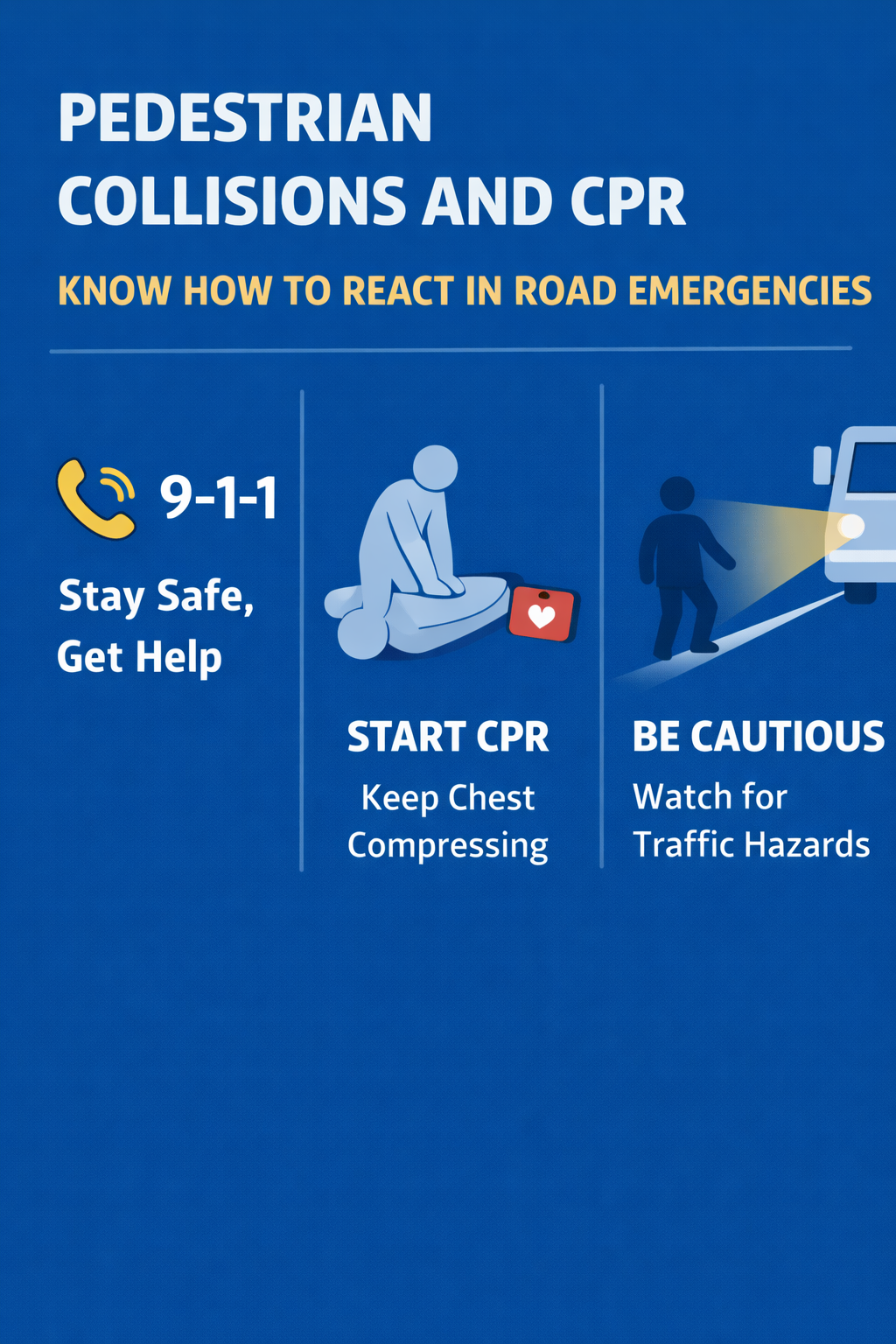
 Serious vehicle collisions can cause life-threatening injuries that may affect breathing and circulation. When a person becomes unconscious or stops breathing normally, cardiopulmonary resuscitation (CPR) may help maintain blood flow and oxygen to the brain until paramedics arrive.
Across British Columbia, including Vancouver and the Lower Mainland, many workplaces and community organizations encourage CPR and first aid training because traffic incidents can occur anywhere — on highways, city streets, parking lots, or near transit areas.
Bystanders who recognize an emergency and call for help quickly can play an important role in the early moments before professional responders arrive.
A Real-World Scenario
In Pitt Meadows, British Columbia, a young man was seriously injured after being struck by a truck in the early hours of the morning.
According to Ridge Meadows RCMP, the incident occurred around 2:30 a.m. near the intersection of Lougheed Highway and Harris Road. Witnesses reported that the pedestrian had stepped into the eastbound lanes of Lougheed Highway while attempting to hail a taxi.
A five-ton box truck traveling along the highway struck the 22-year-old man from Port Coquitlam.
Several people nearby stopped to help immediately. Witnesses called emergency services and began performing CPR while waiting for paramedics to arrive.
The injured man was transported to a healthcare facility in critical condition. Police noted that the driver of the truck was cooperating with investigators as they continued examining the circumstances surrounding the collision.
Incidents like this highlight how quickly emergencies can occur on roadways — and how bystanders may become the first people able to help.
Common Injuries in Pedestrian Collisions
Pedestrian collisions with vehicles can result in a range of serious injuries because the human body has little protection against the force of a moving vehicle.
Possible injuries may include:
-
Head or brain injuries
-
Chest trauma affecting breathing
-
Internal bleeding
-
Broken bones or spinal injuries
-
Loss of consciousness
If breathing stops or becomes abnormal, CPR may be required until emergency responders arrive.
Recognizing When CPR May Be Needed
Bystanders may consider CPR if a person involved in a collision shows the following signs:
-
Unresponsive to voice or touch
-
Not breathing normally or only gasping
-
No obvious signs of movement
-
Sudden collapse after impact
Emergency services should always be contacted immediately so trained responders can provide advanced care.
First Aid Actions Bystanders May Take
First aid training in Canada often teaches simple steps that can help bystanders respond safely in road emergencies:
-
Check the scene for safety, including traffic hazards.
-
Call 9-1-1 and provide the dispatcher with clear location details.
-
Avoid moving the injured person unnecessarily, especially if a spinal injury is possible.
-
Check breathing and responsiveness.
-
If the person is not breathing normally, begin CPR if it is safe to do so until paramedics arrive.
-
If available, an automated external defibrillator (AED) may also be used following device instructions.
Early CPR and quick emergency response can be critical during severe medical emergencies.
Road Safety and Visibility Considerations
Traffic safety experts often emphasize the importance of visibility and awareness, especially during nighttime hours or poor weather conditions.
In the Lower Mainland, factors that may affect road safety include:
-
Reduced daylight during winter months
-
Rain or fog affecting visibility
-
Dark clothing that is difficult for drivers to see
-
Pedestrians crossing outside designated areas
-
High-speed traffic on major highways
Staying visible and using designated pedestrian crossings can help reduce the risk of roadway incidents.
FAQ
Why can CPR be important after a serious collision?
If a person stops breathing or loses circulation following a traumatic event, CPR may help maintain oxygen flow to the brain until emergency responders arrive.
What should bystanders do first after witnessing a road accident?
The first priority is scene safety. Bystanders should watch for traffic hazards and call emergency services before approaching the injured person.
Should an injured person be moved after a collision?
Moving someone with possible trauma may increase the risk of further injury. First aid training typically advises avoiding unnecessary movement unless there is an immediate danger.
How can pedestrians stay safer at night?
Using reflective clothing, staying in well-lit areas, and crossing at marked intersections can improve visibility and reduce collision risks.
Why is CPR training encouraged for the public?
Training helps people recognize emergencies, understand safe response steps, and provide assistance while waiting for professional responders.
Educational Note
This article is intended for general public safety and first aid awareness. Learning CPR and first aid through certified training programs can help individuals better recognize emergencies and respond safely until professional emergency services arrive.
About The Author

Mark Kascha
First Aid Instructor Trainer with 30+ years of experience in CPR, emergency response, and safety training across Canada.
👉 [View full credentials]🔗 View LinkedIn Profile
Last reviewed: March 2026